
Watford's Fragile Situation: Concerns Surrounding Team and Ownership
Watford feel fragile right now. You sense it in the stands, in the boardroom, and in the uneasy silence around what comes next.
On the pitch, the season has lurched rather than lifted. Performances have lacked rhythm, results have been patchy, and the early questions have inevitably circled around head coach Alessio Dionisi. His position has been under scrutiny almost from the first whistle of the campaign.
Two results before the international break have, for now, steadied that particular storm. A much-needed win over Lincoln, followed by a draw with Middlesbrough, has bought Dionisi time and preserved a coach who, crucially, still carries the backing of most supporters. It is not momentum, exactly, but it is a pause in the slide – and at Vicarage Road, even a pause feels valuable.
The problems do not stop at the touchline.
Off the pitch, the club has been hit by a wave of anger and anxiety that goes far beyond form and tactics. Sir Elton John’s stinging criticism after the October debacle against Burnley cut deep. When one of the club’s most iconic figures publicly questions what he sees, it resonates. His words opened the door to a wider backlash: fans and former players lining up to aim their frustration squarely at owner Gino Pozzo.
That outpouring has hardened into something more organised. One supporters’ group has formally declared a loss of confidence in the ownership, a powerful statement at a club where the Pozzo model once symbolised smart, upwardly mobile ambition. Now, doubts about the way Watford are being run echo around the terraces. The turbulence is not a passing mood; it has become the backdrop.
And then there is the issue that hangs over everything else.
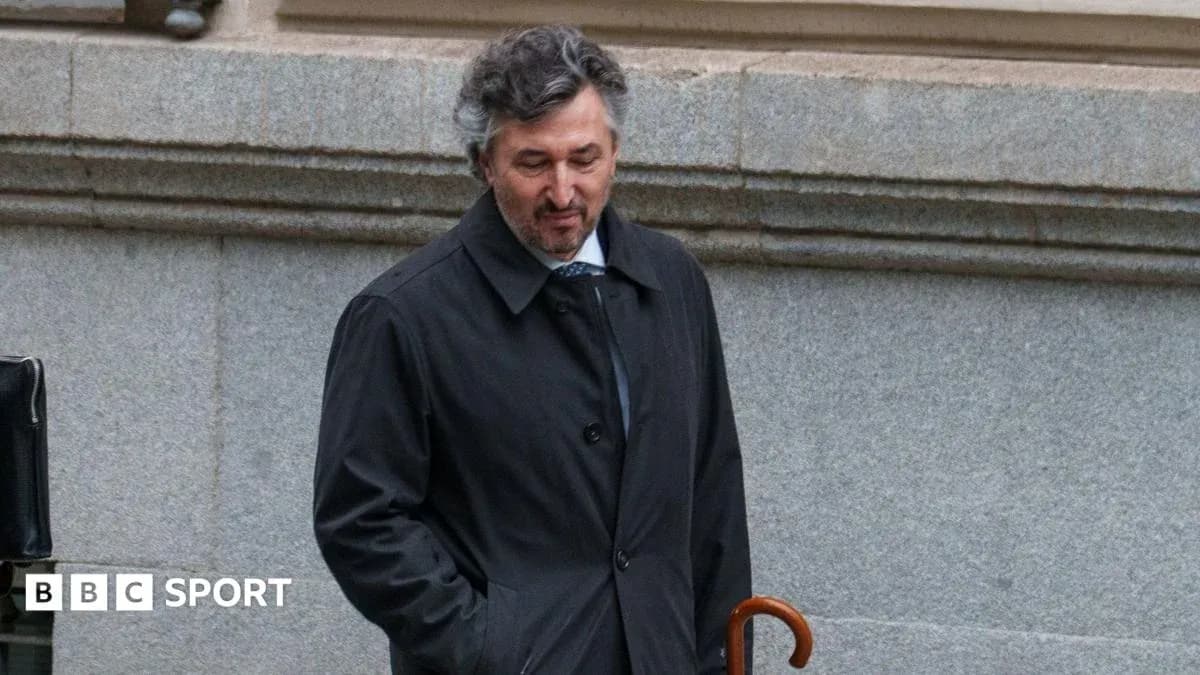
In Madrid, Pozzo stands as one of several defendants in a court case involving alleged tax offences linked to Spanish side Granada, a club with which he was previously associated. The accusations centre on player trading at Granada. Pozzo and the other defendants deny any wrongdoing.
In a rare recent interview with a member of a supporters’ group, Pozzo tried to put distance between himself and the allegations. He dismissed fears, stressing that the case related to Granada rather than to him personally and insisting that all operations had complied fully with the law.
The Spanish court will decide whether that stance holds. What is not in dispute is the potential scale of the consequences. The alleged tax fraud is significant, and if Pozzo is found guilty the punishment could include a lengthy prison sentence.
For Watford, that possibility is stark. A conviction would almost certainly see Pozzo fail the Owners and Directors’ Test in England. That would effectively bar him from serving as a director or officer of the club and force a fundamental change at the very top of the hierarchy. At a time when the football side already feels fragile, the idea of enforced upheaval in the boardroom is daunting.
Watford, for now, are saying nothing while the case runs its course. There will be no public comment until the verdict arrives.
So the club waits. The team battles for points under a head coach fighting to prove he can turn a stuttering start into something more convincing. The supporters wrestle with their faith in an ownership once credited with delivering Premier League nights and cup runs. And in a courtroom hundreds of miles away, a decision looms that could redraw Watford’s future in an instant.
These are not just difficult days at Vicarage Road. They are defining ones.





