WBO President Defends Alimkhanuly's Mandatory Title Shot Against Sheeraz
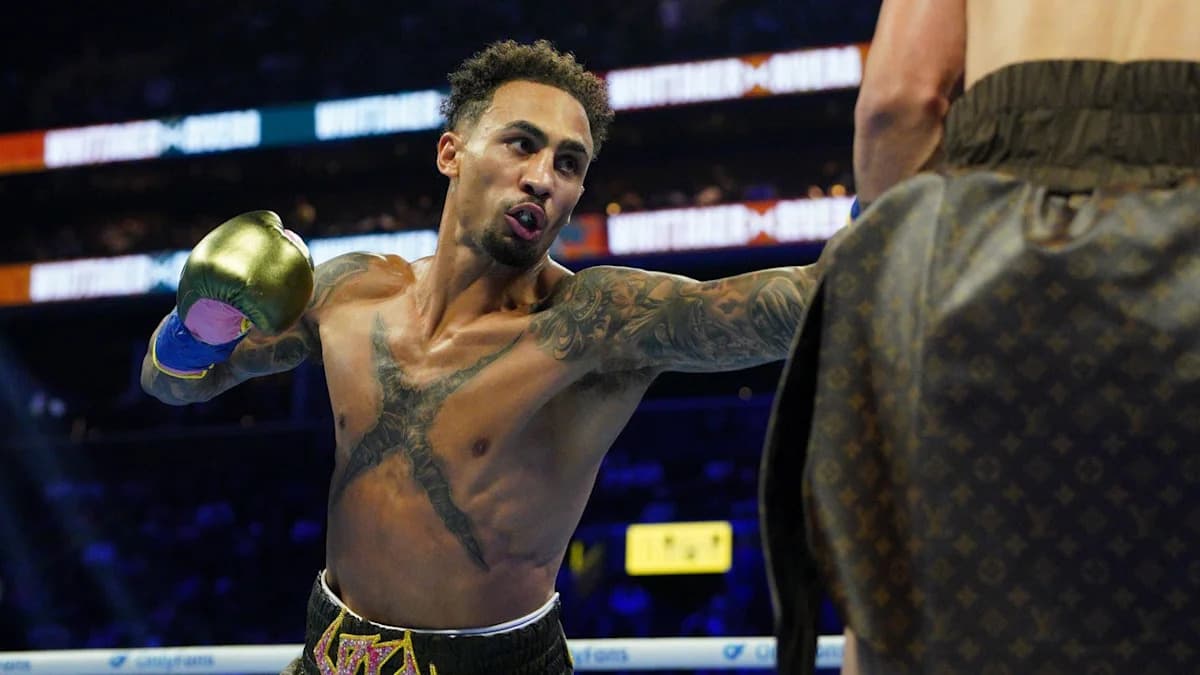
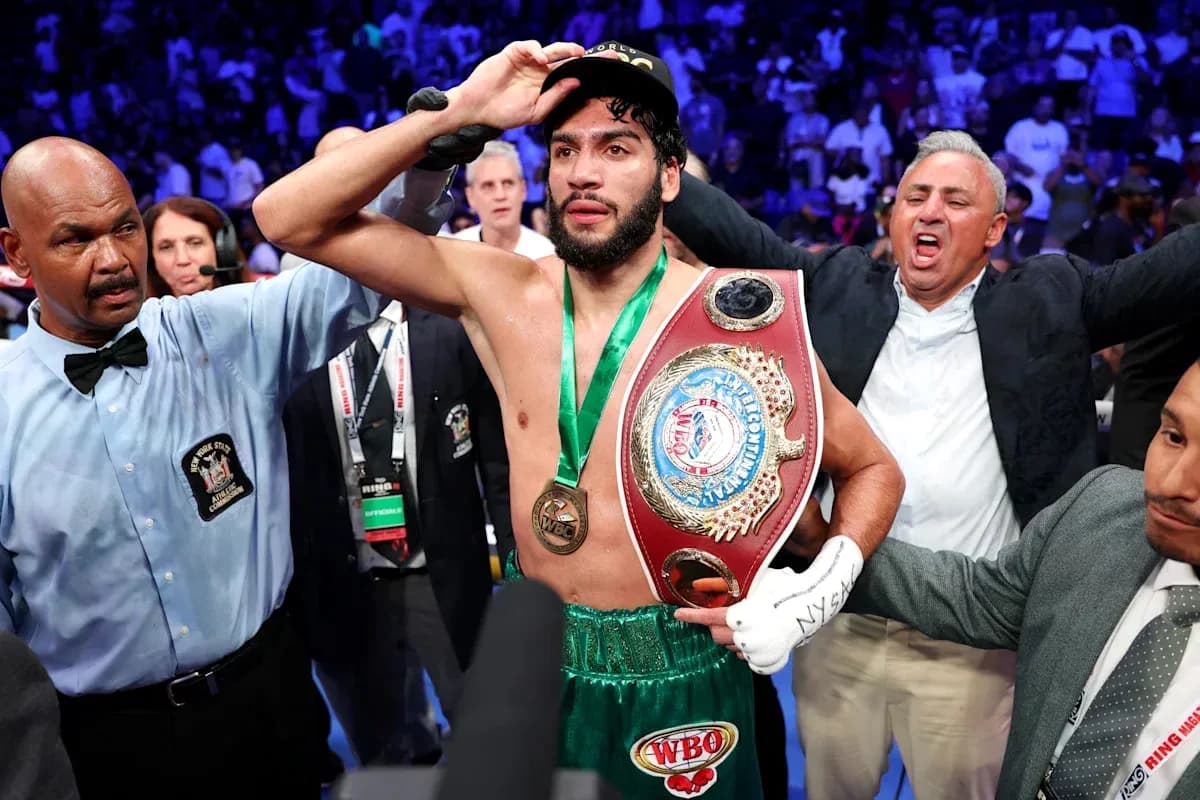
WBO president Gustavo Olivieri has hit back hard at Hamzah Sheeraz’s accusation that boxing’s politics – not merit – put Janibek Alimkhanuly in pole position for his WBO super middleweight title.
Sheeraz, the unbeaten champion at 168 pounds, had branded the sanctioning body’s decision “a joke” and “corrupt” after Alimkhanuly was installed as his mandatory challenger despite a recent failed VADA test and no fights at super middleweight. Olivieri was having none of it.
“I respectfully but unequivocally disagree with his assertions, particularly any suggestion of ‘corruption,’ improper ‘motives,’ or decisions influenced by ‘personal relationships,’” he told Uncrowned, pushing back at the idea that backroom ties had dictated the ruling.
A failed test, a canceled fight, and a fast return
Alimkhanuly’s case is loaded before it even reaches the rankings debate.
The former unified WBO and IBF middleweight champion tested positive for a banned substance in a VADA test just days before a three-belt unification with Erislandy Lara in December. The fight never happened. The bout was scrapped, and Alimkhanuly was suspended.
That should have been the end of his immediate ambitions. Instead, his suspension was later cut short by the WBO, and he has now been placed as mandatory challenger at 168 – a division in which he has yet to throw a single professional punch.
For Sheeraz, that decision crossed a line.
“I think it’s a joke,” he told Ariel Helwani on Uncrowned. “I think what the WBO have done here is disgraceful to the sport of boxing. What they’re essentially doing is rewarding someone who has [tested positive], so to me, it doesn’t make sense.
“What the WBO have done here — to me, it’s corrupt. And I’ll say it as it is, I feel like it’s all based off relationships. These moves being made are all based off personal relationships or whatever it may be, because it’s come out of nowhere and is extremely not right for the sport of boxing.”
Those words forced a response from the top.
Olivieri’s defense: ‘Fundamentally different’ case
Olivieri answered with detail, not just denial.
He stressed that Alimkhanuly’s situation, in the WBO’s eyes, could not be compared to high-profile doping sagas tied to completed fights.
“First, Zhanibek never stepped inside the ring in connection with the anti-doping matter,” Olivieri said. “The bout did not proceed. That fact materially distinguishes his case from other circumstances, including Ryan Garcia vs. Devin Haney, where the contest actually occurred and the anti-doping findings arose in connection with a completed championship bout. These are fundamentally different factual circumstances and should not be treated as interchangeable cases.”
The second pillar of the WBO’s argument: this was a first offense, presented with what the organization considered mitigating factors.
“Second, Zhanibek was a first-time offender. During the disciplinary proceedings, he presented mitigating circumstances for the WBO’s consideration, including supporting medical evidence. The WBO nevertheless imposed disciplinary measures that were broader than the suspension imposed by the licensing commission governing his most recent bout in Kazakhstan.”
The Kazakhstan Professional Boxing Federation (KPBF) had handed Alimkhanuly a six-month suspension. The WBO went to 12 months, reserving the right to adjust it later. After reviewing the “complete record,” including what it described as his cooperation and compliance with all conditions, it chose to terminate the ban early.
From Olivieri’s perspective, that process closed the book on the doping matter. When the suspension ended, so did its impact on Alimkhanuly’s eligibility for a mandatory slot.
The precedent: champions jumping weights
The more contentious part for many fans is not the end of the suspension, but what came next: the leap to mandatory challenger at a new weight without a single fight there.
Olivieri leaned heavily on precedent.
The WBO, he pointed out, has long allowed its recent champions to move up or down and receive preferential treatment in their new division, including being placed directly into a mandatory position. It is not a one-off carve-out for Alimkhanuly.
Keyshawn Davis is one of the clearest recent examples cited by the organization.
Davis lost his WBO lightweight title in June 2025. He then went to super lightweight, boxed twice in non-title bouts, and later jumped again to welterweight. Without a fight at 147 pounds, he was ranked No. 1 and ultimately named mandatory challenger for Devin Haney.
That case, the WBO argues, shows the policy extends even to champions whose standing might be questioned by recent events. The principle is simple from their side: recent WBO champions receive priority when they change divisions.
Alimkhanuly, as a former unified champion at 160, fits squarely into that framework.
Why Alimkhanuly over Bank?
The final part of Olivieri’s explanation goes to the competitive heart of the decision.
In the WBO’s internal rankings battle, the choice for mandatory came down to Alimkhanuly (17-0, 12 KOs) and Jacob Bank (20-0, 11 KOs). One is an unbeaten former unified champion with a résumé built at world level. The other is an undefeated contender still climbing.
Olivieri made it clear where the organization stood.
He argued that Alimkhanuly’s achievements at middleweight, including his reign as unified WBO and IBF champion, made him the stronger candidate. Bank’s record and résumé, in the WBO’s view, did not compare.
From that logic, Alimkhanuly’s name at the top of the list was not a favor – it was the outcome of how the WBO has long done business.
A ruling that won’t quiet the noise
Olivieri closed his case with a firm line: Alimkhanuly’s doping issue ended when his suspension did. It carries no weight, he insists, in the decision to make him mandatory challenger for Sheeraz.
On paper, the WBO has its rationale: a completed suspension, mitigating evidence, a first offense, a historic policy of rewarding recent champions, and a résumé that outstrips the other contenders.
Outside the boardroom, the optics are far harsher. A fighter who failed a test, never boxed at 168, and saw his suspension shortened now stands first in line for a world title shot.
For Sheeraz, that feels like the sport rewarding the wrong things. For Olivieri, it is the system working as designed.
The next move will not be made in a hearing room or a press release. It will be whether Hamzah Sheeraz, furious or not, signs to face Janibek Alimkhanuly – and whether the ring can settle what the politics of boxing never quite can.