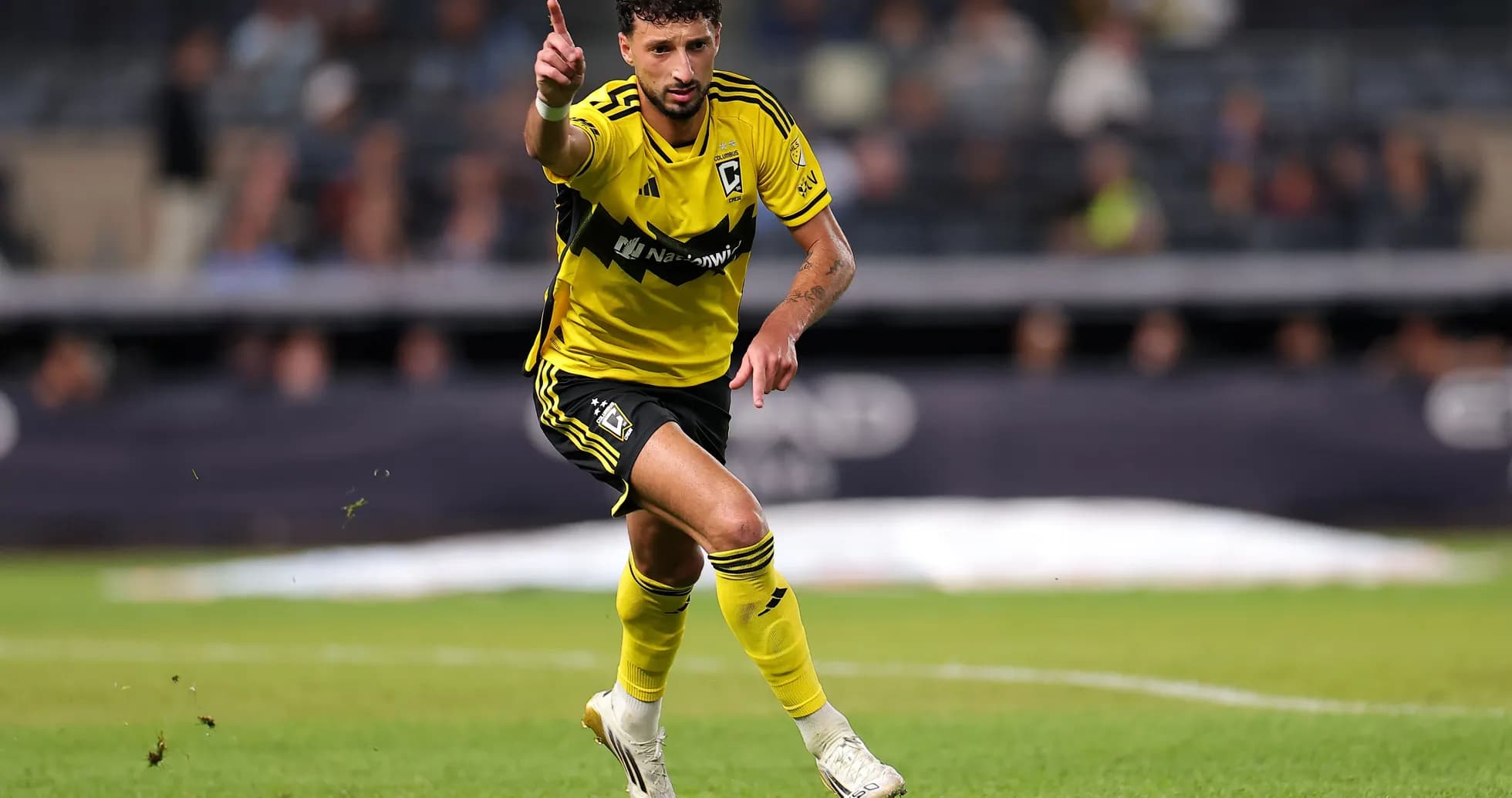
Wessam Abou Ali's Return to Al-Ahly: A Dream or Reality?
Ahmed Shobier cuts through the noise. Wessam Abou Ali is not coming back to Al-Ahly. Not this winter. Almost certainly not any time soon.
The former Al-Ahly goalkeeper used his radio show on Monday to cool a story that had ignited the fanbase: talk that the club had started feeling out a possible return for the Palestinian forward from Columbus Crew.
“There was talk published yesterday that Al-Ahly had begun to open discussions or test the waters over the return of Wessam Abou Ali, and whether Columbus Crew would agree to his departure or not,” Shobier said.
He admitted the idea appealed to him on a football level. Abou Ali had been a difference-maker in red, a forward whose presence altered games and eased pressure. But the key obstacle sits in Ohio, on the training ground of the MLS champions.
According to Shobier, Columbus Crew’s coach shut the door.
“He was a player who made a huge difference with Al-Ahly, but the Columbus Crew coach said he is the future of the club, there is no chance of him leaving, and he said his injury had affected the team and that he will return soon.”
That line says everything. Future of the club. No chance of leaving.
Shobier did not completely bury the dream, but he placed it firmly in the realm of fantasy, not planning.
“If there is even half a chance of him returning to Al-Ahly, I say to the Al-Ahly club, do not hesitate. The idea of his return is almost non-existent, but it is important for one to dream and think,” he added.
So for now, Abou Ali remains a nostalgic wish, not a winter target. Al-Ahly’s reality is different, and it starts on Tuesday.
Anger in the stands, fire in the dressing room
Inside the club, the focus has turned to a squad under pressure and a coach trying to harness that tension.
Shobier revealed that Moroccan coach Hossein Ammouta held what he described as a “very, very long lecture” with his players on Monday. This was not a routine team talk. It sounded like a clear-the-air summit.
“They opened their hearts to one another and spoke together,” Shobier said. “You feel that the players are motivated and want the next match, and there is a state of anger because they see that the fans are very, very angry with the performances in the recent period, and the players want to prove themselves and deliver a better level.”
That anger in the stands has been building. Al-Ahly sit third in the Premier League table with 10 points, level with Zamalek on goal difference and two points behind leaders Pyramids. Respectable on paper, but not enough for a fanbase conditioned to dominance and demanding control, not just contention.
Abu Qir for Fertilizers arrive on Tuesday as more than just opponents. They are the first test of whether that long dressing-room meeting has actually changed something or merely produced good intentions and heavy words.
Zamalek, Bezerra and a deal they could not refuse
While Al-Ahly wrestle with performances and dreams of a returning star, Zamalek are wrestling with hard cash and a saga that has finally run its course.
Shobier shifted his attention across Cairo and did not dress it up: “Finally the closing credits have rolled on the Bezerra nights saga,” he said.
Zamalek, he explained, had reached a point of no return with Juan Bezerra. The Brazilian wanted Shabab Al-Ahli Dubai. The club, mired in a “very, very severe financial crisis,” needed money. At some point, resistance stopped being defiance and started being self-harm.
“Zamalek had no option but to agree to Bezerra’s departure, for several reasons, among them that there is no hope left with him. The Shabab Al-Ahli Dubai offer suited him, it settled in his mind and he will not go back on it, money and then the life in Dubai, and Zamalek tried left and right but there was nothing.”
The numbers tell the rest of the story.
As Shobier outlined, the deal brings Zamalek 3 million dollars cash upon signing, 1 million in February, another 1 million in August, plus 1 million in incentives and bonuses. That is 6 million dollars in potential revenue, before even counting what Bezerra has given up.
The club, he said, is “in dire need of money,” with players owed overdue wages and pushing for their dues. Against that backdrop, every concession matters.
Shobier detailed how the 10% agent commission — close to 600,000 dollars — was waived. So were 5% sponsorship rights and a league title bonus of around 20,000 dollars. By his calculation, when you add what Zamalek gain and what the player has relinquished, the club effectively reaches “approximately 7 million dollars.”
For a team in a financial chokehold, that is not a transfer. It is oxygen.
There was one final twist in the paperwork. Initially, Shobier believed there was no resale clause for Zamalek. Then came a late development.
“What I knew yesterday was that there was no resale clause for Zamalek club, but I learned that Zamalek in the final metres insisted on writing a clause entitling the club to a 20% share of the value of the player's sale in the future,” he said.
It is a classic hedge: immediate cash now, with a hand still on the player’s future value if his career explodes in Dubai.
So Cairo’s two giants stand at different crossroads. Al-Ahly chase performances and cling to the faintest dream of a hero’s return that even their own legend calls “almost non-existent.” Zamalek cash in on a restless star and bet that 7 million dollars and a 20% clause can help steady a listing ship.
The winter window has not opened yet, but the real question is already on the table: who will handle their reality better — the club trying to fix a team, or the one trying to save itself financially?