The Part-Timers Who Triumphed at Wembley Three Times in a Row
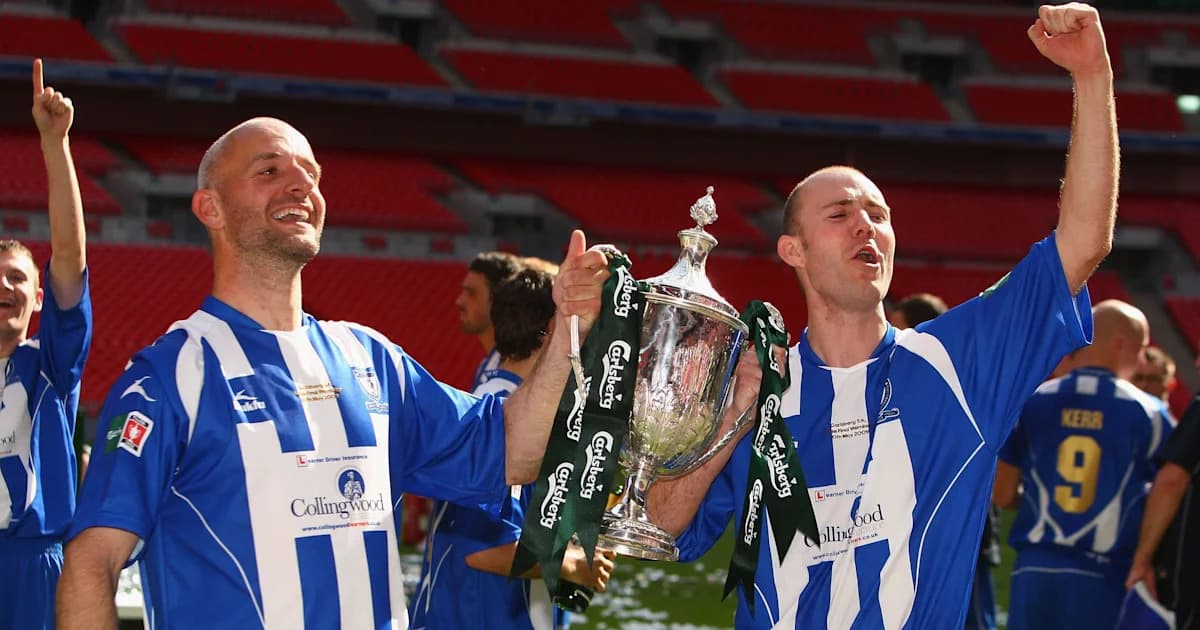
Many know Pep Guardiola's Manchester City for winning four consecutive League Cups from 2018 to 2021, but a lesser-known team achieved a three-peat at Wembley first. Whitley Bay, competing in the ninth-tier Northern Football League, claimed three straight FA Vase titles between 2009 and 2011—an extraordinary feat in non-league football.
The FA Vase, created in 1974 for amateur sides, has only seen The Seahorses win it four times ever, including that unprecedented trio of victories. Their success came under Ian Chandler, a modest IT manager from Sunderland who managed to balance his day job with leading Whitley Bay to historic triumphs.
Ian Chandler: From Player to Manager
Chandler, who had three playing spells at Whitley Bay, took over as manager in 2004 and stayed for a decade. Instead of office meetings, his days were filled with organizing scouting reports and hotel arrangements. After narrowly missing Wembley in 2007-08, where they lost heavily in aggregate to Lowestoft Town, Chandler vowed never to give pre-match interviews again, believing it jinxed the team.
"It's the hardest thing to keep a team together - as soon as players get noticed, they move up," Chandler explained. "But after reaching the Vase semis, players wanted to stay and prove themselves. Then the lads wanted to do it again. And again."
A lifelong Sunderland supporter, Chandler modeled the team’s style on Kevin Keegan's Newcastle, prioritizing entertaining football. "The Premier League can be dull; fans want excitement," he said.
Building a Team United by Purpose
Chandler was already a club legend, having scored the winning goal in the 2002 FA Vase final. Though inexperienced as a manager initially, he assembled a skilled squad admired throughout non-league circles. Chairman Paul McIlduff praised their pace, midfield quality, and lethal strikers, emphasizing the collective mindset: "No one thought they were better than anyone else; they played for each other."
Among the key players was Paul Robinson, dubbed Whitley Bay's Maradona. A former Newcastle academy player, Robinson combined his work at software firm Sage with football under Chandler’s guidance. He fondly recalled zoning out at work, imagining scoring goals and hoping for an easy match.
Robinson described the 2010 FA Vase semi-final second leg, where his last-minute diving header clinched a 6-5 aggregate win over Barwell, sparking a pitch invasion: "Everyone looks forward to finals, but the earlier rounds felt bigger. Home games drew 2,000 to 3,000 fans, making you feel like a real player."
Whitley Bay’s FA Cup runs in the late ’80s and early ’90s also built a winning mentality. Robinson remembered a quarter-final against Biggleswade in 2009 when the opposition showed up in suits and ties, clearly treating it like a final—but Whitley Bay won 5-2 easily. By then, teams feared them before kick-off.
Local Pride and Dedicated Support
The team's achievements lifted the spirits of Whitley Bay, a working-class coastal town near Newcastle known historically as a Victorian holiday spot. Volunteers worked tirelessly before each final, rallying local businesses and supporters. Ticket vans appeared on the high street, shops displayed blue and white stripes, and local sponsors rallied behind the club.
Newcastle United helped sell tickets for the finals, while North Tyneside Council provided security at Hillheads Park, where thousands gathered for cup matches. Despite some travel hiccups, including trains diverted away from Wembley, fans made it to London every time.
Volunteer Jenn Robinson shared, "The first Wembley final was surreal. We even sat in the royal box, and a security guard pointed out Prince William’s seat—it was quite the experience."
Three Finals, Three Victories
Chandler’s son Benjamin served as mascot for all three finals, and the pressure grew with each year. The 2009 final saw Whitley Bay beat Glossop North End 2-0 before a crowd of 12,200. In 2010, they overwhelmed Wroxham 6-1, with Paul Chow scoring just 21 seconds in—a record at Wembley that stood until Ilkay Gundogan broke it 13 years later. The 2011 final delivered a nail-biting 3-2 win over Coalville Town, with Chow netting a late winner after two equalizers.
Nearly 30,000 fans attended these finals collectively. Post-match celebrations evolved from casual pub visits to organized events with families and supporters. Robinson reminisced about spending ten days together during the 2010 final week, including five days in Marbella—a highlight of his life.
Chandler recalled the emotional 2010 trophy ceremony, joined by Mark Taylor, a teammate forced into early retirement by motor neurone disease: "Mark came on away trips wanting just to be himself. He was the core of our second and third years."
Legacy Beyond the Pitch
Success transformed Chandler and his squad into local heroes, drawing media attention and even invitations to sports award events alongside legends like Sven Goran Eriksson and Sir Alex Ferguson. Yet returning to everyday life was challenging. Robinson joked about receiving a standing ovation at work once before colleagues tired of hearing about Wembley.
Whitley Bay’s golden era ended when Chandler left in 2014 following a slump. The club hasn’t claimed major honors since 2011 and remains in the ninth tier. Still, memories linger strongly across the north-east.
Chandler chuckled, "A stranger recognized me recently and started talking about that team. Football means a lot here, and those days are still cherished."