
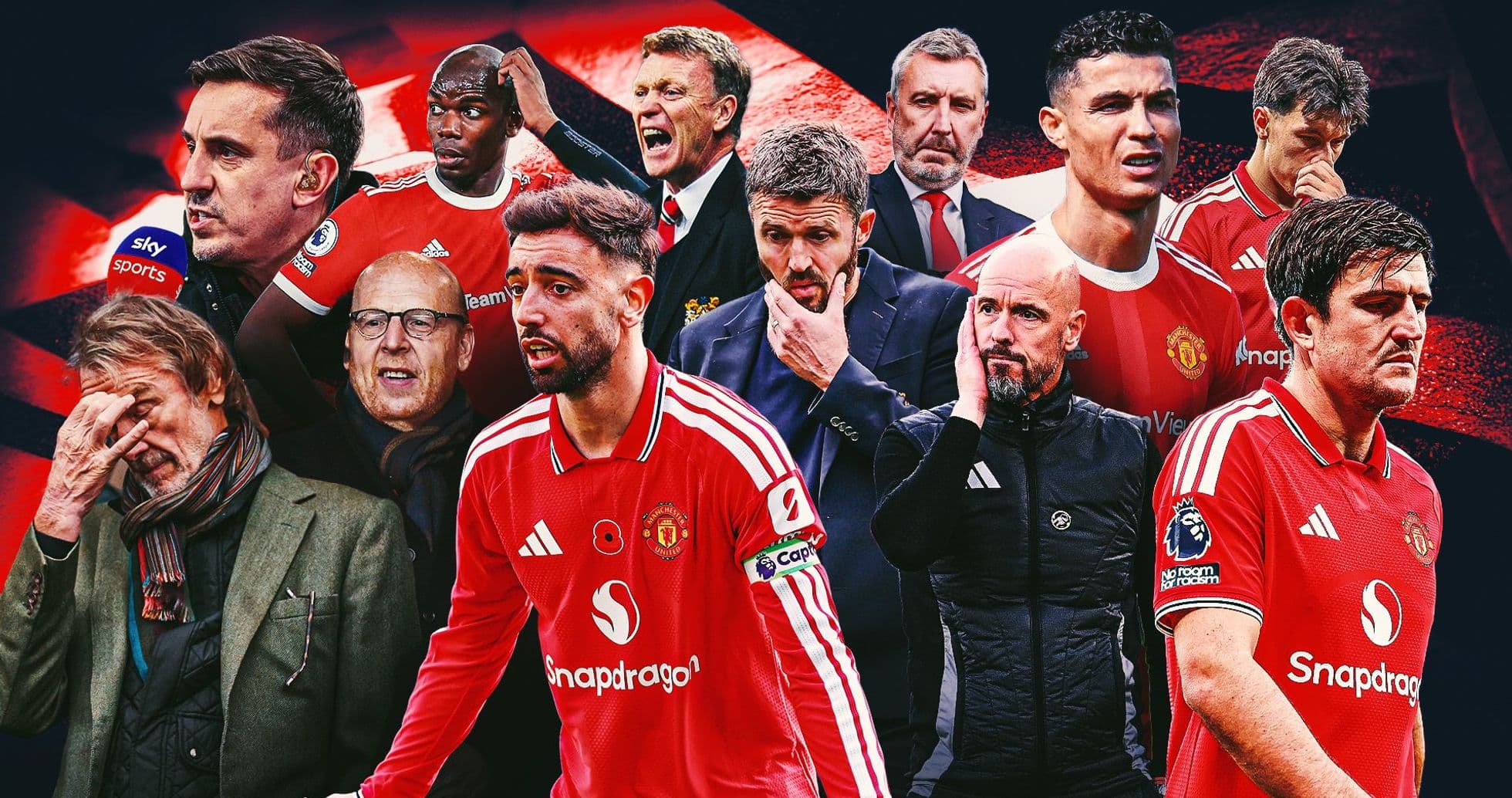
Who Is Truly Responsible for Manchester United's Decline?
Manchester United faces a real threat of relegation for the first time in decades. While Manchester City might only drop due to financial punishments, United's poor performance puts them perilously close to the bottom three in the Premier League. After just one win in their opening nine league games this season, the Red Devils are barely above the relegation zone on goal difference.
The team's recent form is grim: six losses, three draws, 18 goals conceded, and only six scored in their last nine matches across all competitions. The downward spiral feels like it could persist until the end of the year. Another managerial change seems inevitable, but with the deep-rooted problems, any improvement might be short-lived. Once aiming for a Premier League title by 2028 to celebrate their 150th anniversary, the club now fights simply to survive.
How Did It Come to This?
The origins of United's decline trace back to 2003 when Malcolm Glazer quietly began acquiring shares. By capitalizing on tensions between Sir Alex Ferguson and the club's previous owners, Glazer eventually secured nearly full control through a leveraged buyout in 2005, saddling the club with heavy debt for the first time in over 70 years. This move sparked protests among fans, including the creation of FC United of Manchester.
Despite winning multiple trophies between 2006 and 2009, the club's debt grew to £716 million under the Glazers, fueling ongoing fan unrest. Ferguson managed to shield the team from ownership issues, famously defending the Glazers even as spending power diminished.
Leadership Changes Mark the Downturn
The departure of Ferguson and CEO David Gill in 2013 left a vacuum at Old Trafford. Their timing coincided with the Glazers shifting power towards executives like Ed Woodward, who prioritized commercial interests. Ferguson's successor, David Moyes, lacked experience and struggled to maintain standards, leading to United's worst Premier League finish at seventh place.
Louis van Gaal and Jose Mourinho followed, each with mixed success but failing to restore United's dominance. Mourinho won some trophies but ultimately clashed with players. Ole Gunnar Solskjaer, a beloved former player, briefly lifted spirits but failed to secure silverware before being replaced by Ralf Rangnick and then Erik ten Hag.
Ten Hag spent heavily—£617 million—on transfers but saw the club slide to 14th place before his dismissal. Ruben Amorim had little time to fix things before being let go, and Michael Carrick now holds the managerial reins amid ongoing turmoil.
Poor Recruitment Worsened Problems
Since Ferguson's retirement, United have spent over £2 billion on players but achieved few successes. Of 78 new signings, only Bruno Fernandes and Zlatan Ibrahimovic stand out as clear successes.
- Van Gaal signed Angel Di Maria, Memphis Depay, and Morgan Schneiderlin for £110m combined.
- Mourinho re-signed Paul Pogba for £89m and spent around £100m on Romelu Lukaku and Henrikh Mkhitaryan.
- Solskjaer brought in Jadon Sancho, Donny van de Beek, and Aaron Wan-Bissaka, costing roughly £150m.
- Ten Hag signed Antony, Lisandro Martinez, Andre Onana, Mason Mount, Rasmus Hojlund, Manuel Ugarte, and Joshua Zirkzee, many of whom failed to make a lasting impact.
Amorim's transfers showed more promise with players like Bryan Mbeumo and Senne Lammens, though he was hindered by limited authority. Recent signings seem to be club decisions rather than those of the manager, a problem absent during Ferguson’s era.
Boardroom Missteps
Ed Woodward’s tenure prioritized marketing over football needs, offering large contracts to underperforming stars while hampering squad balance. His involvement in the failed European Super League plan hastened his exit.
John Murtough, succeeding Woodward as football director, repeated similar mistakes by overspending on players like Antony and Rasmus Hojlund and offering hefty wages to aging stars like Casemiro.
CEO Richard Arnold’s leadership saw poor handling of sensitive issues such as Mason Greenwood's reintegration and Cristiano Ronaldo's turbulent return, damaging the club’s reputation and internal cohesion.
Recent Ownership and Operational Issues
After a strategic review, INEOS, led by Sir Jim Ratcliffe, acquired a 27% stake and operational control in 2023. Despite promises to revamp the club’s sporting structure, INEOS’s stewardship has coincided with further decline. The decision to extend Ten Hag’s contract before sacking him shortly after reflected chaotic planning. Amorim’s brief tenure ended prematurely, and Carrick’s promotion seemed more reactive than strategic.
The club’s transfer plans remain flawed, neglecting critical areas like defense, contributing to the current relegation threat.
Ratcliffe’s cost-cutting measures, including staff layoffs and slashing ambassador salaries, have angered fans. Supporters staged protests demanding the Glazers and INEOS sell the club. Ratcliffe himself admitted to receiving significant backlash and hinted he may not stay long.
Calls for Change Grow Louder
Former captain Gary Neville has become a prominent voice urging the Glazer family to sell immediately. He highlights the £1.2 billion debt burden and points out that despite heavy spending, the club has failed to build sustainably. Neville criticized plans for a new £2 billion stadium without clear funding and described the current management approach as a failure to take responsibility.
"They have to sell now, enough is enough," Neville said. "The fans have had enough. They have to go now."
Although INEOS might increase its stake or buy out the Glazers by 2029, fans want quicker action. The club’s future looks bleak until the ownership changes and direction improves. The absence of engaged, passionate leadership has drained the club’s spirit, leaving it at a crossroads.





