Wu Bin: The 89-Year-Old Wushu Legend Still Running Strong
At 89, most people slow down. Wu Bin laces up his boots.
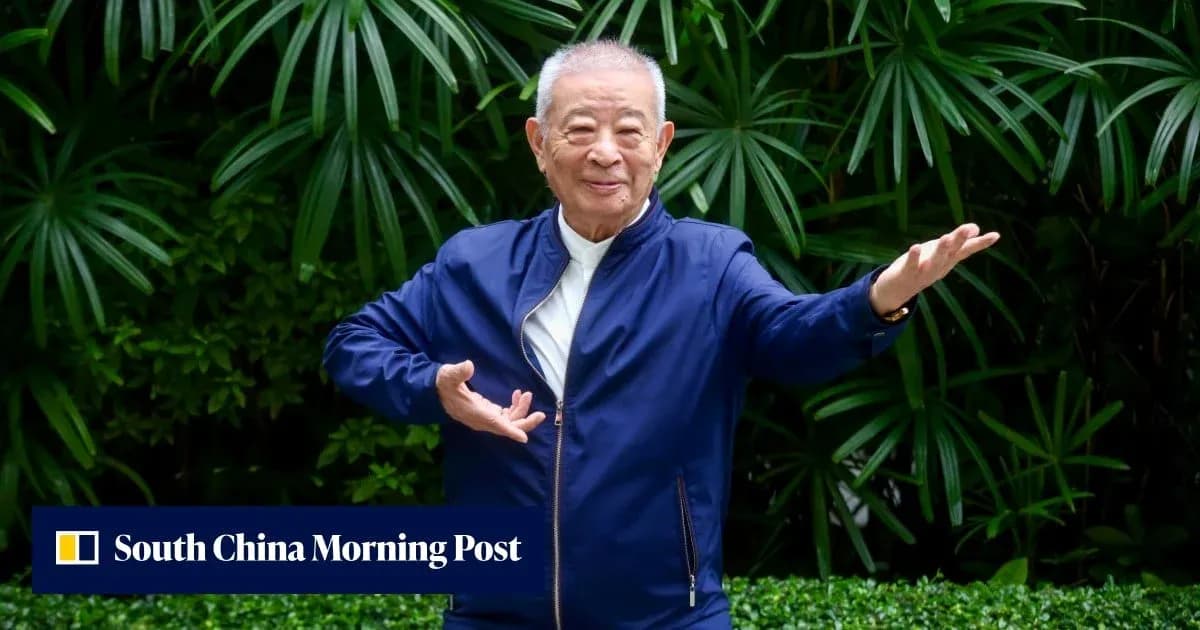
He still runs. He still plays football. He still walks into a wushu arena with the sharpness that once helped change the course of modern Chinese martial arts. No glasses. No hearing aids. Just the same hard edges of discipline that shaped a young boy named Jet Li more than half a century ago.
Wu is living proof of what a lifetime of habits can do to a body and a mind. Not the glamorous, overnight kind, but the kind forged in repetition: early mornings, endless drills, no shortcuts. Those routines built champions. They also built an old man who moves like he has no time to waste.
At the recent 18th Hong Kong International Wushu Competition, Wu was not a ceremonial guest parked in the front row. He presided. He watched. He judged. He travelled there, as he still does across regions and countries, to stay close to the sport he helped drag into the modern era.
On the mats below him, another thread in his story unfolded. Dragon He, son of Jaden He Jingde – one of Wu’s former students – stepped up to compete. Three generations, one coaching lineage. The boy’s performance was more than a routine; it was a reminder that Wu’s influence no longer stops with the athletes he once drilled, but now runs through their children as well.
This is the reach of a man who helped turn wushu from a traditional practice into an elite, structured sport. As a founder of the Beijing Wushu Team, Wu stood at the centre of that transformation. He demanded precision. He demanded athleticism. He demanded that an ancient art be treated with the same seriousness as any world-class discipline.
His greatest discovery arrived in 1971, in the form of an eight-year-old with quick feet and a fierce focus. Wu saw something in Jet Li that others had not yet named. Under his guidance, that boy climbed podiums, mastering the demanding forms and explosive movements that define top-level wushu. Those victories would push Li beyond the sport itself, onto cinema screens and into global stardom, carrying Chinese martial arts with him.
Wu did not chase the spotlight with him. He stayed where he always felt most useful: at the edge of the training floor, eyes narrowed, searching for the next spark of potential. That instinct has not faded with age. It has simply widened.
Now, instead of settling into retirement, he boards planes. He turns up at competitions. He speaks to coaches and young athletes who know his name more as legend than memory. He encourages, corrects, and reminds them that wushu is not just performance – it is a way of living that, if done right, carries you well into old age.
His message is simple, and he embodies it with every stride on his daily runs and every kick of a football: build the right habits early, and they will carry you when the years stack up. Skip them, and no talent will save you.
Wu Bin’s career created champions and film icons. His life now poses a quieter, sharper question: in a sporting world obsessed with quick results and instant fame, who is still willing to train – and live – for the long run?