Alex de Minaur's Struggles at the US Open: A Day of Defeat
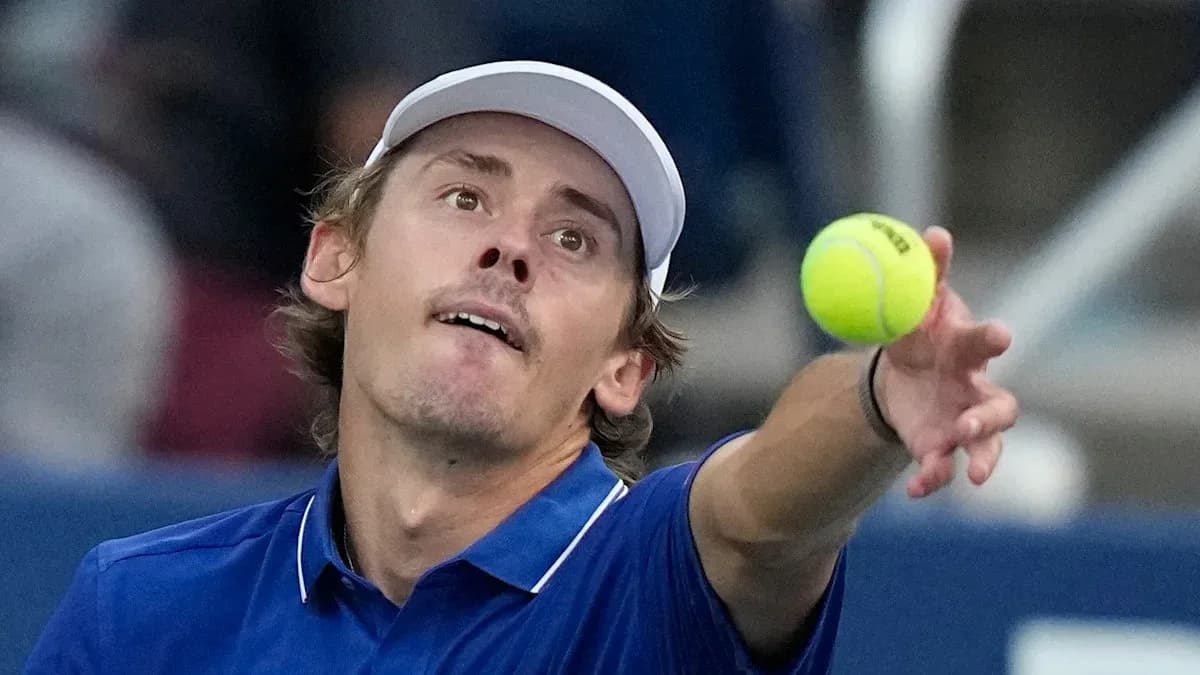
Alex de Minaur didn’t bother dressing it up. “My level today wasn’t good enough. It’s pretty straightforward.”
On a muggy New York afternoon, the Australian No.1 walked off Louis Armstrong Stadium with a 6-4, 7-5, 6-2 defeat to Botic van de Zandschulp and a look that said he already knew the questions coming. He’d beaten the Dutchman four times out of four before this. This time, he never really laid a glove on him.
The numbers told one story. The eyes told a harsher one. De Minaur was flat. Rusty. And for a player who lives off discipline and relentlessness, he was suddenly spraying balls like a man he doesn’t recognise.
A Day When the Forehand Deserted Him
He had backed up just a day after a delayed first-round win over Italian qualifier Andrea Guerrieri. The turnaround was tight, but he refused to lean on that. No talk of scheduling, no mention of fatigue. Just the blunt admission that the tools weren’t working.
“It was just one of those days where just the feeling of the ball on the strings wasn’t there,” he said.
The forehand, usually his metronome, went haywire. Straightforward winners dumped into the net. Others flew metres beyond the baseline. The more he tried to hit his way out of trouble, the deeper he sank.
“I was making a lot of errors, which is not really my normal game style,” he said. “It felt like the more I tried, the more intensity, the more fired up I was getting, I just kept on making unforced errors.
“When those sort of things happen and the odd chance that you have, he comes out with some good tennis – it’s just a recipe for a tough day at the office.”
Van de Zandschulp didn’t need to be spectacular. He just needed to be solid, to keep asking questions. De Minaur’s answers never came.
Calm Words, Heavy Context
For all the frustration, there was no meltdown in the press room. No sign of panic. Just a player trying to zoom out and see the bigger picture.
“Obviously would have loved to do better, as any competitor would, but it’s what happens in this sort of sport. Everyone loses matches,” he said.
“Everyone is losing matches that maybe they would love to have back. It’s one I would love to have back, but we move forward and it’s not the end of the world.”
The problem is that this isn’t an isolated bad day. It slots into a pattern that has been building all season.
After a seventh career grand slam quarterfinal at the Australian Open, de Minaur’s major results have drifted. Third round at Roland-Garros. Fourth round at Wimbledon. Now a second-round exit in New York. Away from the slams, early exits at ATP Tour events have piled up, sharpening the scrutiny on his long-standing setup.
The Coaching Question
When a top-five player in the world rankings – as de Minaur has become – starts to stall, the conversation inevitably swings to the coach’s box.
Adolfo Gutierrez has been in his corner for nearly two decades, since de Minaur moved to Spain as a nine-year-old. It’s one of the longest-running partnerships in the sport. It is also, increasingly, the subject of debate.
In commentary for Nine, Jelena Dokic admitted she wasn’t surprised people were questioning whether the pair should continue together, while also reminding viewers what Gutierrez has helped build.
“Only Alex knows what he needs … a lot of players will change coaches quickly, especially if they feel like the results are not there,” she said.
“That’s up to him to make those decisions and what he wants to do. Let’s not forget Adolfo has gotten him to such a high point in his career – to the top five in the world.”
That’s the tension. Gutierrez is both the architect of de Minaur’s rise and, in some eyes, a potential barrier to the next step. Any decision to split would be seismic, not cosmetic.
A Perfectionist Under Strain
The technical questions are only half the story. The mental load is starting to show.
Dokic pointed to de Minaur’s own personality as a factor in his current slump. After his Wimbledon exit, he looked close to tears as he wrestled with his form.
“We know his mindset, we know what a perfectionist he is. He wants to get to the top and maybe not doing that in the last two years has affected him,” she said.
“For him, wins have become almost a relief and not so much satisfaction and joy, and that’s hard. Losses have almost been end-of-the-world type things. He’s been really, really hard on himself. I think he has to give himself a bit more of a pat on the back and a bit more credit.
“Whatever he decides to do with coaching, the way that he goes about things and the mindset around it is going to have to change. It’s very hard to keep this up, to constantly expect from yourself to win. That’s been an issue for him.”
The warning is clear. When every match feels like a referendum on your worth, the sport stops being a challenge and starts feeling like a burden.
“When you’ve got the constant pressure of feeling like you want to win and get to the top, and maybe that’s not quite happening the way you want to, you can start to lose motivation, you can get really flat,” Dokic added.
“I think that that’s what’s happened – he’s lost a little bit of that mojo to be out there.”
Time to Rethink the Load
The schedule is another piece of the puzzle. De Minaur has worked his way into the elite by playing a high-energy, high-volume brand of tennis. That style demands a lot of the body and the mind, especially across a packed calendar.
Dokic suggested he may need to reassess how much he plays and where he spends his energy. Fewer events. More targeted peaks. A reset, not just in tactics, but in how he builds his year.
For now, the immediate reality is stark. De Minaur is out of the US Open before the first weekend, leaving Dane Sweeny – who stunned No.13 seed Lorenzo Musetti earlier in the day – as the last Australian standing in either singles draw.
On a day when his forehand deserted him and his usual grit couldn’t drag him into the fight, de Minaur’s words were simple. The questions around him are anything but.