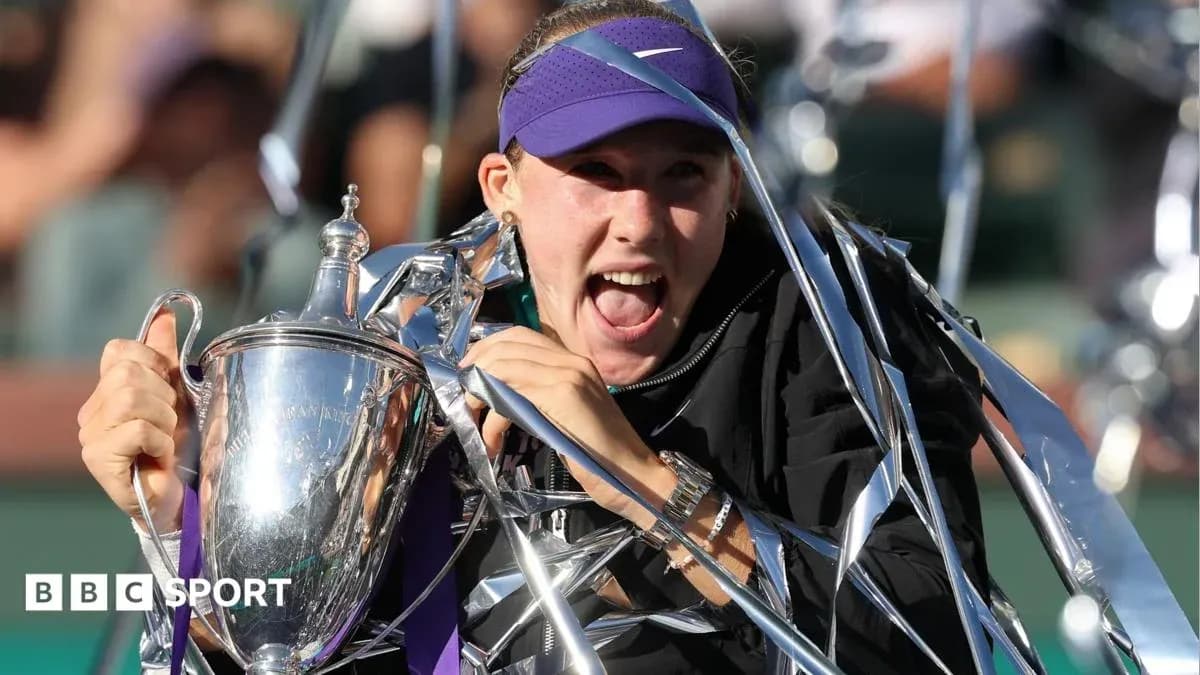
Mirra Andreeva: From Breakdown to WTA Finals Champion
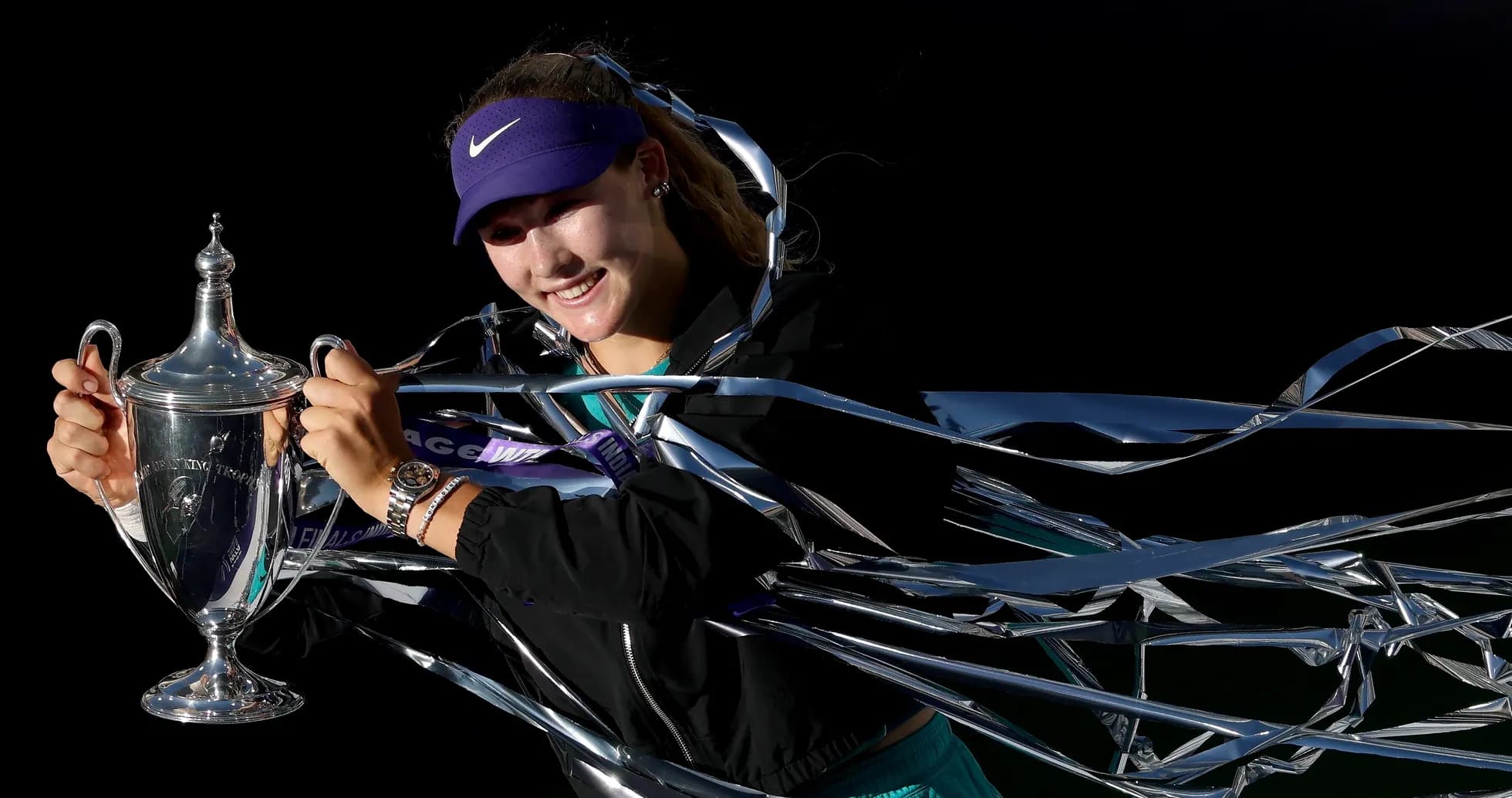
Mirra Andreeva arrived in the desert on the verge of tears. She left it with the biggest title of her career, a purple Mercedes, and the rest of the tour officially on notice.
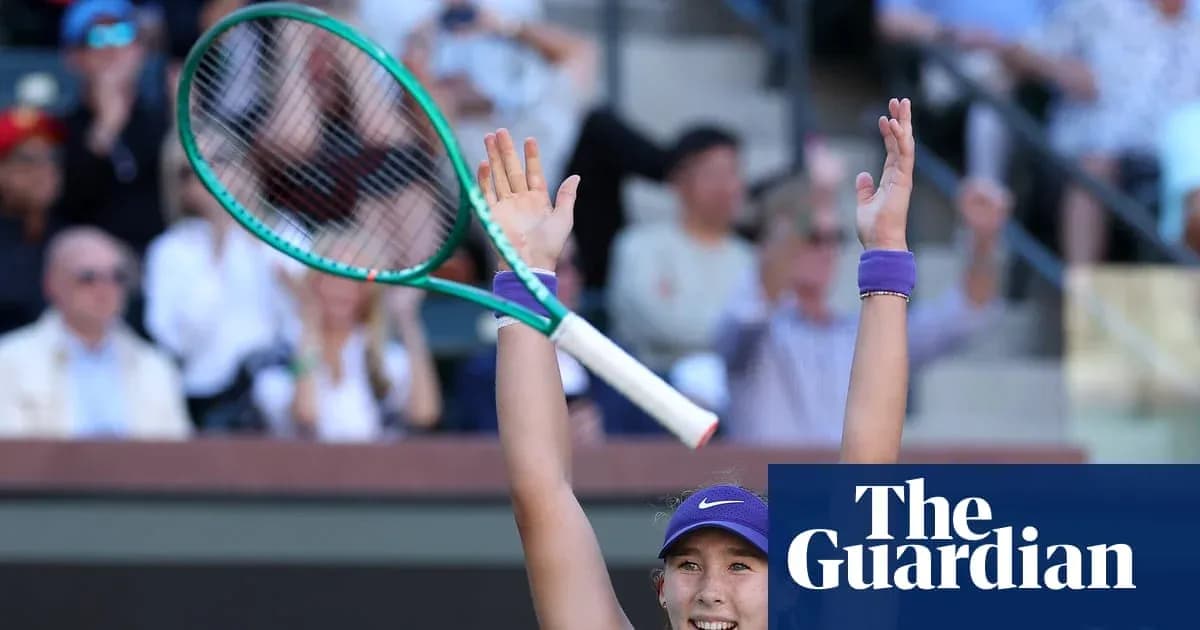
The 19-year-old Russian, who admitted to a “little breakdown” on the practice court before her WTA Finals debut, walked out of Indian Wells as the undisputed star of the week, beating Elina Svitolina 7-5 6-3 in a bruising final to become the youngest champion of the event in 22 years.
From breakdown to breakthrough
The numbers alone are ruthless. Andreeva did not drop a set all tournament. She lost just 26 games in five matches. She climbed to No. 2 in the world rankings and will start 2027 only 293 points behind Elena Rybakina.
But the story of the week was not just domination. It was control.
In March, on these same courts, she left in a storm of frustration, swearing at the Indian Wells crowd after an early defeat at the regular WTA event. Her talent was never in doubt; her temperament was. That version of Andreeva did not show up this time.
Instead, the teenager who walked into the final against Svitolina — one of the tour’s great competitors — carried the look of someone who had decided she would bend the match to her will, no matter how long it took.
It needed patience. And stubbornness.
Wrestling with Svitolina
Three times across the two sets, Andreeva earned a break. Three times, Svitolina dragged her back. Lesser players tighten in those moments; Andreeva sharpened.
Each time she lost the lead, she reset quickly, leaned into her backhand, and went after the ball with more intent. The rally patterns changed. The court opened up. The pressure shifted straight back onto the Ukrainian.
The defining passage came early in the second set. Serving with a break in hand, Andreeva got dragged into a nine-minute war of a game and was finally broken. She did not sulk. She marched to her chair, eyes fixed, towel over her head for a moment, then came out and broke Svitolina from 40-0 down in the very next game.
That was the match right there: a teenager refusing to let momentum slip away.
Her serve misfired at times, but her resolve did not. Andreeva saved nine of the 12 break points she faced and finished with 19 winners to Svitolina’s 10, constantly asking the questions, constantly taking the ball on when it mattered.
“This fighting mindset helped me to get more brave and aggressive in the important moments,” she told Sky Sports afterwards. It showed.
A different Mirra
What stood out most across the week was how little drama came from her side of the net.
The player who once struggled to contain her emotions now stalked the baseline with a calm that felt almost new. No wild rants. No lingering on mistakes. Just a relentless, slightly icy focus that will worry plenty of locker rooms next season.
Her team has clearly played a part in that evolution. As the final ball flew long from Svitolina’s racquet, Andreeva raised her arms, then sprinted to her box, where 1994 Wimbledon champion Conchita Martinez waited among the celebrations.
“I am super thankful to my team for pushing me to my limits, for forcing me to do stuff when I don't want to do anything,” Andreeva said on court. “Thanks for fighting with me, thanks for forcing me to do everything that I have to do and not asking any questions!”
There was gratitude, but also steel. This is a player who knows exactly how hard she has worked to get here — and wants everyone else to know it too.
Taking on the elite – and beating them
Coming into the WTA Finals, Andreeva had won just one of her six matches against top-10 opponents in 2026. That record now looks like ancient history.
In Indian Wells, she took out three top-10 players on her way to the title, including a ruthless dismantling of four-time major champion Aryna Sabalenka on Wednesday that sent a shiver through the draw. This was not a teenager sneaking through soft sections. This was a teenager walking straight through the front door of the elite.
Off the court, she handled distractions with a light touch as well. When private comments from Jessica Pegula to her coach — including calling Andreeva a “diva” — were accidentally live-streamed before the tournament, the incident could have lingered. Andreeva laughed it off and went back to work. The best response came on the scoreboard.
And when it was all over, she returned to a now-familiar line.
Just as she did after winning the French Open, Andreeva closed her speech by thanking herself, borrowing and reshaping the famous Snoop Dogg quote.
“I want to thank myself for always doing the hard work and for never quitting,” she said. “For not taking the days off, for working every day and committing to what I have to do – just thanks to myself.”
A champion who owns her story
Alongside the trophy and the £2.55m prize money, Andreeva collected a custom purple Mercedes, joking that she was happy to stay a “passenger princess” until she finally passes her driving test. The line drew laughs, but the underlying message of her week was far more serious.
This is no longer just a precocious talent with flashes of brilliance and flashes of temper. This is a major champion, a WTA Finals champion, and now the closest challenger to Rybakina at the top of the rankings.
A few days ago, the thought of losing even a group-stage match here had her in tears on the practice court. She walked away with the title instead.
If this is how she plays under that kind of pressure at 19, what happens when she grows into the role of favourite every single week?