Alex Eala: Rising Star of Tennis and Future Market Phenomenon
The packed bleachers tell the story before a ball is struck.
On an outer practice court at the U.S. Open, where stars usually slip in and out in front of a few dozen onlookers, Alex Eala is working through a routine hit — and it looks nothing like routine. Filipino flags ripple in the August heat. Kids press against the railings. Every finished drill draws applause. It feels like a match day.
For a 21-year-old whose global breakthrough is still being written, the scene is startling. For Max Eisenbud, it’s simple confirmation.
The head of client representation at WME Sports and IMG Tennis believes this is only the beginning. He told Forbes he feels “very confident” that by 2027, Eala will be the second-highest-paid female athlete in the world, behind only Coco Gauff. That’s not a throwaway line from a minor agent. Eisenbud has helped shape the commercial empires of Gauff, Maria Sharapova and Emma Raducanu. He knows what a market phenomenon looks like.
And he’s treating Eala as the next one.
A Seven-Figure Rise
The numbers already have real weight. Forbes estimates Eala has earned more than $5 million off the court over the past 12 months, before taxes and management fees, on top of $1.7 million in 2026 prize money.
This isn’t a sudden gold rush. It’s the payoff from a portfolio built patiently and now exploding in value.
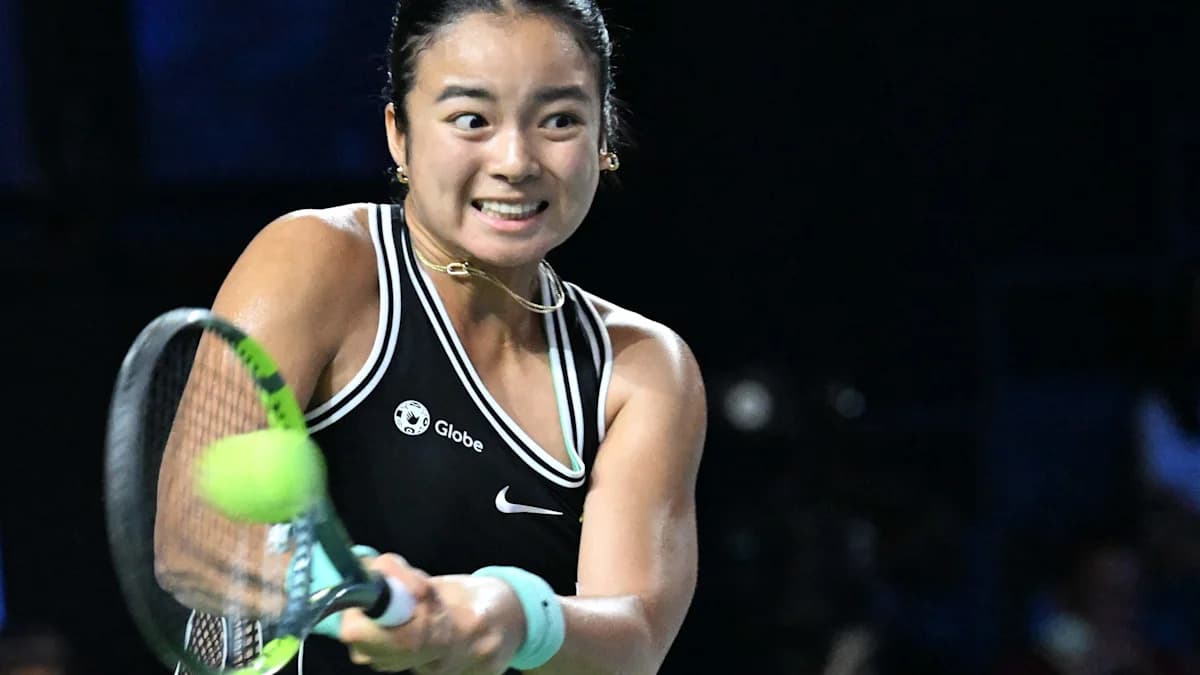
Globe Telecom spotted her first, signing her as an ambassador when she was just 8. Babolat backed her through her junior years. Nike came calling in 2019, Bank of the Philippine Islands in 2022. Locally joined in 2025, Milo in February 2026. What began as a promising junior with a few regional deals has turned into a global property with a waiting list.
Nike has leaned hard into her roots, rolling out sampaguita-inspired merchandise and apparel that speaks directly to Filipino fans and, crucially, travels well beyond them. The branding isn’t generic. It’s specific, cultural, and increasingly visible.
The clearest signal of her new commercial tier sits in a tiny space on her kit: the patch.
Globe and BPI have both signed fresh four-year agreements starting in 2026, each guaranteeing more than $1 million annually just to put their logos on her Nike outfit. Eisenbud told Forbes that seven figures is now essentially the starting price for brands that want in.
The sticker shock is deliberate. It’s the cost of access to a fanbase that moves.
New York Takes Notice
The U.S. Open has seen young stars arrive with buzz before. It has not often seen practice sessions turn into de facto national gatherings.
During Fan Week, Eala’s hits drew some of the largest crowds on site, waves of Filipino supporters packing into the stands, chanting, taking over walkways and concourses. What should have been a quiet tune-up became one of the week’s main attractions.
Then came the Stars of the Open exhibition at Arthur Ashe Stadium. Eala stepped onto the sport’s biggest stage opposite American prospect Iva Jovic and, again, the crowd crackled. For a player still in the early chapters of her main-draw Grand Slam career, this was unusual territory.
The tournament paid attention.
Her opening-round match against American qualifier Mary Stoiana has been slotted into Louis Armstrong Stadium, the second-largest arena at the USTA Billie Jean King National Tennis Center. That’s not a courtesy; it’s a programming decision. Tournament director Eric Butorac has acknowledged that once organizers saw the reaction during Fan Week, they knew Eala needed a major court. Ticket prices quickly followed the demand curve upward.
For an athlete trying to convert national adoration into global stardom, this is the perfect laboratory: a massive market, a multicultural crowd and a primetime stage that rewards those who can command it.
Chasing Gauff, Carrying a Nation
The financial summit Eala is being pointed toward is steep. Forbes estimated that Gauff earned $25 million off the court in 2025. Freestyle skier Eileen Gu followed at $23 million, Chinese tennis star Qinwen Zheng at $21 million, with Aryna Sabalenka and Iga Swiatek each at an estimated $15 million.
Those are established names with Grand Slam trophies, Olympic medals or deep major résumés. Eala is not there yet.
What she does have is a ranking on the move and a story that sells. She is already up to No. 18 in the world after a season highlighted by her first WTA singles title in Washington, where she became the first Filipino to win a WTA Tour-level singles championship. That kind of milestone matters both in the locker room and in the boardroom.
But the ranking is only one column on the spreadsheet. The other is the audience.
Filipino fans have followed her from Washington to New York, filling practice courts, juicing exhibitions, and now helping push her U.S. Open debut onto Louis Armstrong. They are loud, organized and fiercely loyal, turning every appearance into a shared event. For brands, that’s gold. For tournaments, it’s a scheduling nudge. For Eisenbud, it’s a familiar pattern.
Former world No. 1 Andy Roddick told Forbes that Eala is bringing a massive new audience to tennis. Eisenbud has seen this kind of gravitational pull before around Sharapova, Gauff and Raducanu. This time, the epicenter is a country that has long adored the sport from a distance but never truly had a singles star at this level to rally around.
That’s what separates Eala. She isn’t just another talent from an established tennis nation. She is the face of a fanbase that feels newly invited into the main conversation.
The Next Step
Attention, though, only travels so far without results at the very top.
The commercial machine around Eala is already humming. The endorsements are stacked, the kit is sold, the patches are paid for. The next test is the one tennis always demands: Grand Slam consistency.
Deep runs in New York, Melbourne, Paris and London would harden Eisenbud’s bold prediction into something closer to inevitability. The sponsors are betting she can do it. The crowds in Queens already behave as if it’s a matter of time.
If Eala turns this noise into second-week appearances and, eventually, a serious tilt at the sport’s biggest titles, the packed practice courts of this U.S. Open will look like a prologue. Not just to a tennis career, but to a commercial empire that might soon sit just one rung below Coco Gauff — and carry an entire nation with it.