Alex Eala's Second Serve: Embracing the Joke with a Serious Twist
Alex Eala knows the joke. She just doesn’t love the punchline.
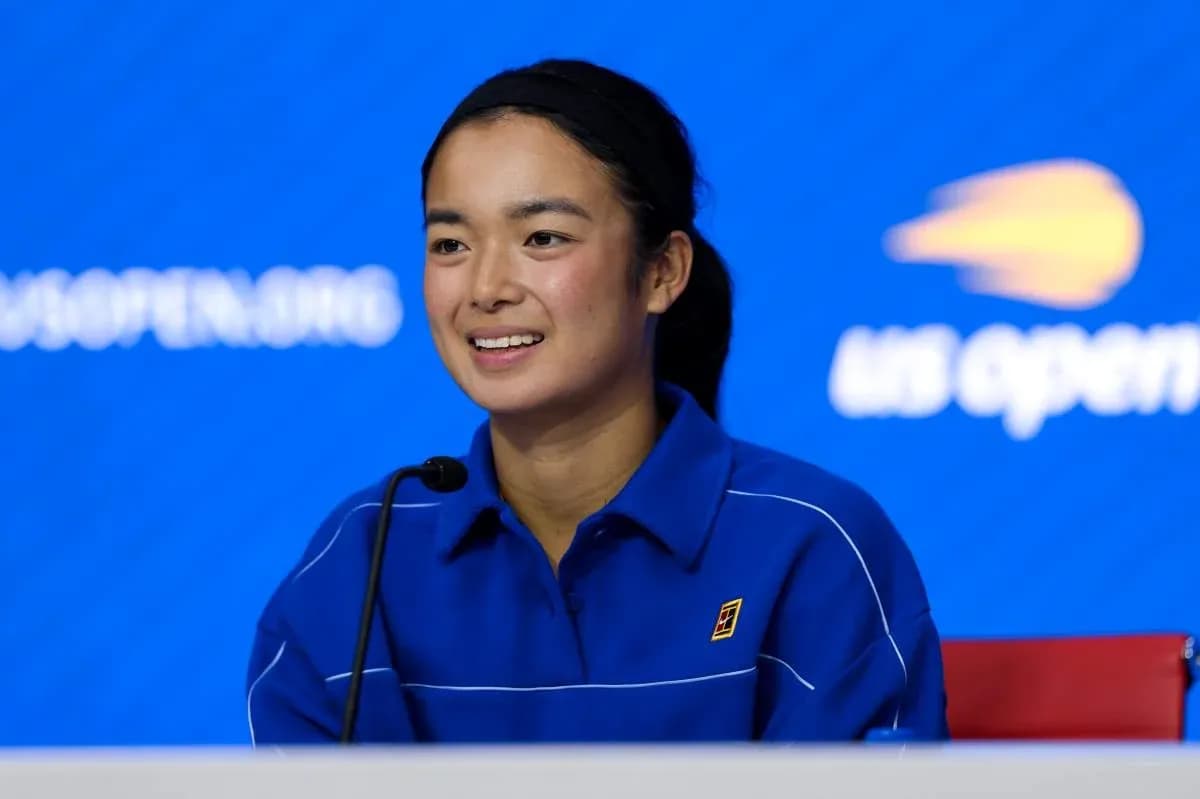
On US Open media day, the 19-year-old Filipino star was asked about the viral nickname for her second serve — “Fookelya” — a term lifted from Filipino gay slang, laced with vulgarity, and now splashed across social media and even T-shirts. Fans have turned it into a meme, a wink and a cheer rolled into one. Eala, smiling but clearly weighing her words, made it plain: she understands the humor, but she doesn’t quite embrace the label.
“Hindi siya masyadong positibong salita ’yon,” she said, acknowledging that the word itself isn’t exactly flattering. When a Filipino reporter explained that supporters were trying to reclaim what many see as a weakness and rebrand it as a secret weapon, she softened, but only slightly. “Hindi ko alam kung ano ’yung pakiramdam ko sa salitang ’yon kasi it’s not a very positive term,” she added.
She switched to English to make the emotional stakes clear. The serve, she explained, has been one of the toughest parts of her development. She has spent years grinding at it, reshaping it, defending it.
“And I love my serve,” she said.
A Meme Jumps the Fence
What began as a local in-joke among Filipino fans has broken into the global tennis conversation. “Fookelya” no longer lives only in comment sections and group chats.
Broadcaster Blair Henley brought it to a wider audience on the Love All Podcast, describing Eala’s second delivery as unconventional but effective. The nickname itself never needed Henley’s endorsement; the serve did. Henley’s point was simple and sharp: “It doesn’t have to look like Serena Williams’ serve to be effective.”
That line captured the essence of Eala’s evolution. Her second serve doesn’t thunder. It disorients.
The nickname’s rise gave Eala a chance to address it on her own terms. She didn’t scold her fans. She didn’t accuse them of disrespect. She recognized the affection behind the joke, even as she pushed back against the word.
“I think I would appreciate a more positive term,” she said. “But I don’t think they mean it in a bad way.”
Her coach, Joan Bosch of the Rafa Nadal Academy, has tried to reframe the relationship between Eala and that much-scrutinized delivery. He tells her to treat it like a younger brother — fragile, unpredictable, in need of patience and protection. She is the “ate,” the older sister who looks out for it.
“Like my coach says, it’s like my little brother,” Eala said. “Parang ate ako sa serve ko.”
That metaphor cuts straight to why the nickname stings. To fans, the serve is a meme. To Eala, it’s family. You can tease it, but you don’t turn it into a punchline.
Why a Slower Serve Baffles the Best
The conversation around her delivery didn’t grow just because of a clever nickname. It exploded because that same “little brother” has been messing with some of the best returners in the world.
Before facing Eala in the Washington final, Jessica Pegula reportedly asked a practice partner to dial down his serve. She wanted to simulate Eala’s slower pace, knowing that players who feast on power often struggle when they suddenly have to generate their own.
Iga Swiatek ran into the same problem at Wimbledon. During her loss to Eala, Swiatek noted that the Filipino began serving “slower and slower,” dragging her out of the usual rhythm built against heavier, more predictable deliveries.
Then came Andy Roddick’s analysis. The former world No. 1, owner of one of the biggest serves the sport has seen, explained why Eala can “get away” with something that looks, on paper, like a liability.
Her serve doesn’t need to end the point. It just has to start a messy one.
If the returner misjudges the timing or fails to strike cleanly, Eala pounces. Her first groundstroke is where she does the real damage, stepping inside the baseline and redirecting the ball with pace and early contact. The serve sets the trap; the forehand and backhand spring it.
Not everyone is satisfied. Renowned coach Rick Macci, who helped shape the games of Serena and Venus Williams, looked at the same delivery and saw a ceiling. Ahead of Eala’s US Open opener, he praised her movement and aggressive ball-striking but wrote that her serve “biomechanically has to be rewired” for her to reach another level.
Macci also warned of something less technical and more emotional: nerves. He predicted that the swelling support around her would create an “Eala Earthquake” in her first-round match, shaking the young star as much as it lifts her.
Roddick and Macci aren’t arguing. They’re looking at different points on the same line. One sees why it works today. The other sees what it could become if the mechanics finally match the ambition.
New York’s Spotlight, Old Question
Eala arrives in New York with the highest ranking of her career, up to No. 18 in the world and seeded 17th in the women’s singles draw. She opens against American qualifier Mary Stoiana, a familiar opponent she beat 7-5, 6-2 at the W100 event in Landisville, Pennsylvania, earlier this year.
This time, every delivery will be dissected — speed, placement, shape, and that unusual, rhythm-breaking tempo that has already rattled champions. Cameras will linger on her toss. Analysts will freeze-frame her motion. Fans will wait for the slower second serve, half in suspense, half in on the joke.
The nickname will almost certainly follow her through the gates at Flushing Meadows. It’s too catchy, too controversial, too perfectly internet-ready to disappear now.
Eala isn’t asking for silence. She isn’t asking her supporters to stop celebrating the shot that has become both her riddle and her refuge. She is asking for something subtler, and harder: respect for the work behind the meme.
She wants the “little brother” of her game to carry a name that sounds less like a sneer and more like what it actually is — a flawed, evolving weapon she has chosen to love.