Alexander Zverev: From Prodigy to Established Force in Tennis
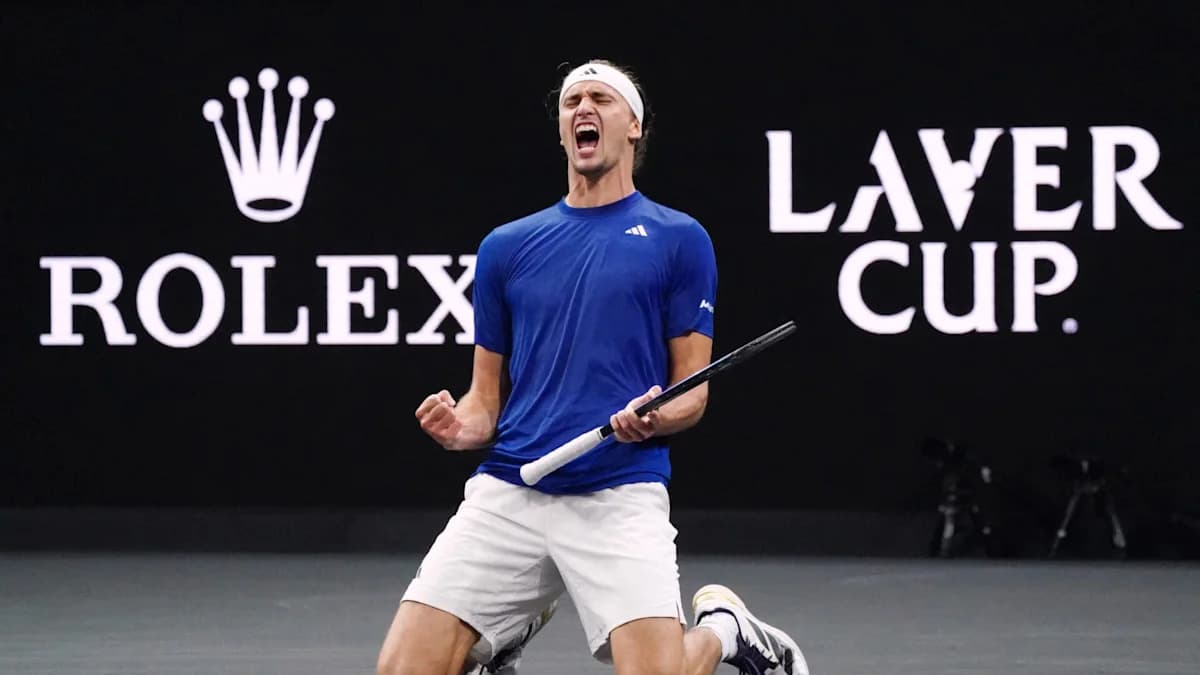
Alexander Zverev spent more than a decade being talked about in the future tense. On Sunday in New York, that finally ended.
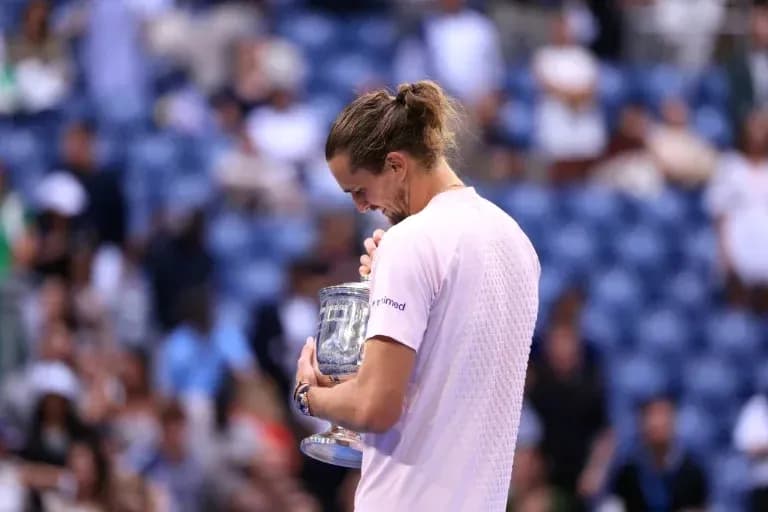
With his US Open triumph over rising American Ben Shelton, the 29-year-old German claimed a second Grand Slam title in less than four months and turned a career of promise, pain and polarisation into something harder to dismiss: a résumé that belongs alongside the sport’s elite.
This is no longer a story about what he might become. It’s about what he is.
From prodigy to proof
The signs were there from the start. Zverev grew up in a tennis household, his parents both high-level players in the former Soviet Union, his older brother Mischa a professional on tour. The younger Zverev shot up to 6-foot-6 (1.98m), armed with a huge serve and easy power from the baseline, the kind of package that screams inevitability in junior tennis.
He idolized Roger Federer, chased the same stages, carried the same expectation that the biggest titles would eventually follow. For years, they didn’t.
The first big chance came in New York in 2020. Zverev led Dominic Thiem by two sets in the US Open final, then watched the match slip away in five. His serve, the supposed bedrock of his game, betrayed him.
"That was exactly the time when I had real struggles with my serve and my second serve," he reflected later. "I knew that my serve could break down at any moment. That's one difference that I do feel now, luckily for me."
The scar tissue from that night never really left. It just had to be worked through.
Injury, doubt and the long climb back
The momentum he built in the early 2020s crashed brutally at Roland Garros in 2022. Locked in a punishing semi-final with Rafael Nadal, Zverev crumpled on the clay, his ankle ligaments torn. The images of him leaving Court Philippe-Chatrier on crutches felt like a career detour at best, a career threat at worst.
Surgery followed. Rehabilitation followed. Questions followed.
He lives with diabetes, a daily battle layered on top of the demands of the tour. By the time he returned in January 2023, the conversation had shifted. Was he mentally fragile? Would his body hold up? Would that US Open final be his one great chance?
He answered some of that quickly, winning a 20th career title in Hamburg. The fuller response came in 2024, when he powered to the French Open final and rose to world number two, dragging his name back into the centre of the sport’s biggest debates.
"In the life of a professional athlete, you will have the highest highs and the lowest lows," Zverev said. "Getting caught up in the lows is the biggest mistake that you can make.
"You shouldn't try to evaluate everything when times are tough, you should try to find ways to get better when you're on a high."
That line would sound like a cliché if the lows weren’t so visible.
Success on court, controversy off it
Zverev’s career has never existed in a vacuum. Domestic violence allegations from two former partners, Olga Sharypova and Brenda Patea, have shadowed him for years. He has consistently and strenuously denied the accusations.
The ATP Tour investigated one claim and said it found insufficient evidence to punish him. In Germany, the case involving Patea — the mother of his daughter — led to a penalty order and fine in 2023. Zverev appealed. The legal battle ended in June 2024 with a settlement, reached just hours before he stepped on court for his French Open semi-final.
He has kept repeating one constant: family is central.
"For me, my family is everything and I owe them a lot for helping me to become the tennis player that I am today," he has said.
The split-screen has been unavoidable: a player chasing legacy on court, while scrutiny and legal processes played out off it.
Olympic gold, Slam heartbreak, and a new era
Even in the years when majors eluded him, Zverev kept stacking big results. The standout came at the Tokyo Olympics in 2021, where he stunned Novak Djokovic and then beat Karen Khachanov to win gold. It was a landmark victory, but not the one that defines eras in tennis.
The Grand Slam question refused to go away. Every deep run came with the same refrain: can he actually win one?
The doubts only grew as a new order took hold. Jannik Sinner and Carlos Alcaraz began to carve up the sport, winning nine straight majors between them and pushing Zverev’s quest into the background. He reached another final at the 2025 Australian Open, only to lose in straight sets to Sinner. Three Slam finals, three defeats.
At some point, the narrative around a player hardens. Nearly man. Nearly champion. Nearly great.
Zverev never bought it.
"I believed in it. I believed that it's possible," he told reporters in New York, adding with a laugh: "I think not many of you guys did."
The French Open title in June finally cracked that ceiling. It was the “happy end” he spoke about, the major he had chased since his teens. The US Open win, his third consecutive Grand Slam final and second major in four months, did more than add another trophy. It changed the scale of the conversation.
This is now a career with Olympic gold, multiple Slams, and a sustained presence at the top of the rankings. The mental frailty tag has lost its grip.
From future star to established force
For years, Zverev’s story was told in conditional verbs and hypothetical arcs. If he fixed his serve. If he stayed healthy. If he handled the pressure. If he could finally get over the line at a Slam.
Those questions haven’t all vanished, but the context has. He is no longer chasing his first. He is building on his second.
The men’s game still runs through Sinner and Alcaraz in many eyes, but Zverev has forced his way into that frame, not as a promise but as a proven threat. The floodgates, as this summer has shown, are open.
The next chapter is no longer about whether he belongs. It’s about how far, and how fast, he can push this late-blooming surge while the window is finally, decisively, his.