Alfie Hewett Denies Tokito Oda Grand Slam Glory
Alfie Hewett arrived in New York with scars. A brutal defeat at Wimbledon. A season owned by Tokito Oda. A narrative that said the Japanese teenager would complete a calendar Grand Slam and turn 2026 into a one-man era.
He left with something far heavier than a trophy case. He left with his identity back.
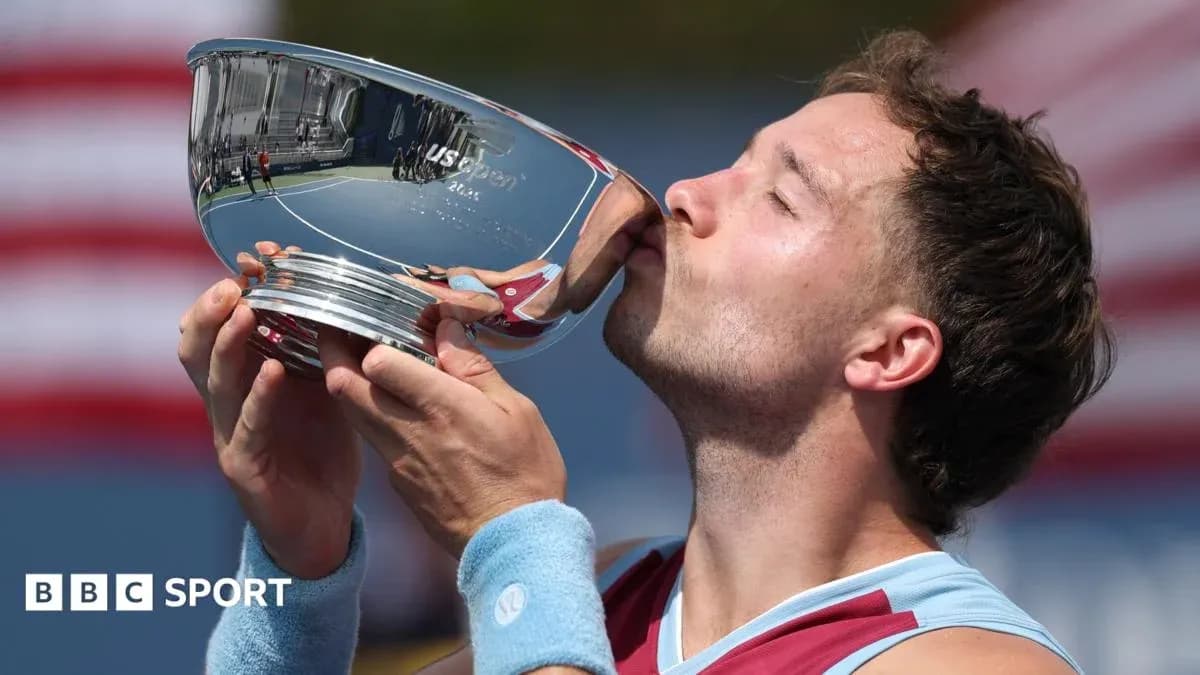
On Arthur Ashe, the 28-year-old Briton tore through the world number one 6-0 7-6 (7-5) to claim a fifth US Open men’s wheelchair singles title and stop Oda from completing a clean sweep of all four majors this year.
It was not just a win. It was a reclamation.
From “a shell of myself” to possessed
Hewett had been here before, but never like this. Oda had beaten him in the finals of the Australian Open, the French Open and Wimbledon this season. The last of those, a 6-1 6-1 hammering at SW19, left Hewett with only two games and a lot of questions.
That loss, he admitted to BBC Sport, forced him to “look in the mirror”. The reflection was uncomfortable.
He spoke of wanting to “be a little bit more like me” again, to rediscover the fearless competitor who had already collected 10 Grand Slam singles titles. At Wimbledon, he said, he had been quiet, timid, “a shell of myself”.
For six weeks he simmered. “Champing at the bit,” as he put it, to prove to himself that the real Alfie Hewett was still there.
New York felt him immediately.
After saving a break point in the opening game, Hewett flipped a tight start into a statement. He described that first set as “possessed” and it looked exactly that: aggressive returning, relentless depth, no hint of the passivity that had haunted him at SW19.
Games flew by. Oda, so often the one dictating, found himself smothered. Hewett sealed the bagel 6-0 with a ferocious backhand return winner, a shot that carried as much emotion as precision. This was not damage limitation. This was a man taking back control.
A champion’s response under fire
Oda, though, is not world number one by accident. The 20-year-old came into the final having won the past six Grand Slam singles titles, a run that had given him a shot at history: the calendar-year Grand Slam.
He steadied in the second set and began to look more like the player who has dominated the sport. The rallies lengthened, his weight of shot returned, and for the first time in the match Hewett looked under real pressure.
The scoreboard told the story. Oda surged into a double-break lead. The set seemed gone. The match looked destined for a decider, where the man chasing history might well have reasserted his authority.
Hewett refused to let it reach that point.
Point by point, he clawed his way back. He broke once, then again, dragging himself level. Oda still had his chances – three set points to force a third set – but each time Hewett found a way to shut the door.
The pressure finally told in the tie-break. Hewett, locked in and aggressive, edged ahead and held his nerve to close it out 7-5, completing a comeback that felt as psychological as it was tactical.
The roar at match point was not just about a fifth US Open crown. It sounded like release.
Oda’s dream denied, Hewett’s statement made
For Oda, the defeat cut deep. “Definitely I was trying to get the calendar year [Grand Slam] this year,” he said on court. “This was the last part of it so it’s really tough for me, but I think Alfie deserved it today.”
He was right. On the day, Hewett hit a level that matched the stakes. This was the same opponent who had dominated him at Wimbledon, the same player who had swept all three majors before New York. Yet on the biggest stage of the final Slam of the year, the balance of power flipped.
Hewett’s victory also capped a superb week in Queens. He had already lifted the doubles title on Friday alongside long-time partner and fellow Briton Gordon Reid, adding another chapter to one of the great partnerships in wheelchair tennis.
Singles, though, is where the inner battles live. This 11th Grand Slam singles title will stand apart for Hewett, not just because of the opponent or the occasion, but because of what it demanded of him after that humbling at SW19.
He wanted to be fearless again. Brave. Courageous in the big moments. In New York, he was all of that.
The calendar Grand Slam will have to wait for Oda. The era of one-man dominance will, too. With Hewett rediscovering his edge on the sport’s loudest stage, the next chapter of this rivalry suddenly looks far less predictable – and far more compelling.