Alfie Hewett Denies Tokito Oda Grand Slam Sweep at US Open
Alfie Hewett arrived in New York with scars. Two brutal defeats to Tokito Oda in major finals this year, including a humbling at Wimbledon where he managed just two games, had left the Briton questioning himself, his game, even his identity on court.
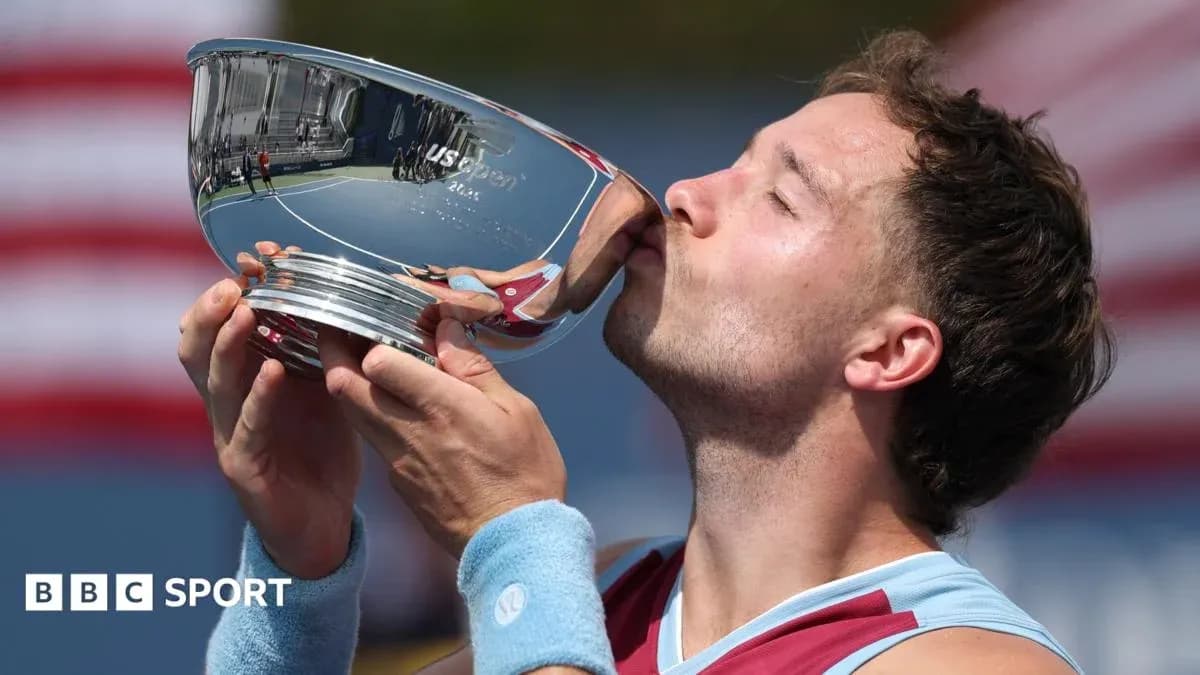
He walked out of Flushing Meadows on Sunday with something far more powerful: his fifth US Open men’s wheelchair singles crown and the most cathartic victory of his career.
The 28-year-old stunned top seed Oda 6-0 7-6 (7-5), not only reclaiming a title he has made his own, but shattering the Japanese star’s bid for a calendar-year Grand Slam and ending his run of six straight major singles trophies.
This was not just a win. It was a statement.
From “shell of myself” to possessed
Hewett had spoken openly about how that 6-1 6-1 loss to Oda at Wimbledon forced him into uncomfortable self-examination. He told BBC Sport that it made him “look in the mirror,” and what stared back was not the player he believed himself to be.
"I'm known for being just as fearless, brave and courageous in big moments and I felt I was everything but that in Wimbledon," he said. "I was quiet, I was timid, I was a shell of myself."
Those words lingered in the build-up to New York. Six weeks of frustration. Six weeks of replaying points in his head. Six weeks of, as he put it, “champing at the bit” to prove he could be himself again.
When the final began, that pent-up energy exploded.
Hewett saved a break point in the opening game and then tore through the first set with a level of aggression and clarity that left Oda reeling. He later described that spell as “possessed” – and it looked exactly that. Every rally carried intent, every swing had purpose.
He sealed the 6-0 opener with a vicious backhand return winner, a shot that felt like a line drawn under the Wimbledon trauma. This was not the tentative, uncertain Hewett of SW19. This was the version that has collected Grand Slams and terrified opponents for years.
Oda fights back, Hewett refuses to blink
Oda, chasing a clean sweep of the Australian Open, French Open, Wimbledon and US Open titles in 2026, had not lost a Grand Slam singles match in six tournaments. His composure has been a defining trait of his rise to the top of the sport.
So the response was inevitable.
The second set turned into the kind of battle that has so often gone Oda’s way. The Japanese star tightened up his game, found greater depth on his groundstrokes and began to drag Hewett into longer, more physical exchanges. The momentum shifted. The pressure grew.
Hewett fell a double break behind. The clean lines of that first set suddenly blurred. Oda, sensing the door had opened, pushed harder and earned three set points to drag the final into a decider.
This was the crossroads – the precise type of moment Hewett had lamented at Wimbledon, when he felt his courage had deserted him.
Not this time.
He clawed his way back from that double-break deficit, refused to yield on those three set points, and dragged the set into a tie-break through sheer force of will. The rallies crackled with tension. One misjudgment, one lapse, and the match could have flipped.
Instead, Hewett held his nerve. The tie-break was tight, nervy, but he played the bigger points with the conviction he had promised himself he would rediscover. At 7-5, as Oda’s final resistance broke, Hewett completed one of the most emotionally charged wins of his career.
A champion restored, a sweep denied
For Oda, the defeat cut deep. “Definitely I was trying to get the calendar year [Grand Slam] this year,” he said on court. “This was the last part of it so it's really tough for me, but I think Alfie deserved it today."
The respect between the two is clear, but so is the rivalry. Oda had beaten Hewett in the finals of the French Open and Wimbledon this season and began the year by lifting the Australian Open. He stood on the brink of a perfect Grand Slam year; Hewett knocked him off it.
The Briton’s victory also completes a superb New York double. On Friday, he teamed up with long-time partner Gordon Reid to win the doubles title. Two trophies in three days at Flushing Meadows, and an 11th Grand Slam singles title in total, underline his enduring presence at the top of the sport.
Yet this one feels different. Not because of the scoreline, but because of the journey that led to it – from being “a shell” of himself on Centre Court to playing like a man “possessed” in Arthur Ashe conditions.
Hewett didn’t just reclaim a title. He reclaimed himself.
And with Oda still at the peak of his powers, and the scars of this loss likely to sharpen his edge, the next chapter in their rivalry already looms over the sport: who bends first when everything is on the line again?