Anisimova Survives Tough Test Against Tagger in US Open
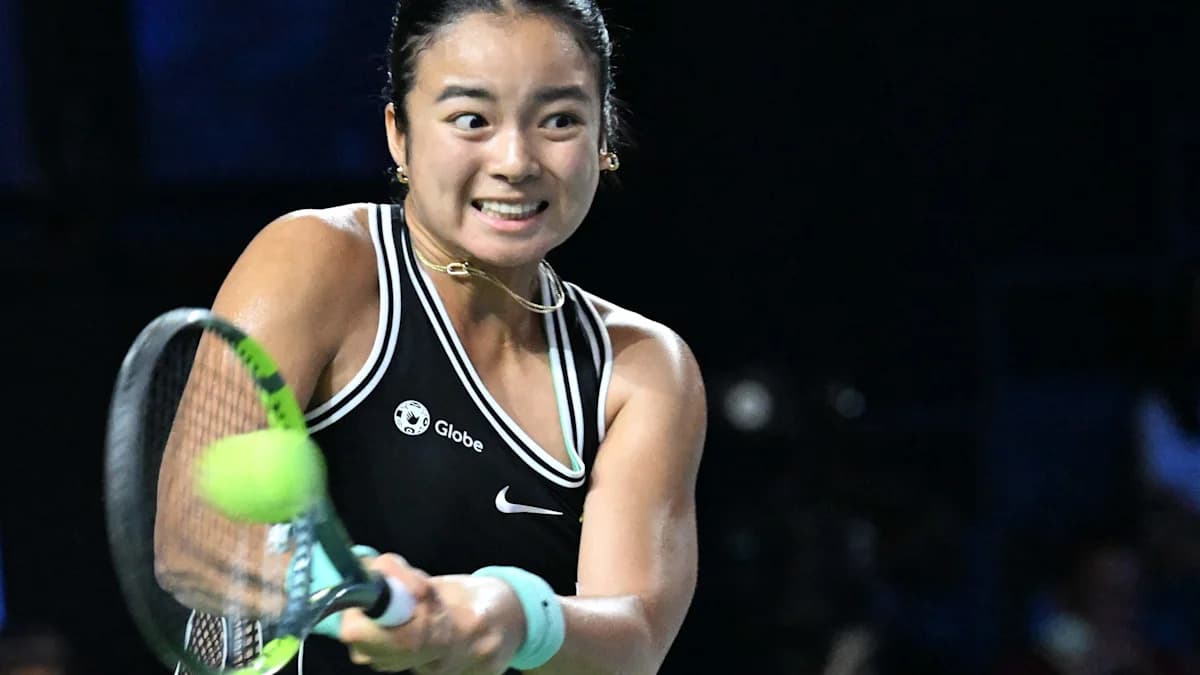
Amanda Anisimova walked off Grandstand with a reminder for the rest of the draw: she is not going anywhere quietly this fortnight. Stretched, jolted out of rhythm and briefly out-hit by 18-year-old debutant Lilli Tagger, last year’s beaten finalist dug in and came through 6-3, 3-6, 6-1 to reach the third round of the US Open.
It was not smooth. It was not straightforward. It was exactly the kind of match that hardens a contender.
Anisimova bent, then bit back
Anisimova, the No 10 seed and one of the pre-tournament favourites, looked in control early. Her weight of shot and depth gave her the first set 6-3, the American striking cleanly enough to justify those who see her as a genuine title threat.
Tagger, though, is no ordinary newcomer. The Austrian teenager, making her US Open debut, refused to be overawed. She broke Anisimova in the opening game of the second set, held her nerve, and flipped the tone of the afternoon. The rallies lengthened, the ball-striking sharpened, and Anisimova’s certainty wobbled just enough for Tagger to seize the set 6-3 and level the match.
For a few minutes, Grandstand felt the shift. A top seed, a teenager, a live upset brewing.
Then the response came.
Anisimova reset at the changeover and came out for the decider with a different edge. She broke immediately for 1-0, then backed it up, her forehand finally punching through Tagger’s resistance. At 3-0, she launched into one of the games of the day: more than nine minutes, six break points for Anisimova, bold defending from Tagger, and rallies of a quality that belied the occasion.
Tagger kept swatting away chances, even earning an advantage of her own. Anisimova’s answer was brutal – a confiscating forehand return that tore the point away and, with it, much of Tagger’s momentum.
The pressure finally told. Anisimova broke again for 4-0, “breaking the back of the match”, as it felt in real time, and from there she did not look back. The final set ran away from Tagger 6-1, the scoreline harsher than the contest but reflective of a top player finding her top gear when it mattered.
She will face Anastasia Potapova or Leolia Jeanjean in round three, and is seeded to meet Mirra Andreeva in a potential round-four blockbuster. If that happens, it will be one of the matches of the week.
Tagger, though, leaves a mark. At 18, with that composure and ball-striking, this will not be the last time her name appears on a big court in New York.
Keys walks the tightrope, then storms through
On Stadium 17, Madison Keys produced the kind of chaotic epic that has defined her grand slam career. The 22nd seed looked gone, then gone again, before detonating her forehand to escape 5-7, 6-4, 7-6(5) against Anna Bondar.
Keys dropped the first set 7-5, her game veering between unplayable and unravelled. In the decider she trailed 5-2, with Bondar twice serving for the match and holding five match points across those games. Each time, Keys swung, not steered.
Serving at 2-5, 15-40, she stared down two of those match points and simply unloaded, rifling forehand winners and backing them with an ace and a service winner. Bondar’s arm tightened; Keys’s didn’t. The American broke back for 3-5, then again to level at 5-5, as Bondar’s serve deserted her at the worst possible moments.
By the time the match tiebreak arrived, Stadium 17 was all in on “Oor Maddy”. Keys went down mini-break, hauled it back with a crunching return, then rattled through a run of ferocious forehands. From 5-5 in the breaker she surged to 9-5, turning defence into attack with that trademark power, and closed it out 10-5. Five match points saved, four of her own created, one of the gutsiest wins of the day secured.
Next up: Qinwen Zheng or Yulia Putintseva. If Keys keeps finding that forehand under pressure, nobody will relish that assignment.
Osaka survives the swings
On Arthur Ashe, Naomi Osaka delivered a familiar script with a slightly unfamiliar twist. The two-time US Open champion beat Katerina Siniakova 6-2, 5-7, 6-1, but turned what looked like a procession into a scrap before reasserting control.
Osaka dominated the opening set 6-2, her pace from the baseline too heavy for the doubles world No 1. She led 4-2 in the second, then 5-3, and served for the match. The finish line, though, has not always been her friend in recent seasons.
A flurry of breaks, a wobbly second serve and Siniakova’s refusal to go away dragged the set into chaos. Osaka’s ball toss faltered, her backhand misfired, and Siniakova snatched four straight games to steal the set 7-5 from 2-6, 3-5 down.
For a player still rebuilding confidence after her 2024 return from maternity leave, it was a dangerous moment. Osaka left the court between sets, came back, and did what champions do: she raised the level.
She held comfortably to start the third, broke for 2-0 with a gorgeous half-volleyed, wrong-footing lob from the back of the court, and this time did not loosen her grip. A superb all-court point at 30-all in the next game – retrieving a monster forehand, then finishing with a low volley – underlined her renewed intent. From 3-0, she surged to 5-1, broke again, and closed the match with the authority that had briefly deserted her.
It was not clean, but it was important. Osaka meets Elise Mertens next, and while a run to the final still feels a stretch, the hard-court pedigree is unmistakable when her timing returns.
Khachanov crushes a wounded No 3 seed
On Louis Armstrong, a different kind of story unfolded. Felix Auger-Aliassime, the No 3 seed and twice a US Open semi-finalist, walked into a heavyweight second-round test against Karen Khachanov and never truly found his body, let alone his best tennis.
Auger-Aliassime edged a tight first set in a tiebreak, 7-6(3), finishing with a huge cross-court forehand and a smothered overhead that evoked a Pete Sampras highlight reel. At that point, it looked like the kind of statement set a top-three seed uses as a platform.
Then his level fell off a cliff.
Khachanov, a former US Open semi-finalist himself, steadied, simplified, and went to work. He took the second set 6-3, then ran away with the third and fourth by identical 6-2 scorelines, breaking early and repeatedly as Auger-Aliassime’s movement and intensity drained away.
The Canadian appeared to be carrying a foot problem, struggling to push off and compete properly in the longer rallies. He managed to cling on for a hold at 2-5 in the third, but Khachanov was relentless, keeping the ball deep, asking questions, and letting Felix’s body answer them with a grimace.
By the time Khachanov closed it out – 6-7(5), 6-3, 6-2, 6-2 – the upset barely felt like one. The Russian meets Benjamin Bonzi or Ignacio Buse next, while Auger-Aliassime leaves New York with more questions about his ceiling at the majors. His serve and backhand, so often the foundations of his game, do not look markedly sharper than they did several years ago. For a No 3 seed in his best slam, that is a problem.
Swiatek cruises, Bouzkova ruthless, Dart outclassed
On Grandstand, Iga Swiatek delivered the kind of clinical performance that used to feel routine and this season has sometimes looked distant. The 2022 champion beat Nadia Podoroska 6-3, 6-2, moving into the third round without dropping serve all tournament.
Swiatek started with three holds to love, then tightened the screws. She served out the first set at 5-3, then broke immediately to open the second, flattening a second serve and smoking a forehand. At 3-1 she sniffed another break, got it when Podoroska netted a backhand and overcooked a forehand, and from 6-3, 4-1 there was no way back. She finished 6-3, 6-2, losing only five games on the day.
After an indifferent 2026, the Toronto title last month has clearly put a spring back in her step. She will face Marie Bouzkova next.
Bouzkova, the No 25 seed, took care of that business herself, dismantling Britain’s Harriet Dart 6-2, 6-2 on Court 11. Dart never really settled, falling behind 1-3 in the first and 0-4 in the second as Bouzkova’s consistency and depth smothered any hint of a comeback. The Czech now steps up to face Swiatek in what will be a very different level of examination.
A day of warnings and wake-up calls
By the time Taylor Fritz had raced to 5-0 in his opening set on Ashe and the outer courts had settled into their afternoon rhythm, the early message from day five was clear.
Anisimova, Osaka and Swiatek all advanced, but each did so in a way that told a slightly different story. Swiatek looked like her old, ruthless self. Osaka showed flashes of the champion she has been and the contender she still might be. Anisimova, pushed hard by a fearless teenager, proved she has the resilience to match her ball-striking.
On another court, Felix Auger-Aliassime was reminded that rankings and seedings mean nothing if the body will not follow.
For a tournament still feeling out its shape, these are the days that quietly redraw the picture.