Arthur Ashe Stadium: The Loudest Court in Tennis
Arthur Ashe Stadium doesn’t do quiet. It never has.
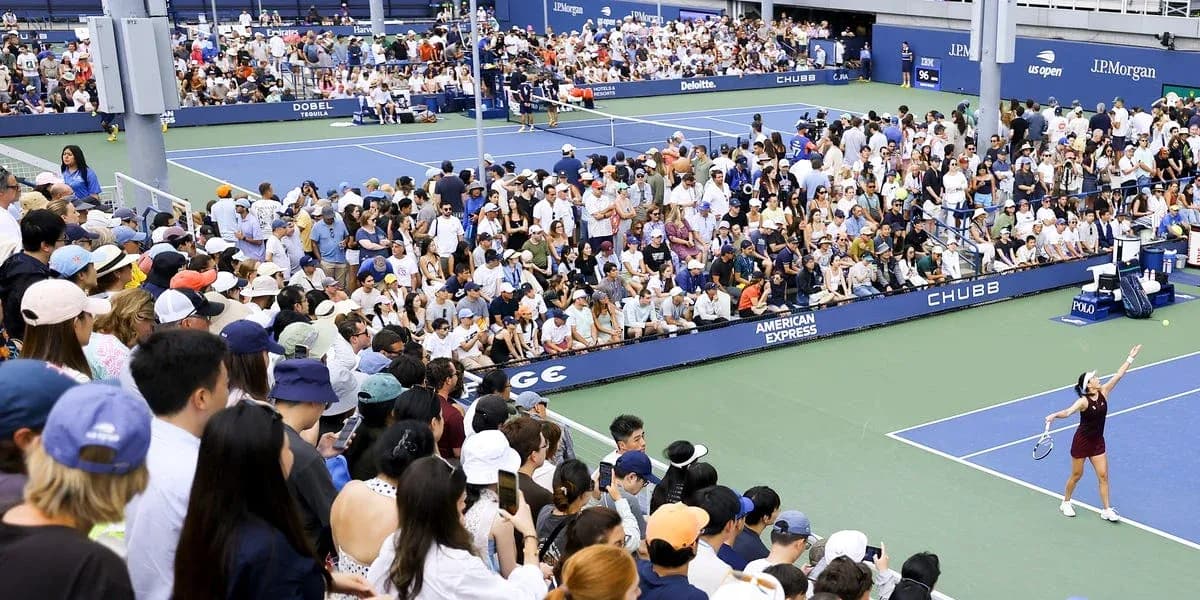
The biggest court in tennis hums, buzzes, shouts and clatters from the moment the gates open until the last night session drags past midnight. Where Wimbledon’s Centre Court and Roland Garros’s Court Philippe-Chatrier settle into a reverent hush, Ashe lives in permanent background noise. Players walk into a low roar and know it won’t really dip. Not for them. Not for anyone.
“On Arthur Ashe Stadium, there’s always ambient noise,” says Félix Auger-Aliassime, a two-time semifinalist in New York. “The brain just gets used to it after a while. There’s no other way to put it. There’s no preparation for that.” You arrive with your routines and your focus tricks, he says, and then you simply cope. Every player finds their own way.
Most of them, crucially, don’t want it any other way.
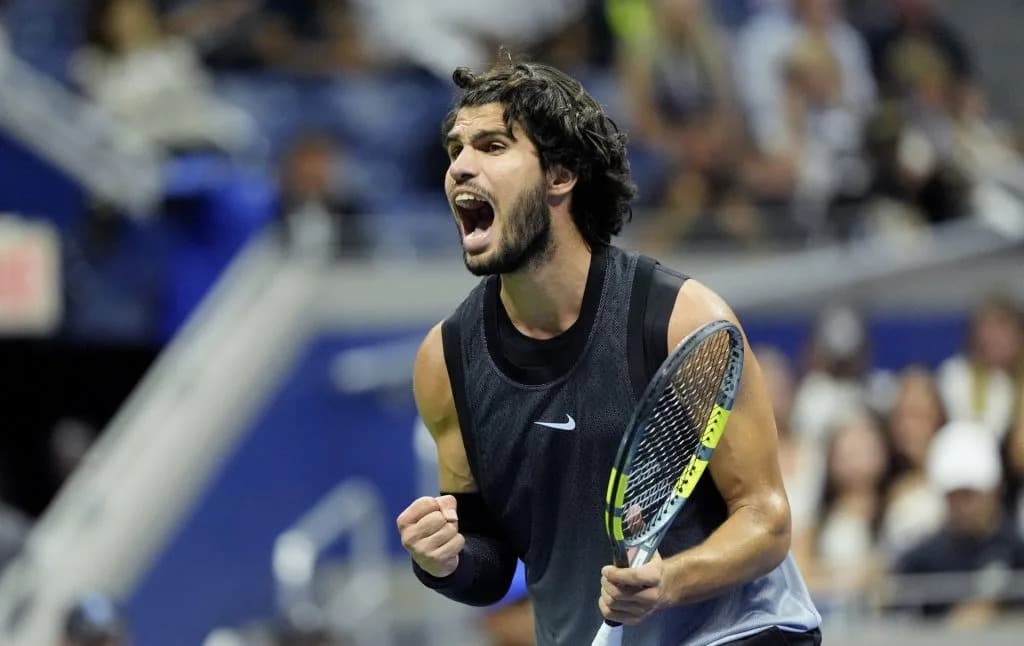
“New York—it’s different,” Frances Tiafoe says. “Night on Ashe is so special. It’s the biggest court in tennis. The atmosphere is wild.” Naomi Osaka, twice a champion here, calls Ashe a “stage,” the kind that turns contenders into stars. “The U.S. Open makes stars and there’s just a special type of energy there,” she says.
That “special type of energy” is no accident. It’s policy.
Tennis, but make it New York
In recent years, the U.S. Open has stopped apologizing for its chaos and started marketing it. American player Emma Navarro nailed it last year when she described the tournament as “casually rowdy,” a pointed contrast to the “proper,” “elegant,” and “respectful” air of Wimbledon.
Tournament organizers have leaned straight into that rowdiness. In 2024, they relaxed long-standing rules about when spectators can move to and from their seats, rolling out what they call “fan free movement.” Less waiting in the tunnels, more people drifting in and out mid-match.
“It might be seen as a radical thing for tennis,” tournament referee Jake Garner said at the time, “but I’m not sure trying to increase the fan experience and making it more enjoyable for them should be that radical.”
This is not just a tweak to logistics. It’s a direct challenge to more than a century of tennis etiquette.
For generations, the sport clung to quiet. Spectators were to be seen, not heard. Players, aside from the occasional grunt, were expected to keep their emotions in check. “There has been a tradition of allowing players to concentrate,” says Lizzie Post, great-great-granddaughter of etiquette icon Emily Post and co-host of the Awesome Etiquette podcast.
The roots are obvious. Tennis emerged in the late 19th century as a diversion of the British upper classes, and it carried their codes with it—decorum, restraint, and a clear sense of who belonged. “You can’t separate the sport from the people who played it,” says historian Robert Lake, who has written on tennis’s social history. Traditional etiquette, he notes, is “definitely rooted in ideas of class that permeated the sport when it first emerged in the late 1800s.”
New York has decided that era is over.
From drawing room to street festival
A quiet court may be traditional. It is not mandatory. And for some, it’s a problem.
“Tennis causes problems for itself when it is clutching its pearls and being precious,” says veteran tennis writer Matthew Futterman of The Athletic. He asks a simple question: how do you get a child excited about a sport if their first instruction is to sit still and stay silent for three hours? “That sounds like a punishment to me.”
The U.S. Open offers something else entirely. It doesn’t feel like a single game with a clear beginning and end. It feels like a campus. Fans wander from outer courts to practice courts to food stalls to bars. They drop into matches, then drift away.
“Tennis, you’re sort of wandering around, you’re in your seat for a while, you watch the match, but a lot of it is about everything else,” Futterman says. On the early days of the tournament, a committed fan can see a dozen different matches, each with its own soundtrack.
That’s the genius of the Open, he argues: understanding that tennis sells best when it feels like an outdoor festival. Music thumps, food lines snake, celebrities pose in suites, and somewhere in the middle of it all, a five-set classic breaks out on Ashe.
The USTA doesn’t shy away from that description. “Everything that people associate with New York—the passion and the energy and the excitement—feels very much endemic to the U.S. Open itself,” says Nicole Kankam, the USTA’s Managing Director, Pro Tennis Marketing and Entertainment. “It’s loud, it’s tough, it’s hot, but it’s also everything that makes it great and exciting.”
Journalist Simone Scott, who created “The Girls’ Guide to Sports” to make arenas and stadiums feel less intimidating for women, sees the Open as a rare crossroads of sport, style, and culture. She calls it “very New York”—elite athletes at full throttle, sitting alongside fashion moments, celebrity sightings, and fans from every imaginable background. “It feels vibrant, welcoming, and inspiring, and there's really nothing else quite like it,” says Scott, who is working with Dove during this year’s Open.
This is not just about vibes. It’s strategy.
A louder path to growth
For Kankam and the USTA, the noise is a tool. The mission is growth.
“Audiences and fan expectations change and evolve,” she says. The challenge is to hold onto the core traditions that matter while staying open to new ways of watching. Refuse to evolve, and you lock the gates on future fans.
One of the clearest examples sits outside the main show courts. Last year, the Open launched Finals Fan Fest, which allows people without tickets to the championship matches to buy grounds passes, watch on big screens and soak up the party on-site. It worked.
According to Kankam, 85% of people who bought those grounds passes were completely new to the U.S. Open. For the official after party, that number jumped to 95%. These weren’t diehards trading up. They were fresh eyes.
For Jessica Schiffer, founder of tennis platform Hard Court, this is overdue. “Tennis has been very stuffy and uptight for too long, and we need to get with the times and make it a little easier for people to enjoy the sport,” she says. She still loves the serenity of a silent court, but she recognizes what the Open is doing: lowering the barrier to entry without tearing up the rulebook entirely.
That balance—access without anarchy—is where the debate starts to sharpen.
When the party blocks the view
Not everyone is sold on “fan free movement.” The loudness is one thing. The constant motion is another.
Brand strategist Heather Queiroz, a long-time tennis fan, doesn’t flinch at the volume. What ruined last year’s U.S. Open for her family was the human traffic jam in the stands. People standing in the aisles during points. Groups lingering in rows, blocking sightlines. Arguments breaking out over who should sit, who should move, and when.
“We found ourselves in a lot of weird interactions and arguments with other people because they would just be standing [during points] or just standing in the aisles and then you can’t see,” she says. Tennis, she points out, is a sport of inches. Angles, lines, and ball trajectory matter. “What makes tennis so unique is that it’s a very precise sport. If you were going to watch the match, you kind of need to watch it.”
Her fear is simple: in chasing new crowds, the Open risks alienating the ones who built their schedules—and their budgets—around coming every year. “Short-term, you can erode your loyal fan base, but long-term it doesn’t play out,” she says. With ticket prices climbing, the calculation gets harsher. “The more OG fans are definitely frustrated—and then with the prices going up, it makes you not really want to go because if you end up not really being able to see the match very well, then you might as well just watch it on TV and at least be able to see good tennis.”
The fix, she believes, doesn’t require ripping out the new playbook. Start with education. Put clear signage around the grounds. Spell out that you don’t stand in the aisles during points. Lay down the basics.
Lizzie Post agrees that etiquette can be taught, not assumed. She suggests something as simple as a brief guide printed or sent with every ticket. “You do want to make sure spectators know what the experience is supposed to be and what the decorum is for it,” she says. That responsibility, in her view, sits with the people running the show—the tournament, the ushers, the security staff. They decide what kind of event they’re throwing, and they need to communicate it.
For Post, etiquette isn’t about snobbery; it’s about impact. “Etiquette is thinking about our impact on the people around us and how we can make that a positive one and not a negative one. It doesn’t take much.” At the center of all this, she reminds, are the players: “two competitors playing at their best and trying to be their best. They train all year, every day. Their whole life, their livelihood, is based on this. You don’t want to be the lone voice that’s really loud in a quieter place.”
The U.S. Open, then, sits in a fascinating tension. It is the sport’s loudest laboratory, testing how far tennis can stretch without snapping. On one side: music, movement, and a younger, broader crowd that sees Ashe as a place to be, not just a match to watch. On the other: fans and purists who still want to see every ball, hear every strike, and feel that old, electric hush before a second serve at 5-all.
What’s clear is that New York is not turning back. As Futterman puts it, this is “not your British grandmother’s tennis tournament.”
The real question is whether the rest of the sport will dare to catch up.