Arthur Gea's Heartbreaking Exit from the US Open
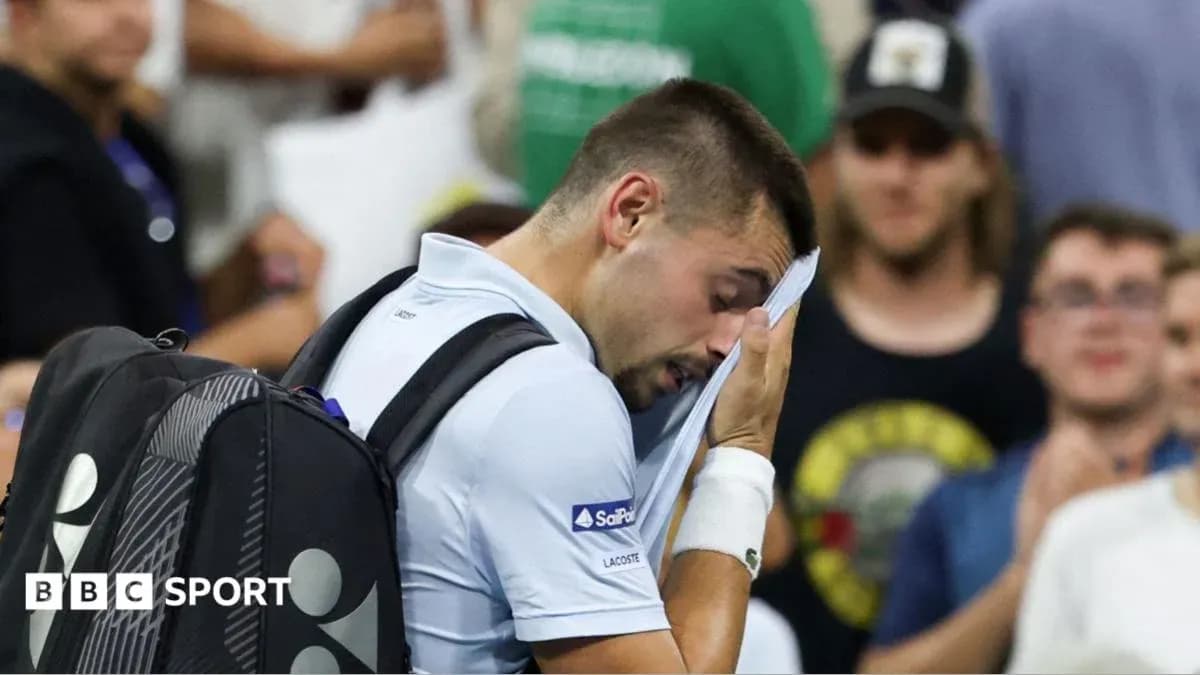
Arthur Gea stood a single point from history. Three hours later, he was out of the US Open.
The 21-year-old Frenchman, a lucky loser who had already turned a second chance into a deep run, came within a swing of becoming the first lucky loser ever to reach a Grand Slam quarter-final. Instead, he left Arthur Ashe Stadium with a five-set defeat, a hollow feeling, and the kind of scar only tennis can leave.
A Match Point Lost, A Marathon Slips Away
Facing Botic van de Zandschulp in the fourth round, Gea had the match on his racquet in the third-set tie-break. He led, he earned match point, and the moment opened up in front of him. He couldn’t take it.
From there, the night turned brutal.
Van de Zandschulp, ranked 70 in the world, clung on, then clawed back, then took over, grinding out a staggering 3-6 6-7 (0-7) 7-6 (9-7) 7-6 (7-3) 6-4 victory in five hours and 13 minutes – the fourth-longest match ever recorded at Flushing Meadows. It was a contest that veered from one extreme to another: Gea’s explosive shot-making and fearless aggression against the Dutchman’s stubborn refusal to go away.
Gea had already done the hard bit just to be here. Ranked 87, he wasn’t high enough to make the main draw when the entry list closed and had to go through qualifying. Even that route seemed to slam shut when he lost in the final qualifying round to American Nishesh Basavareddy.
Then came the twist. Casper Ruud, the 2022 US Open finalist, withdrew injured on the eve of the tournament. Gea’s name came out of the lucky loser pool. A door he thought was closed suddenly swung wide open.
He charged through it. Wins over Juan Manuel Cerundolo, Zachary Svajda and Michael Zheng carried him into the last 16 and into the New York spotlight. For two and a half sets against van de Zandschulp, it looked like the fairytale would stretch into the second week.
The pressure finally told, but on the wrong side of the net. Gea failed to convert that match point in the third-set breaker, then later could not serve out the match in the fourth. Each missed chance fed van de Zandschulp’s belief. Each escape hardened his resolve.
By the time the fifth set began, the Dutchman looked fresher, more assured. He broke once, held his nerve, and walked away with a comeback he himself described as a “crazy” one, admitting he had “no clue” how he pulled it off.
Gea leaves as the 13th lucky loser to fall in the fourth round of a major. The consolation? A cheque for $480,000 – a huge leap from the $66,000 he expected from qualifying alone. The regret will linger far longer than the numbers.
Van de Zandschulp, though, moves on. His reward is a second US Open quarter-final and a meeting with the top seed.
Zverev Finally Beats the Clock
Waiting for him is Alexander Zverev, who for once finished under the New York curfew.
The German, 29, had lived on the late shift all fortnight, his previous three matches ending at 1:55am, 2:15am and 1:09am. This time, he wrapped things up with rare efficiency and an almost civilized finish.
Zverev dismissed Italian 21st seed Luciano Darderi 6-2 6-2 7-6 (7-3), dominating the first two sets and closing out the third in a tie-break to reach the last eight. The French Open champion even had enough time to joke about his unfamiliar schedule, saying he didn’t quite know what to do with himself before midnight and quipping about either heading back to the practice courts or to a bar.
He made it clear he wants the night again when he faces van de Zandschulp on Wednesday, saying he would “for sure” request the evening session and joking that he had effectively rented the court from 11pm until 2am for two weeks. It suits his rhythm. It suits his game. And it gives New York another marquee night-time act.
Blockx Bites Down on the Pain
Earlier in the day, another young story of survival played out on the outside courts.
Alexander Blockx, the 28th seed from Belgium, looked close to breaking down physically against Francisco Cerundolo. Instead, he broke through mentally. Fighting rib pain that he said affected him from the start, particularly on serve, Blockx ground out a 6-3 4-6 7-5 7-5 win to reach his first Grand Slam quarter-final.
At 21, he now carries a slice of history with him: the first Belgian man ever to reach the last eight at the US Open.
He admitted he had been “really close” to retiring, saying he was “just hanging in there” and that if he had lost the third set, he likely would have stopped. He didn’t lose it. He refused to walk away. The match tightened, Cerundolo pressed, but Blockx held his line in both of the final two sets.
If his body allows, Blockx will face Karen Khachanov on Wednesday. That is no small “if” after the way he described his rib pain, but the opportunity is the biggest of his career.
Khachanov, the Russian world number 50, had to summon his own reserves to get there. He fought back from two sets to one down against 14th seed Learner Tien, turning a tense, edgy contest into a 7-5 4-6 6-7 (6-8) 6-1 6-4 win. The result halted Tien’s bid to help deliver four American men into the US Open quarter-finals for the first time since 1995.
The margins were thin everywhere you looked on Monday in New York. One point here, one decision there, one body holding up just a little longer than the other. Gea fell on the wrong side of that line. Van de Zandschulp, Zverev, Blockx and Khachanov stepped over it.
Now the question is who can keep walking through the fire as the second week tightens its grip.