Aryna Sabalenka Advances to U.S. Open Final with Dominant Win
NEW YORK — On a night when the air felt thick enough to slow a tennis ball, Aryna Sabalenka cut straight through it.
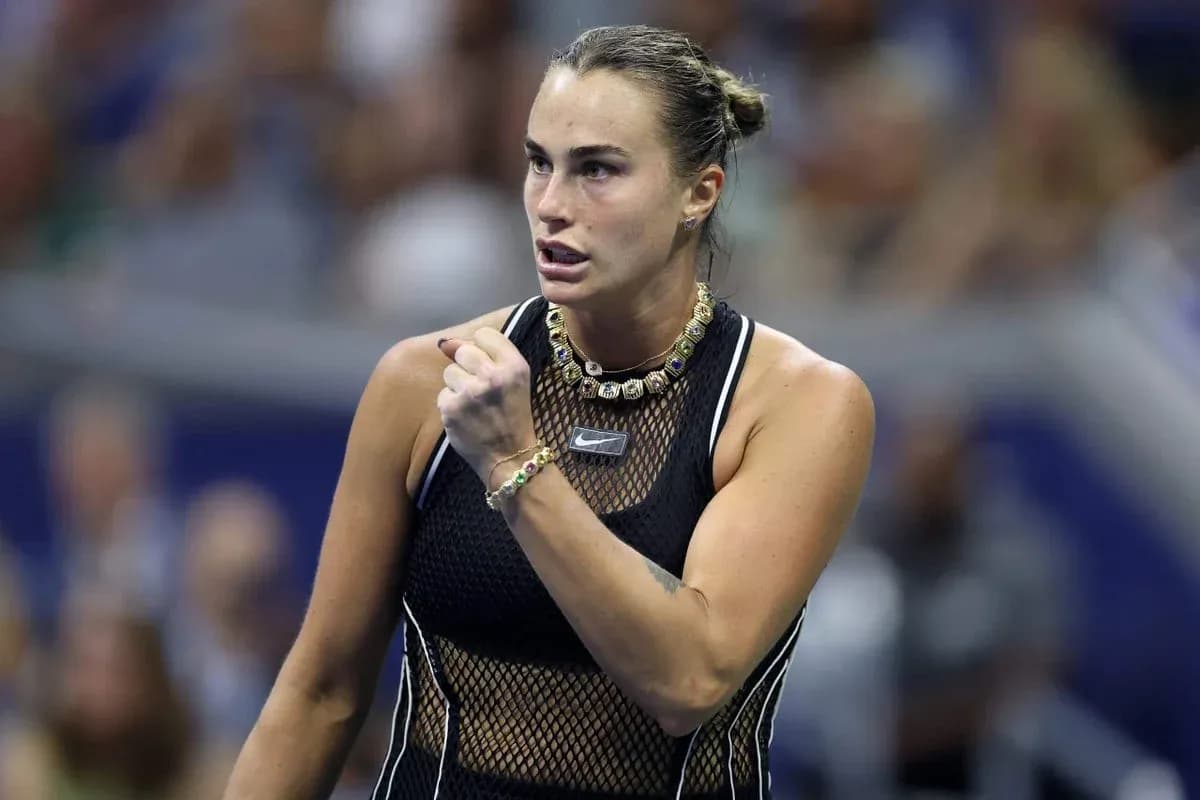
The defending champion muscled past Jessica Pegula 7-5, 6-2 in Arthur Ashe Stadium, powering her way into a fourth straight U.S. Open final and moving within one win of a remarkable three‑peat in New York. Waiting for her is Elena Rybakina, the woman who will replace her as world No. 1 on Monday.
Sabalenka doesn’t care about the math. Not this fortnight. Not in this city.
All that matters is the trophy.
A different Sabalenka in New York
For four months, Sabalenka had looked human again. The player who blitzed the tour early in the season had frayed at the edges, dropping matches, dropping leads, sometimes beating herself as emphatically as any opponent could.
That version did not step onto Ashe on Thursday.
The moment she arrived in New York, something shifted. The last shot at a Grand Slam this year, the same scenario she faced 12 months ago, has once again turned the U.S. Open into her personal reset button.
“I feel confident and I feel mentally and physically really strong right now,” she said afterward, sounding as if the doubts of spring and summer belonged to someone else.
Six wins in a week will do that. So will a stadium that feels like home. Sabalenka loves this court so much she named her cavalier King Charles spaniel Ash. Under the lights, in the noise, she looked like a player feeding off every decibel.
“I just love New York and I love being here, and I love the energy of the city,” she said. “I think that’s what drives me. That’s what really inspires me and pushes me to keep going.”
The ranking will slip on Monday, no matter what happens in the final. The standard has not.
Pegula squeezed out of the match
Pegula walked into Ashe as the hometown hope, world No. 3, and one of the steadiest hard‑court performers of the summer. The crowd wanted to believe. Sabalenka barely let them.
In the opening set, Pegula earned just a single break point. Sabalenka wiped it away with a heavy first serve and a heavier forehand, the kind of one‑two combination that has come to define her hard‑court dominance.
Pegula tried to take the air out of the match. She drove flat, hard balls down the middle, denying Sabalenka the angles she loves to carve, trying to make the defending champion miss rather than outplay her. It was the blueprint that had worked in Berlin, where Pegula had handed Sabalenka a rare 6-0 set on grass.
But this was not grass. This was Sabalenka’s element.
“Fast courts, but also bouncy a little bit,” Sabalenka said of the surface. “That really gives me more possibilities of, like, pushing her back.”
She did exactly that. Over and over.
The first set became a test of nerve and weight of shot. Eleven straight holds. Rallies played at full tilt, the ball skidding and leaping under the Ashe roof. Sabalenka flashed frustration when she clipped the net or when Pegula found a clean winner, but the tension never spread to her game.
At 5-6, Pegula finally cracked. Sabalenka’s power forced two errors. The double fault that followed told its own story. On the second set point, Sabalenka went right at her again, hammering down the middle. Pegula’s reply died in the net.
Set Sabalenka. Match tilted.
No escape routes
Once Sabalenka had the lead, she tightened the screws.
The second set was cleaner, colder. The fist pumps were measured, not wild. She didn’t need drama; she just needed weight, depth, and that snarling second serve that has become one of the most underrated weapons in the women’s game.
Her first‑serve percentage — 55 percent — was nothing special. The damage came after the miss. Those “nasty, twisting” second serves dug into the court and kicked away, and she won two‑thirds of those points. Pegula, usually so secure on return, found herself pushed back, rushed, and often wrong‑footed.
Afterward, Pegula could only half‑joke about the problem she and her team keep running into.
“We’re like, ‘Do you like us?’ Like, we’re good people, we’re pretty nice to you guys. Do you think that maybe one day she could be maybe off a little bit, so I could just, like, get a chance?”
There was no such opening. Pegula, 22-5 since a first‑round exit at the French Open, has been a near guarantee to go deep at events this summer. Against this version of Sabalenka, that reliability meant nothing.
Once Sabalenka found the rhythm on Pegula’s flat pace, the American felt the walls closing in.
“I’m not quite a Rybakina where I can serve myself out of trouble, and I’m not quite a Coco that can rely on insane athleticism,” she said, looking ahead to Sabalenka’s possible opponents at the time.
Then came the verdict on what she had just faced.
“I do think the way she played tonight, I think she would have beaten anybody.”
Chasing a New York three‑peat
This run is not a one‑off. Sabalenka has owned the hard‑court majors in recent years. This will be her fourth consecutive U.S. Open final. She has already lifted the trophy twice. In Melbourne, she has reached four straight Australian Open finals and claimed two of them.
The third Australian title has stayed just out of reach, with back‑to‑back losses in the championship match. In New York, she senses a different script.
Here, the conditions suit her. The speed. The bounce. The chaos. The expectation.
She walked off Ashe with a calm pump of the fist, not a roar, as if she understood this was only part of the job. One more night, one more final, one more chance to turn a dominant era on hard courts into a piece of history.
Rybakina will take the No. 1 ranking on Monday. Sabalenka has the shot at something rarer in modern tennis: three straight U.S. Open titles in the city she loves like no other.