Aryna Sabalenka Dominates Iatcenko in US Open Second Round
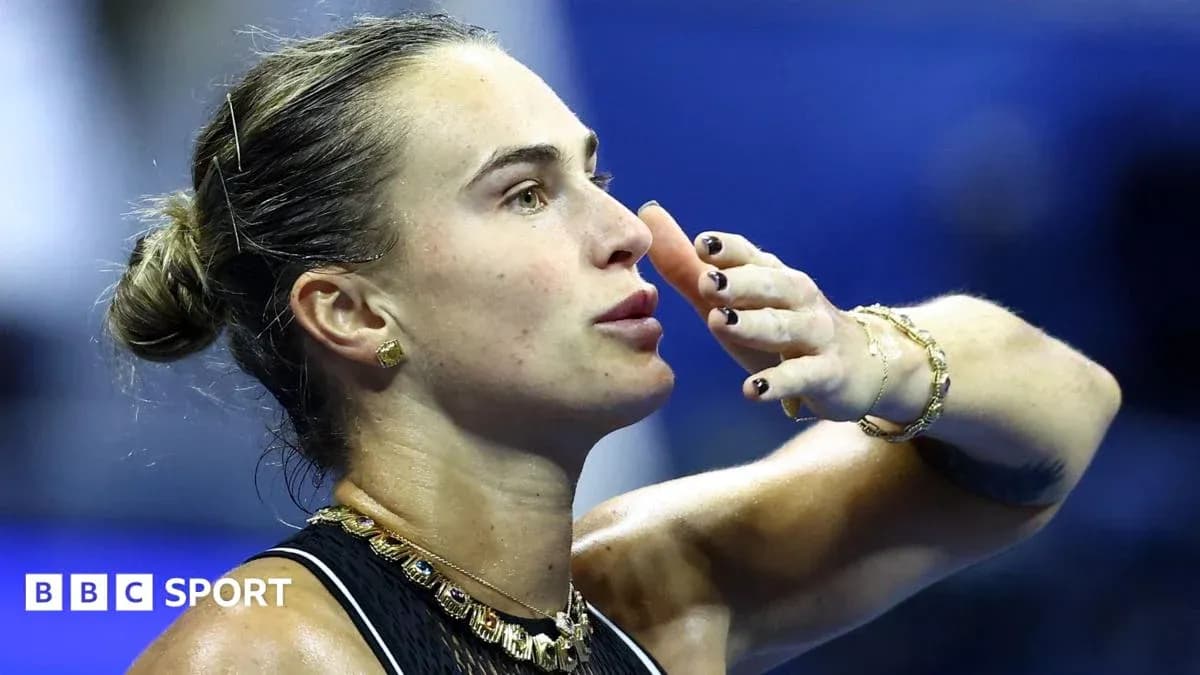
Aryna Sabalenka needed just 53 minutes to remind everyone why she owns this court – and still walked off looking like a player with something to prove.
The two-time defending US Open champion tore through debutant Polina Iatcenko 6-1 6-1 in a brutally one-sided second-round match, the kind of early-round demolition that barely raises her pulse. It did nothing, though, to soften the edge that has crept into a strange, uneven season for the world number one.
A mismatch on the scoreboard, a statement in intent
From the first game, Sabalenka’s ball-striking sounded different. Heavier. Sharper. Iatcenko, a 22-year-old qualifier ranked 160 in the world, looked overawed under the lights on the biggest stage in tennis, her nerves almost visible in the way her racket arm tightened.
Three winners. That’s all the Russian could muster. Sabalenka cracked 24.
The opening set felt like a training drill. Sabalenka bullied returns deep, stepped inside the baseline, and suffocated rallies before they could develop. At 5-0 up, the contest already felt academic. Iatcenko finally held serve for 5-1, breaking into a relieved smile just for getting on the board, but Sabalenka slammed the door shut with a hold to love in under 90 seconds.
Twenty-four minutes. That’s how long the first set lasted.
Iatcenko took a bathroom break, officially to change her kit, though it looked more like a desperate attempt to reset mentally. Sabalenka stayed loose, practising her serve on court, pacing like a player who had no intention of letting the level drop.
She didn’t. Not for long, anyway.
A double break came quickly for 3-0 in the second set, the gulf in pace and power growing by the point. Sabalenka did wobble in a sloppy fourth game, surrendering her serve, but the lapse barely registered. She broke twice more, closed the match with the same ruthless authority, and handed Iatcenko a harsh but valuable education in what life at the very top actually looks like.
For the Russian, there is consolation. A first taste of Arthur Ashe Stadium. A benchmark of the standard required. And a sizeable boost to her career – she arrived in New York with around $300,000 in career prize money and leaves with another $190,000 to fuel the next phase of her journey.
Sabalenka left with something different: a win that looked easy, but a bigger fight still looming.
Dominant on court, bristling off it
For all the clean hitting and efficient finishing, Sabalenka’s body language never quite matched the scoreline. Even in victory, there was a tension about her, a sense that this fortnight is about more than simply moving through the rounds.
She admitted before the tournament that she had been “dealing with several things” during a five-month spell that fell far below the standard she set at the start of the year. The numbers tell the story. She opened 2026 in terrifying form: Australian Open finalist, Indian Wells and Miami titles back-to-back, just one defeat in her first 27 matches – to Elena Rybakina in Melbourne.
Then the machine slowed. Since completing the Sunshine Double, Sabalenka’s record before New York slid to 17–7. Only one WTA semi-final in that stretch. The aura of inevitability around her results began to crack.
So when a reporter suggested in her post-match press conference that she had been at “lots of parties” in the build-up to the US Open, Sabalenka snapped.
“What kind of question is that? Just because I posted some activities with brands, you think that I've been partying [and] not training?” she shot back.
The follow-up – asking if she was “getting serious” now the tournament had started – only sharpened the exchange.
“Oh yeah, I wasn't serious before that. Next question.”
The answers were short, pointed, and revealed more than any stat sheet. Sabalenka knows the narrative around her season has shifted. She also knows she has no margin for error if she wants to keep her place at the top.
Number one under siege
The equation is brutally simple. Sabalenka must win the US Open again to have any chance of holding on to the number one ranking. Even then, it might not be enough.
If Rybakina reaches the semi-finals, she will climb to the top of the rankings regardless of what Sabalenka does in New York. Jessica Pegula and Coco Gauff also lurk with a mathematical shot at the summit if they lift the trophy.
The irony is stark. Sabalenka is chasing a rare “three-peat” at Flushing Meadows, yet the season’s final major could end with her losing the very status that once seemed locked in for months.
On this evidence, at least, the fight is still there. Her dismantling of Iatcenko did not truly test her level, but it did restore some of the swagger that has been missing. The ball flew off her strings with the old ferocity. The scoreboard raced. The focus, by her own assessment, returned.
“I'm happy with the level I played, happy with the focus and happy to be through this match,” she said, before turning her attention to Kamilla Rakhimova of Uzbekistan in the third round.
Rakhimova will offer a different kind of resistance. So will the second week, if Sabalenka gets there. The real examination of where her game – and her head – are at is still to come.
Pegula, Gauff keep the pressure on
While Sabalenka cleared her first serious marker on Ashe, the players chasing her did their part across the grounds.
Third seed Jessica Pegula continued her push for a maiden Grand Slam singles title with a composed win over fellow American Sofia Kenin, 6-3 6-1. It was the kind of tidy, businesslike performance that has become her trademark, and it keeps alive her own bid to climb to number one if she can go all the way here.
Coco Gauff, the fourth seed and reigning US Open champion, also remains in the hunt both for the title and, with the right combination of results, the top ranking. She advanced with a 6-3 6-1 victory, underlining the growing sense that the women’s draw is slowly coiling towards a heavyweight showdown in the latter rounds.
Karolina Muchova, last month’s Wimbledon runner-up, moved through in straight sets. So did two-time major semi-finalist Marta Kostyuk. Teenage American Iva Jovic added her name to the list of convincing winners as the first two rounds passed with remarkably few shocks.
The favourites are holding their nerve. The bracket is tightening. The margins at the top, both for trophies and for ranking supremacy, are shrinking by the day.
Sabalenka has made the first step look easy. The real question now is whether this was just a routine beating of an overmatched qualifier – or the first swing in a two-week fight to keep her crown and her throne in the same place.