Aryna Sabalenka Dominates Polina Iatcenko in US Open Second Round
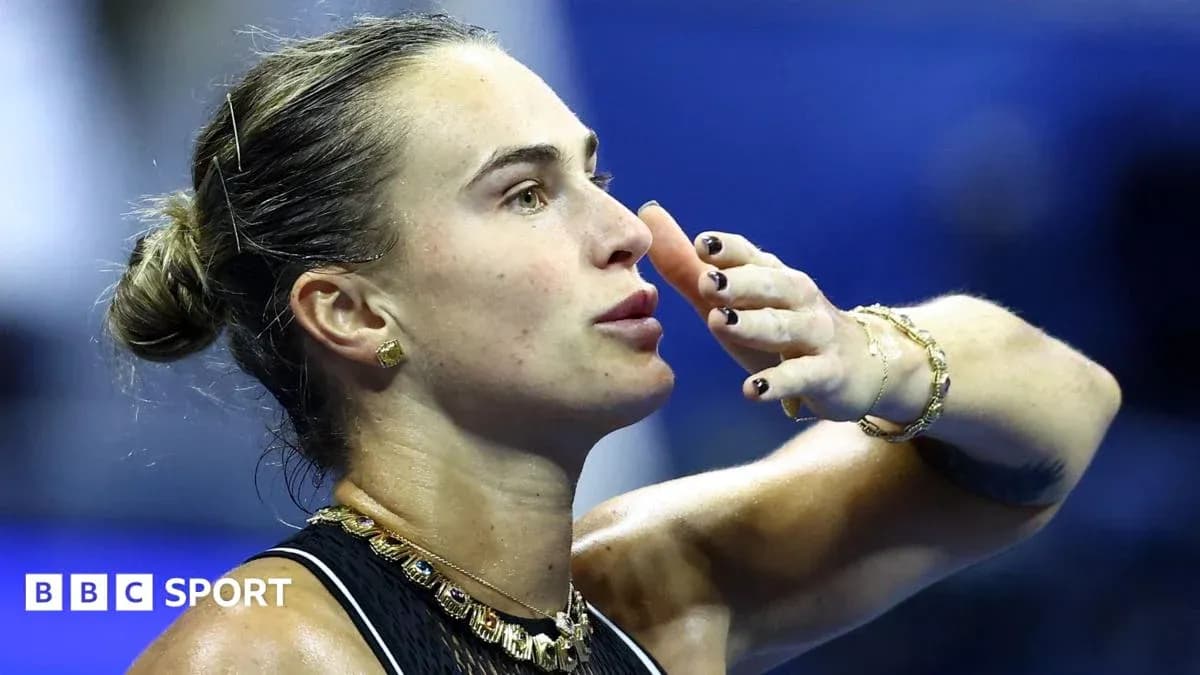
Aryna Sabalenka barely broke sweat. She barely broke stride.
In 53 unforgiving minutes, the two-time defending US Open champion tore through debutant Polina Iatcenko 6-1 6-1, a demolition that looked more like a brisk training hit than a second-round match in New York.
Yet when it was over, the world number one walked off Arthur Ashe Stadium with something short of joy written on her face.
A rout that answers almost nothing
On paper, this was a mismatch. Sabalenka, 28, chasing a third straight US Open crown and a first major of a turbulent season. Iatcenko, 22, a qualifier ranked 160 in the world, stepping into the glare of the sport’s biggest court for the first time.
The scoreboard told the story: 24 winners from Sabalenka, just three from Iatcenko. The top seed’s pace and power hit like a freight train; the Russian’s resistance barely registered.
Iatcenko’s nerves were obvious from the opening games. She sprayed errors, struggled with the weight of ball and the occasion, and looked frozen as the games flew by. At 5-0 down in the first set, she finally held serve, and the smile that broke across her face said as much about relief as it did about belief.
It didn’t last. Sabalenka coolly served out the set to love in under 90 seconds.
The entire first act had taken only 24 minutes, yet Iatcenko opted for a bathroom break, officially to change her kit, realistically to try to reset her mind. Sabalenka stayed loose, hitting serves on the baseline, keeping the engine running.
The restart brought no reprieve. Sabalenka surged to a double-break lead at 3-0, the gap in class yawning wider with every exchange. A sloppy service game briefly interrupted the procession as she was broken for 3-1, but any hint of a wobble vanished almost instantly. She broke twice more, closed out the match with authority, and handed Iatcenko a harsh, if valuable, lesson in big-time tennis.
For the Russian, there is consolation. Experience against the world number one on Ashe. A serious financial boost too: she arrived in New York with $300,000 in career earnings and leaves with another $190,000 to pour back into her career.
For Sabalenka, the win was brutal, efficient – and almost entirely uninformative about where her game truly stands.
A strange season and a shrinking cushion
This has been a season of extremes for Sabalenka.
She tore through the early months, reaching the Australian Open final and then sweeping the Sunshine Double at Indian Wells and Miami. Across her first 27 matches of 2026, she lost only once – to Elena Rybakina in Melbourne.
At that point, the number one ranking looked nailed down. Untouchable.
Then the gears ground. Since Miami, her win-loss record has dipped to 17-7 coming into New York. Just one WTA semi-final in the last five months. A clear drop from the ferocious standard she set to start the year.
Before this US Open, Sabalenka admitted she had been “dealing with several things,” aware that her level had slipped well below her own expectations. The title defence here is not just about history now. It is about survival at the top.
She knows the equation. To have any chance of keeping the number one ranking, she must lift the trophy again in New York. Even then, it may not be enough. If Rybakina reaches the semi-finals, the Kazakh will climb to the summit regardless of what Sabalenka does.
Jessica Pegula and Coco Gauff are lurking too. Both Americans can also finish this fortnight as world number one if they win the title.
The margin for Sabalenka is razor-thin. The performance against Iatcenko, as ruthless as it was, didn’t test that edge.
“I’m happy with the level I played, happy with the focus and happy to be through this match,” she said, already eyeing a third-round meeting with Kamilla Rakhimova of Uzbekistan.
Happy, yes. Relaxed, no.
A champion bristles
If the match was straightforward, the aftermath was anything but.
In her post-match press conference, Sabalenka’s mood hardened when a reporter appeared to suggest she had been spending too much time at “lots of parties” in the build-up to the tournament.
“What kind of question is that? Just because I posted some activities with brands, you think that I've been partying [and] not training?” she shot back, visibly irritated.
When the same reporter asked if she was “getting serious” now that the US Open had started, Sabalenka’s reply dripped with sarcasm.
“Oh yeah, I wasn't serious before that. Next question.”
The exchange laid bare the tension around her season. The outside perception of a star enjoying the trappings of success. The inside reality of a player trying to drag herself back to her best under the weight of expectation, scrutiny and a shrinking lead at the top of the rankings.
On court, she looks like the same force of nature. Off it, the pressure is clearly pressing in.
Seeds hold firm in the women’s draw
Across the grounds, the women’s event continues to move to a familiar rhythm: big names advancing, shocks in short supply.
Third seed Jessica Pegula kept her push for a first Grand Slam singles title on track with a commanding win over fellow American Sofia Kenin, 6-3 6-1. The victory keeps alive her own shot at the number one ranking, if she can go all the way in New York.
Fourth seed Coco Gauff did her part as well, cruising through in straight sets and maintaining her parallel bid for both a maiden US Open crown and the top spot.
Karolina Muchova, this year’s Wimbledon runner-up, moved through without fuss. Marta Kostyuk, a two-time major semi-finalist, also advanced in straight sets. Teenage American Iva Jovic added another chapter to her fast-rising profile, joining the chorus of comfortable winners.
The theme is clear: the favourites are holding their ground. The draw, for now, is behaving.
The three-peat chase
Sabalenka’s path will only get steeper from here. Rakhimova in the third round will offer more resistance than Iatcenko. The real examinations, though, lie deeper in the second week, where the title contenders will finally collide.
A “three-peat” at the US Open would place Sabalenka in rare company. It would also send a pointed message after months of doubt: that the early-season juggernaut was not a mirage, just briefly derailed.
For now, she has done what champions do against overmatched opponents: arrive, dominate, leave quickly.
The questions around her season, her form, her future at number one – those remain.
New York will provide the answers. The only unknown is whether Sabalenka will still be standing when the city finishes asking them.