Aryna Sabalenka's Quest for a Three-Peat at the US Open
Aryna Sabalenka is chasing history in New York, but this time the air feels different.
The world No. 1 arrives at the US Open with a chance to do what only Serena Williams has done in the modern era: win three straight titles in Flushing Meadows. Serena owned the city from 2012 to 2014. Sabalenka now stands on that same ledge, staring at a three‑peat and the weight of a ranking that suddenly looks fragile.
Her season, by her own standards, has been flat. No Grand Slam titles so far. Nearly 100 weeks at No. 1 under threat. Elena Rybakina, Jessica Pegula and Coco Gauff are all close enough to smell the top spot. This is not a coronation. It’s a knife fight.
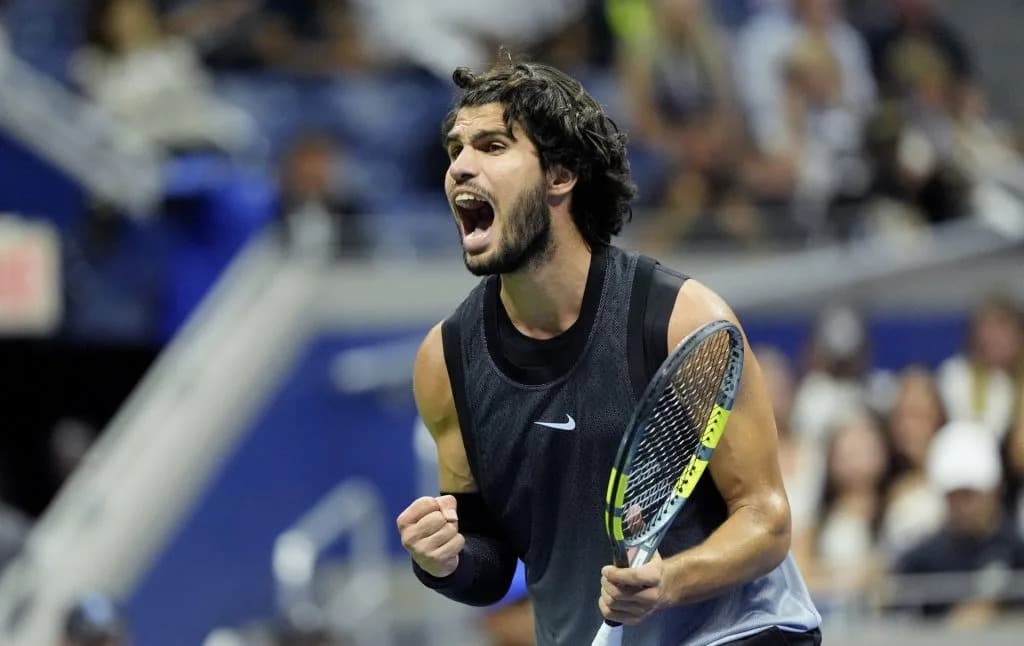
On the men’s side, chaos lurks. Jannik Sinner is out injured. Carlos Alcaraz is only just returning to singles after almost four months away. Between them, they’ve taken three of the last four US Open crowns. With one sidelined and the other short of matches, the draw has cracked open in a way New York hasn’t seen for years.
The main draw release on August 27 didn’t just confirm paths. It exposed fault lines and opportunity.
Rybakina’s opening — if her body lets her take it
Elena Rybakina can walk out of New York as the new world No. 1. She doesn’t even need the trophy to do it; a semifinal run would be enough to push her past Sabalenka for the first time in her career.
There’s a catch. Her Achilles.
The soreness that flared in Cincinnati turned into a genuine scare, and she still hasn’t confirmed she’ll play. If she does, the draw has given her a soft landing to test that ankle. She opens against Thea Frodin, with Darja Vidmanova a likely second‑round opponent. Those are rounds to feel her way in, not survive.
Then the temperature rises. A potential third-round clash with Maria Sakkari, who always brings edge and intensity. A possible fourth round with Naomi Osaka, a two-time US Open champion who knows this court better than almost anyone in the field. And looming beyond that: Iga Swiatek in the quarterfinals, the same Swiatek who beat Rybakina in the Canadian Open final earlier this month.
Rybakina has never gone beyond the fourth round in New York. To change that and claim No. 1, she has to carry a vulnerable Achilles through the most physical hard-court fortnight of the year.
American men smell their moment
Every US Open brings the same statistic, the same sigh: no American man has lifted the trophy since Andy Roddick in 2003. A generation has passed. The drought has become a storyline of its own.
This year, it feels less like a curse and more like an opening.
With Sinner out and Alcaraz just back from a long layoff, the men’s field is as loose as it has been in years. Six Americans sit inside the world’s Top 25: Ben Shelton (No. 9), Taylor Fritz (No. 10), Frances Tiafoe (No. 12), Learner Tien (No. 15), Brandon Nakashima (No. 17) and Tommy Paul (No. 21).
They’re not just ranked; they’re winning. Fritz took a hard-court title in Washington, Shelton did the same in Montreal. Nakashima reached the Montreal final, Tiafoe did it in Cincinnati. This is not a token presence. It’s a wave.
New York has broken American hearts for two decades. This time, the question feels sharper: can one of them finally walk into Arthur Ashe Stadium on the final Sunday and leave with the trophy?
Pegula’s clearest path yet
Jessica Pegula has been blunt about her ambition: “My goal is to win the tournament,” she told USA TODAY Sports. For once, the draw doesn’t argue with her.
She opens against Elena-Gabriela Ruse, then gets the winner of Venus Williams versus Sofia Kenin. That second-round match will draw headlines, but it’s Pegula who quietly benefits from the chaos on the other side of the net.
A potential third round against No. 31 Leylah Fernandez awaits, a player who thrives on big stages but remains beatable. Then likely No. 16 Sorana Cirstea, a matchup Pegula leads 3–1. The real test begins in the quarterfinals, where No. 7 Karolina Muchova or No. 9 Elina Svitolina could stand in her way.
And then there’s the wall she still hasn’t scaled: Aryna Sabalenka. Pegula lost her first Grand Slam final to Sabalenka at last year’s US Open, straight sets. She also fell to the Belarusian in the semifinals the year before. If they meet again in the last four, it will be more than a ranking battle. It will be a test of whether Pegula can finally flip a script that has defined her deepest runs at majors.
First-round fireworks
The tournament won’t need time to warm up. The draw has thrown up heavyweight matches from day one.
On the men’s side, No. 10 Arthur Fils faces Stefanos Tsitsipas in a clash that feels like a crossroads. Fils just stormed to his first ATP Masters 1000 title in Cincinnati, taking out Frances Tiafoe in three sets in the final. Tsitsipas, a two-time Grand Slam finalist (2021 French Open, 2023 Australian Open), hasn’t reached the third round at any major this season. His pedigree says danger. His recent record says vulnerability.
On the women’s side, No. 20 Maja Chwalińska, the 2026 French Open finalist, opens against American Taylor Townsend. Townsend loves New York, and it shows in her results: two fourth-round appearances at the US Open, including last year. Chwalińska brings clay-court credibility; Townsend brings swagger and a crowd that tends to roar for her. That one has “night-session noise” written all over it.
Djokovic walks into a gauntlet
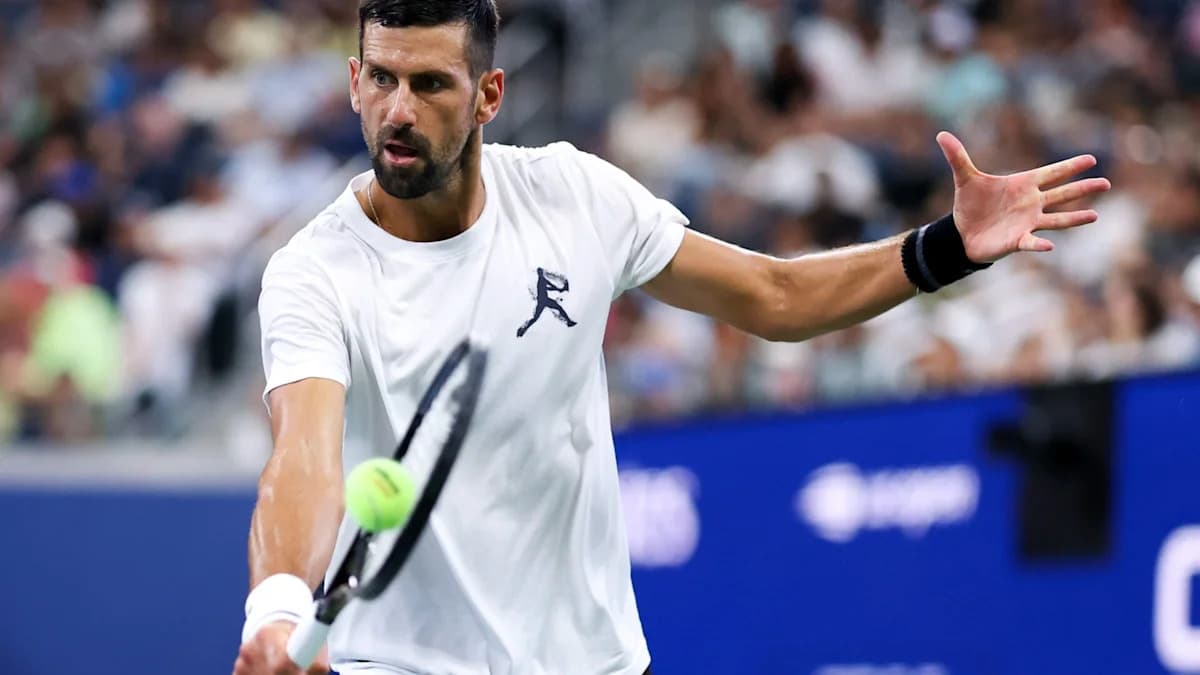
Novak Djokovic is chasing a number that towers over the sport: Grand Slam title No. 25, a record for men or women. The draw has offered him no favors.
He starts against Mariano Navone in their first-ever meeting, a match he should control. After that, it gets crowded. Matteo Berrettini, a Wimbledon finalist in 2021, or three-time major champion Stan Wawrinka could be waiting in the second round. Neither is the force they once were, but both know how to swing freely on a big stage.
A third-round date with No. 27 Tomas Etcheverry is possible, followed by a fourth-round clash with either No. 16 Brandon Nakashima or No. 23 Andrey Rublev, both dangerous on hard courts.
If Djokovic reaches the quarterfinals, No. 7 Daniil Medvedev lurks, a US Open champion who relishes this surface. Then comes the semifinal minefield: No. 2 Carlos Alcaraz, No. 8 Ben Shelton, or No. 10 Arthur Fils. Survive all of that, and the final could bring No. 1 Alexander Zverev.
At 39, Djokovic has seen every kind of draw. This one still makes you exhale. Hard.
Sabalenka’s uneasy shot at a three-peat
This isn’t Sabalenka’s first crack at a three-peat. She arrived at the 2025 Australian Open chasing a third straight title in Melbourne, only to be stopped by Rybakina. New York now offers a second chance at that rare slice of dominance.
Her form doesn’t scream inevitability. No Slam titles this year. A ranking under siege. A field that no longer seems intimidated by the No. 1 next to her name.
The road is rugged. No. 27 Barbora Krejcikova looms as a possible third-round opponent, a former Grand Slam champion with enough craft to drag anyone into deep water. No. 15 Diana Shnaider could wait in the fourth round, then No. 6 Linda Noskova in the quarterfinals, the same Noskova who lifted the Wimbledon trophy in 2026.
To keep her reign going and join Serena in the three‑peat club, Sabalenka has to rediscover the ruthless, front-foot tennis that once made her look untouchable on hard courts. Anything less, and the No. 1 next to her name will be someone else’s by the time the lights go out in Queens.
Gauff’s brutal road through the draw
Coco Gauff arrives with momentum and a target on her back. She just won the Cincinnati Open, beating Pegula in the final, and yet the draw has handed her one of the toughest paths of any contender.
Her second round could bring Paula Badosa or Daria Kasatkina, two unseeded names that carry far more danger than their ranking suggests. Both are former Top 10 players. Badosa, in particular, has recent history: she beat Gauff on grass in Berlin in June.
A third-round rematch with No. 28 Sara Bejlek is on the cards. Gauff handled her 6-4, 6-1 in the Cincinnati semifinals last week on her way to the title, but repeating that dominance under New York pressure is another matter.
The fourth round could bring No. 14 Iva Jovic or No. 17 Alexandra Eala. Get through that, and the quarterfinals become a marquee event. No. 5 Mirra Andreeva, the 2026 French Open champion, is the likely opponent. Gauff leads their head-to-head 5–0, including a win on clay in the Italian Open quarterfinals in May, just before Andreeva lifted the Roland Garros trophy. On hard courts, Gauff beat her 6-3, 6-2 in the second round of the 2023 US Open.
The matchup everyone will circle, though, is the possible all-American quarterfinal against Amanda Anisimova, the No. 10 seed and last year’s US Open finalist. Anisimova leads their rivalry 2–1. Their styles clash, their resumes collide, and the stakes would be enormous.
Survive that, and the semifinal could bring either No. 2 Elena Rybakina or No. 8 Iga Swiatek. Rybakina owns two major titles and the current Australian Open crown. Swiatek carries six Slam singles trophies, including the 2022 US Open, and a past run of 125 weeks at No. 1.
For Gauff, this isn’t a path. It’s an obstacle course.
Tiafoe’s favorite stage, toughest questions
Frances Tiafoe has built some of the best moments of his career in New York. Two Grand Slam semifinal runs, both at the US Open (2022 and 2024), turned him into one of the city’s adopted sons.
Now he arrives banged up and stubborn.
Earlier this month, Tiafoe had surgery to remove a cyst on his right hand. Days later, against medical advice, he played Cincinnati anyway. “They didn’t actually want me to play here ... but obviously every athlete’s stubborn,” he said after reaching the semifinals. He pushed all the way to the final, then faded in a 6-3, 1-6, 6-0 loss to Arthur Fils, taking a medical timeout and later pulling out of mixed doubles at the US Open.
His status isn’t in full doubt, but it’s not clean either.
The draw gives him a gentle start: fellow American Martin Damm Jr. in the first round, then likely Aleksandar Vukic in the second. Tiafoe owns the head-to-head against both. Those matches offer time to find rhythm and test that hand.
Then the mountain appears. No. 7 Daniil Medvedev could be waiting in the fourth round. No. 4 Novak Djokovic in the quarterfinals. No. 2 Carlos Alcaraz in the semifinals.
Tiafoe loves this stage. The question is whether his body will let him stay on it long enough.
Venus Williams, one more walk into the roar
Serena Williams already lit up this US Open fortnight with a mixed doubles quarterfinal run alongside Carlos Alcaraz. Now the spotlight swings back to her sister.
Venus Williams, 46 years old and still refusing to fade quietly, will play her 26th US Open after receiving a wild card into the main draw. The reward? A first-round date with Sofia Kenin, the 2020 Australian Open champion on hard courts.
Venus’ recent singles results are harsh. She lost in the first round here last year, then again at the Australian Open this season. The draw has not been kind. Kenin brings baseline weight and major-winning experience.
Yet when Venus walks out onto Ashe again, none of that will matter for a moment. The crowd will rise, the noise will swell, and an era will take another breath.
In a tournament defined by shifting power and fragile dynasties, her presence offers a simple, stubborn counterpoint: some stories in New York refuse to end quietly.