Ben Shelton Triumphs Over Carlos Alcaraz in Epic U.S. Open Match
NEW YORK — By the time Ben Shelton uncorked a 146 mph ace to end it, Arthur Ashe Stadium felt less like a tennis court and more like the last, wild bar still open in New York City.
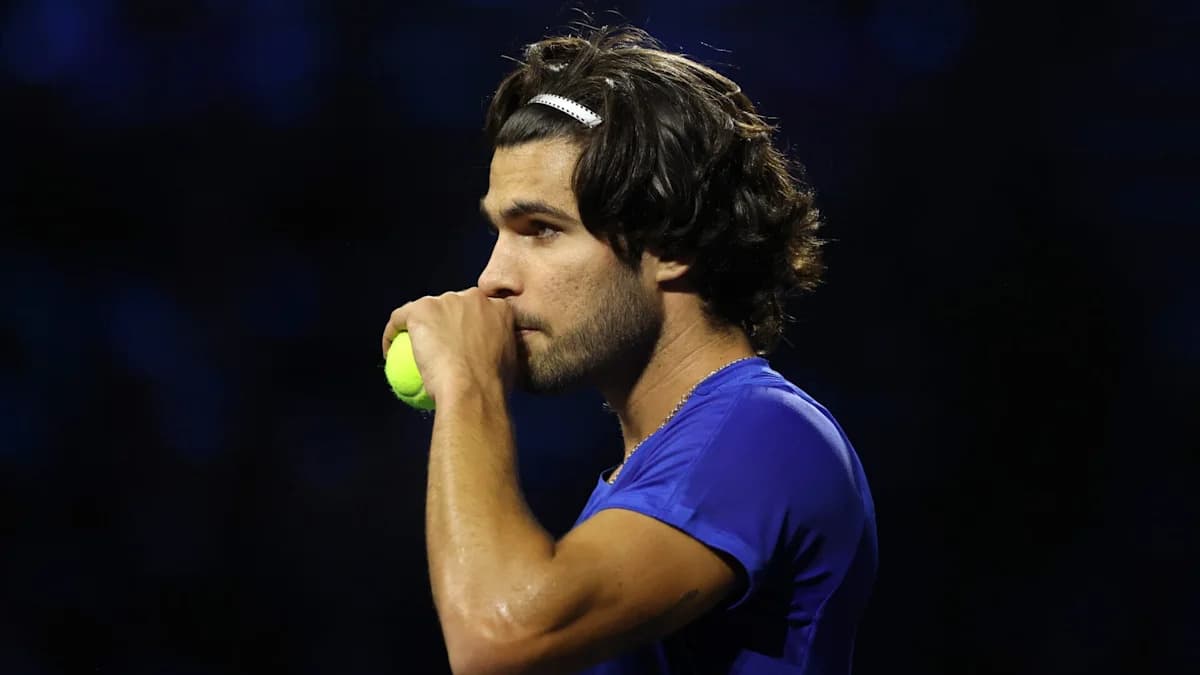
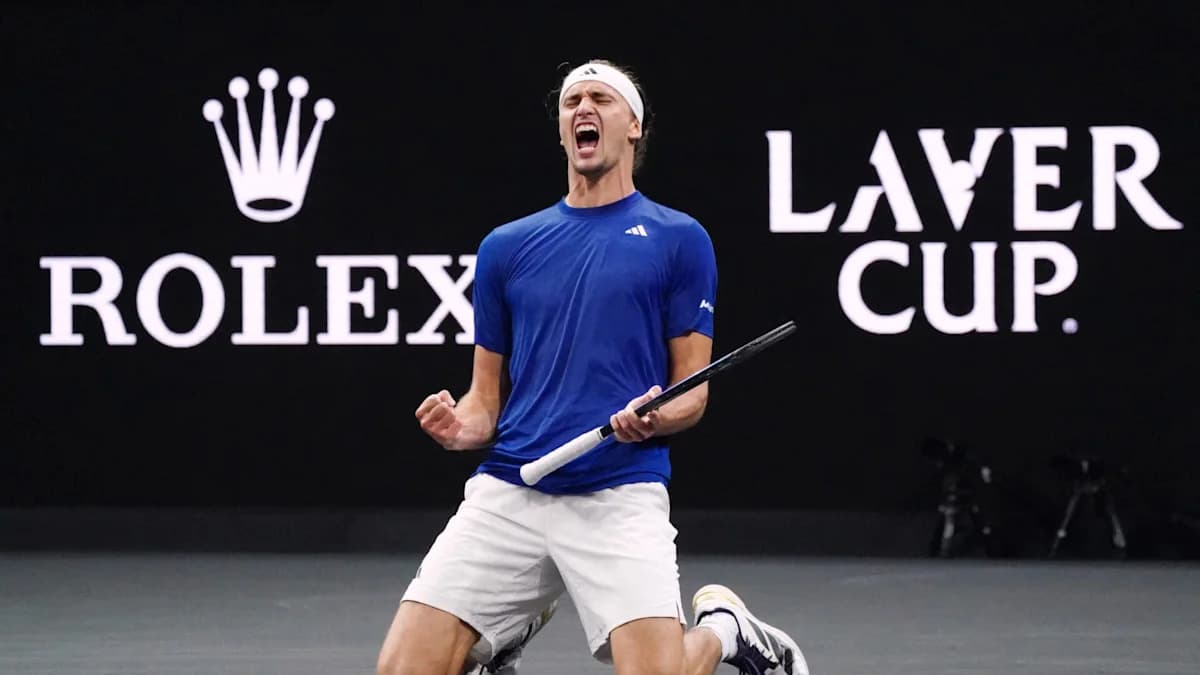
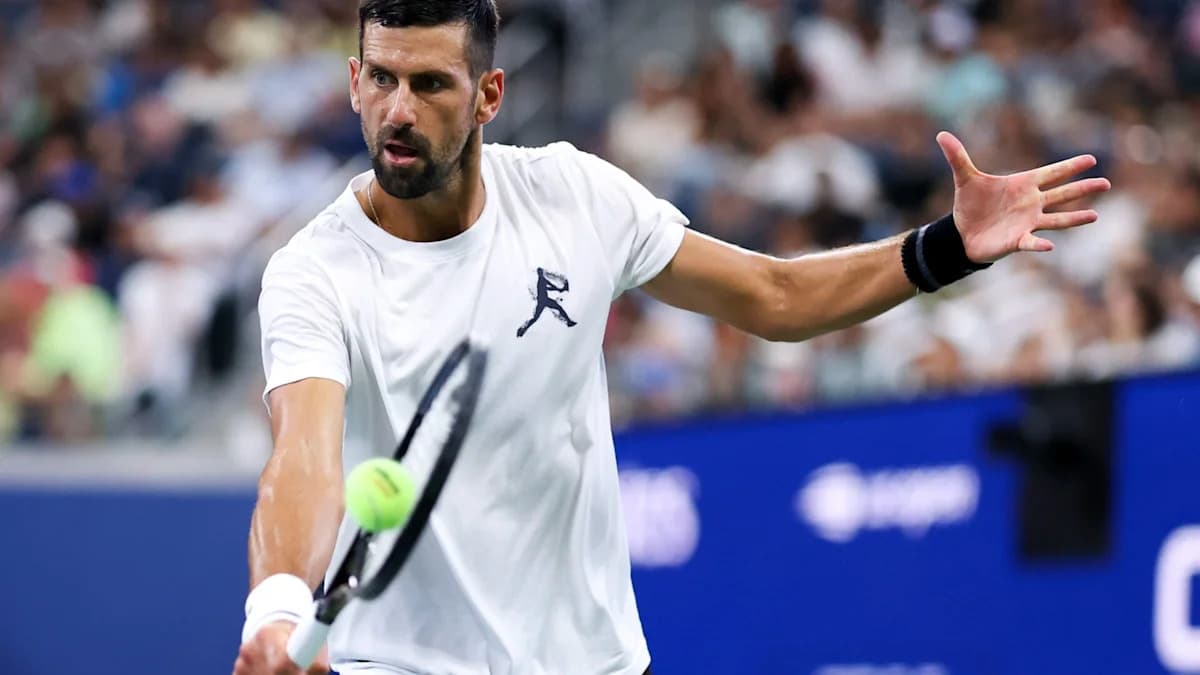
The clock read 3:33 a.m. The stands, half-empty and half-delirious, rose as one. Shelton roared, racket aloft, after a 6-7(5), 6-1, 6-3, 1-6, 7-6(10-7) victory over Carlos Alcaraz that will live as much in the lore of the U.S. Open’s late nights as in any record book. Officially, it was tennis. In reality, it was a five-set prizefight that just happened to involve rackets.
“This was a war. Epic match. So physical,” Shelton said afterward, still buzzing. He called it “the most enjoyable match” of his career. You could see why.
A Main Event at Midnight
They didn’t strike a ball until 11:05 p.m. ET, a start time more suited to a pay-per-view undercard than a Grand Slam quarterfinal. Nearly 24,000 fans stayed anyway, wedged into Ashe for a showdown between the American with the cartoonish serve and the Spaniard who seems to have borrowed his shot-making from another planet.
Styles make fights. Shelton, 23, is an athletic spectacle, a leaping, lunging showman who seems to play half his points in midair. Alcaraz, already a seven-time Grand Slam champion at 23, is the sport’s great improviser, an artist who can turn a defensive scramble into a highlight in a single step.
For a set, the script held. They traded haymakers, big serves and bigger forehands, but no one could land the combination that mattered. At 5-5 in the opener, the pattern that has so often defined Alcaraz’s matches appeared again: a loose game from his opponent, a missed first serve here, a short ball there, and suddenly the world’s most ruthless closer had the break.
Shelton, though, didn’t follow the script. He broke right back, helped by two wild Alcaraz forehands that flew yards long. For anyone else, after nearly five months out with a wrist injury, that would have been routine rust. For Alcaraz, who had eased through his first four rounds, it felt like a glitch in the matrix.
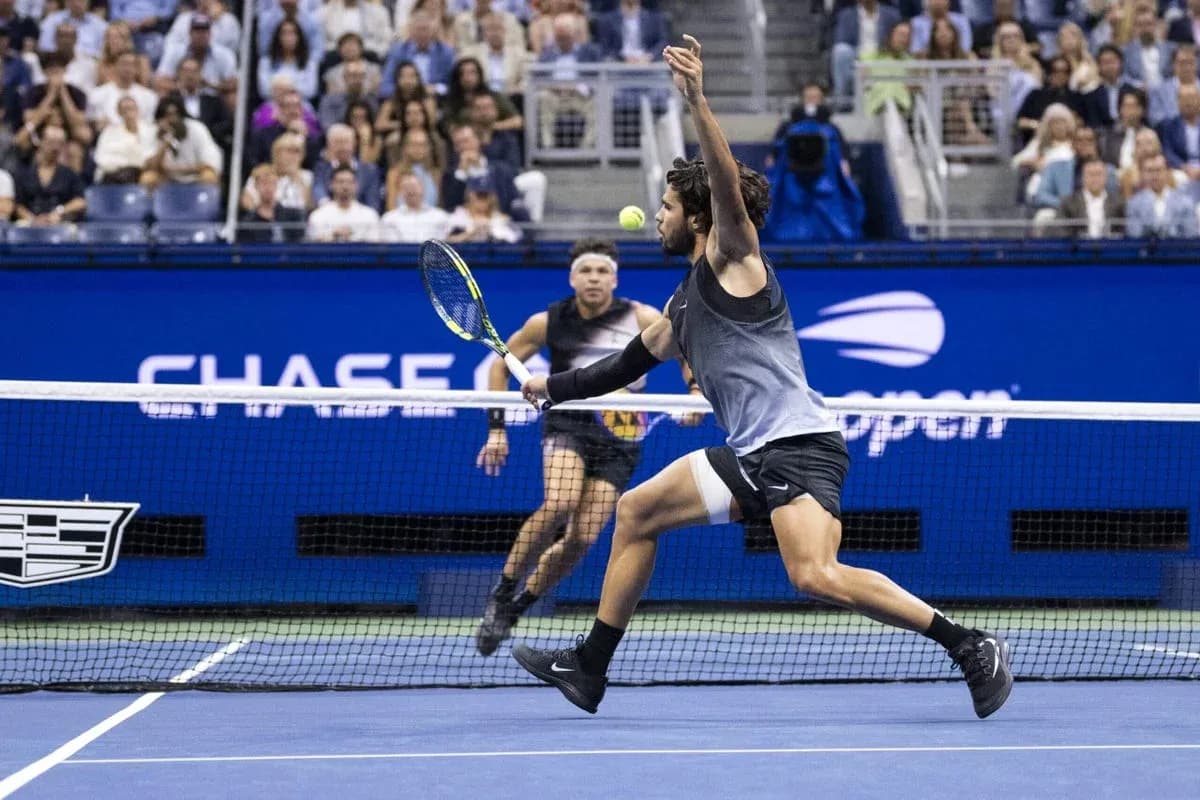
The tiebreak became a microcosm of the night—brilliance and nerves, often in the same point. At 3-3, they produced a lung-busting, lunging rally of desperate retrievals and instinctive improvisation, Shelton ending it with a feathered lob that left Alcaraz sprinting back with his shoulders to the net. But from 5-3 up, Shelton blinked. Alcaraz surged. Four straight points, capped by one of those all-court scrambles he seems to summon on command, and the first set was gone.
Shelton had poured more than an hour of perfect tension into the opener and had nothing to show for it. That has been the story of many of his nights against Alcaraz and Jannik Sinner. Not this one.
The Champion Starts to Leak
What came next flipped the dynamic. The second set turned into something almost unthinkable: an Alcaraz error reel. Seventeen unforced errors, just eight winners, and a Spaniard who suddenly looked mortal. Shelton broke once, then twice, then a third time. The scoreboard said 6-1 Shelton. The stadium blinked. Had he really just steamrolled Alcaraz like that? He had.
The third set followed the same current. Shelton attacked, stepping inside the baseline, pounding serves into the body and the corners, dragging Alcaraz from sideline to sideline. He grabbed another early break and kept his foot down.
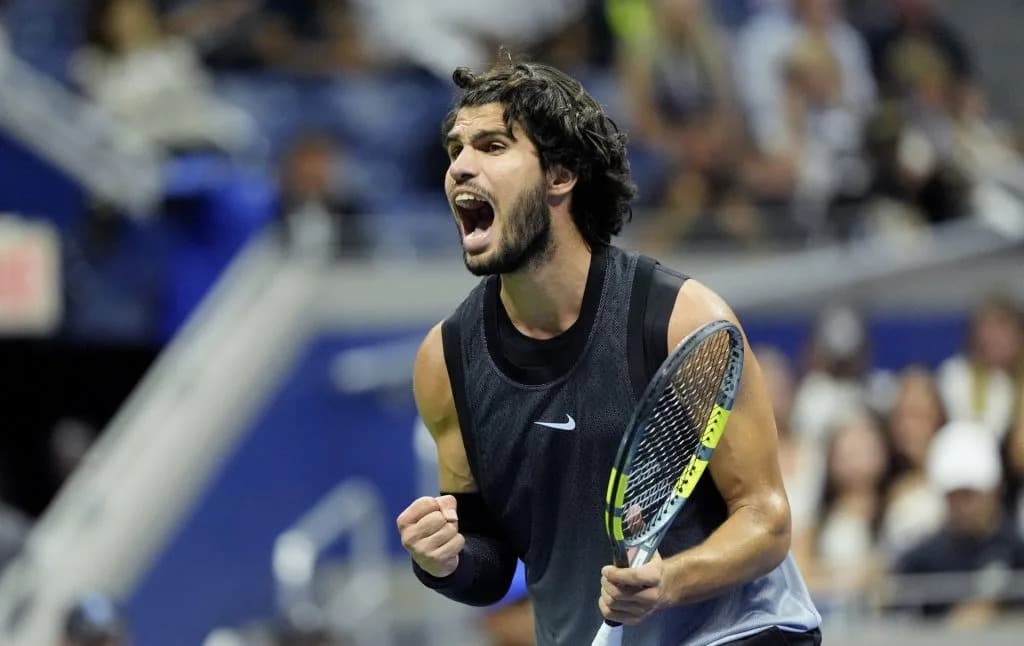
Midway through, Alcaraz finally tried to rouse himself, punctuating routine points with fist pumps, shouting toward his box as if willing his legs to wake up. The tennis turned chaotic again when Shelton served for the set at 5-4. At 30-30, they produced yet another ridiculous exchange of drop shots, sprints, and impossible angles, Alcaraz finishing with a twisting forehand winner while running away from the court.
That was the kind of point he usually uses to flip a match. Shelton knew it. He walked to his towel, and as he did, his father and coach, Bryan, leaned over the video board and extended a hand. Keep going. Keep running.
Shelton slapped it, reset, and fired three unreturnable serves. Three errors from Alcaraz. Set Shelton, 6-3. One set from the biggest win of his life.
Alcaraz’s Last Stand
On his chair before the fourth, Alcaraz sat with his head between his knees, chest heaving. He looked spent. When he stood, his legs seemed heavy, his eyes glassy. Shelton sensed it and swung for the knockout.
He had chances. A forehand miss from Alcaraz handed him a look at a potentially decisive break. Shelton pushed a backhand long. Another short ball, another mishit from the Spaniard, another opening. Shelton sailed a forehand wide.
He didn’t panic. Alcaraz was giving him looks, and the American trusted more would come. They didn’t. Alcaraz, who had wandered through much of the night in a fog, suddenly sharpened. He followed a blistered return with a serve-and-drop-volley combination that yanked Shelton forward and drew an error. He screamed, finally alive.
The match flipped in a handful of minutes. Shelton’s radar slipped. Alcaraz, sensing the wobble, turned into a baseline predator, dragging Shelton corner to corner, testing his legs and lungs in long, brutal rallies. He broke serve for the first time since late in the opening set and rode that surge to a 6-1 fourth set.
It was now past 2 a.m. Perhaps 10,000 fans remained, scattered in pockets around Ashe, unwilling to leave. Shelton looked rattled. Alcaraz looked reborn. The night, and the match, were destined to go the distance.
A Fifth Set for the Night Shift
Fifth set. 2-2. Alcaraz ripped a forehand to earn break point and, for a moment, it felt like the inevitable was coming. The champion had the chance to close, to turn another epic into another escape.
Shelton refused. He retreated two steps, timed a leaping overhead perfectly, and hammered it so hard that Alcaraz tumbled to the court. The crowd erupted. Shelton followed with a series of booming serves, held, then turned to the stands and shook his racket overhead. He wanted noise. He got it. “U-S-A” rolled down from the upper deck.
By 2:51 a.m., the two had pushed the U.S. Open into uncharted territory, surpassing the previous record for latest finish set in 2022, when Alcaraz and Sinner played a quarterfinal that felt like a glimpse into the sport’s future. This one felt like a sequel, with a different co-star.
Shelton kept swinging and kept earning chances. Serving at 4-5, Alcaraz flirted with the edge. Shelton earned three opportunities to move within a game of serving for the match. On one, he floated a chip approach instead of ripping it. The ball landed, the crowd inhaled, and the net-post lights flashed red. Out. Not this time.
On the next chance, Alcaraz threaded a running crosscourt passing shot. On the third, Shelton yanked a backhand into the net. By 3 a.m., they were still locked together, neither willing to blink long enough for the other to walk through the door.
At 3:20 a.m., with the beep of garbage trucks starting their rounds outside the Billie Jean King National Tennis Center, they faced the only fitting conclusion: a first-to-10 tiebreak for the match.
“Let’s go Ben” echoed around the cavernous stadium. Fans clapped in ragged unison, some wrapped in blankets, others standing in T-shirts, defying the hour. The atmosphere felt both frayed and electric.
Shelton jumped ahead 3-1, then stumbled. Three errors in four points, plus a heavy Alcaraz forehand, flipped the score and hushed the chants. Just as the Spaniard seemed ready to wrest control, though, his game began to leak again. A forehand drifted long. Shelton found another huge serve. “Let’s go Ben” thundered back.
At 8-7, serving, the match finally sat on Shelton’s racket. He went body first, jamming Alcaraz. 9-7. One more. He tossed the ball, snapped through the motion, and delivered a final, ferocious ace. Knockout.
A New American Night
Shelton’s celebration was raw, almost disbelieving. He had relied on that serve for years, but never to topple a player of Alcaraz’s stature on a stage like this, at an hour like that.
Alcaraz, standing under the stadium afterward with a smile, chose perspective. After nearly five months away with that wrist injury, he was content just to have been back in the fight, to have pushed his body and game into the early hours again. Shelton’s serve had shackled him just enough. The effort of the first set had drained him just enough. And no one, not even a Spaniard accustomed to late nights, trains to play elite tennis at 3 a.m.
Shelton, though, has done this shift before. Earlier in the tournament, after a three-hour Williams sisters doubles match, he and Denis Shapovalov had taken the court so late that, as he put it, their “brains and games were goo.” He’d needed two sets to find himself that night, two more to win. This time, against a far greater champion, he found enough clarity in the chaos.
An American man hasn’t lifted a Grand Slam trophy in 23 years. That drought won’t end this week, but one American will be in the U.S. Open final on Sunday. Shelton now faces Frances Tiafoe in an all-U.S. semifinal that will carry the weight of that history and the charge of a home crowd that just watched one of its own outlast the sport’s most dazzling champion.
Maybe, for American men’s tennis, this wasn’t just a record-breaking night.
Maybe it was the start of something that won’t be going to bed anytime soon.