Ben Shelton Defeats Carlos Alcaraz in Historic US Open Match
Ben Shelton walked off Arthur Ashe Stadium at 3.30am, arms raised, eyes blazing, having just sent the defending champion out of the US Open and jolted the tournament awake in the dead of night.
The 21-year-old American, seeded eight, outlasted Carlos Alcaraz 6-7(5) 6-1 6-3 1-6 7-6(10-7) in a wild, seesaw quarter-final that finished as the latest match in US Open history. It was brutal, breathless, occasionally chaotic – and utterly compelling.
Shelton, playing with his trademark swagger and thunderbolt lefty serve, advances to just his second US Open semi-final. Alcaraz, visibly ill yet still ferociously competitive, pushed the contest to a deciding tiebreak but finally ran out of road against a man who refused to blink.
A marathon in the middle of the night
Three long matches earlier on Ashe turned the schedule into a grind. Shelton and Alcaraz did not strike a ball until after 11pm in New York. By the time they shook hands at the net, the city that never sleeps had proof.
The opening set set the tone. Alcaraz, competing in his first tournament since April after a wrist injury, edged a tight tiebreak 7-5, soaking up Shelton’s pace and punishing short balls. The champion looked rusty in patches, but his instincts remained razor sharp.
Shelton’s response was ruthless. He tore through the second set 6-1, ripping serves and stepping inside the baseline, the crowd sensing a shift as Alcaraz’s energy dipped and the American’s confidence surged. The third followed the same script: Shelton dictating, Alcaraz scrambling, the Spaniard searching for rhythm while the scoreboard turned against him.
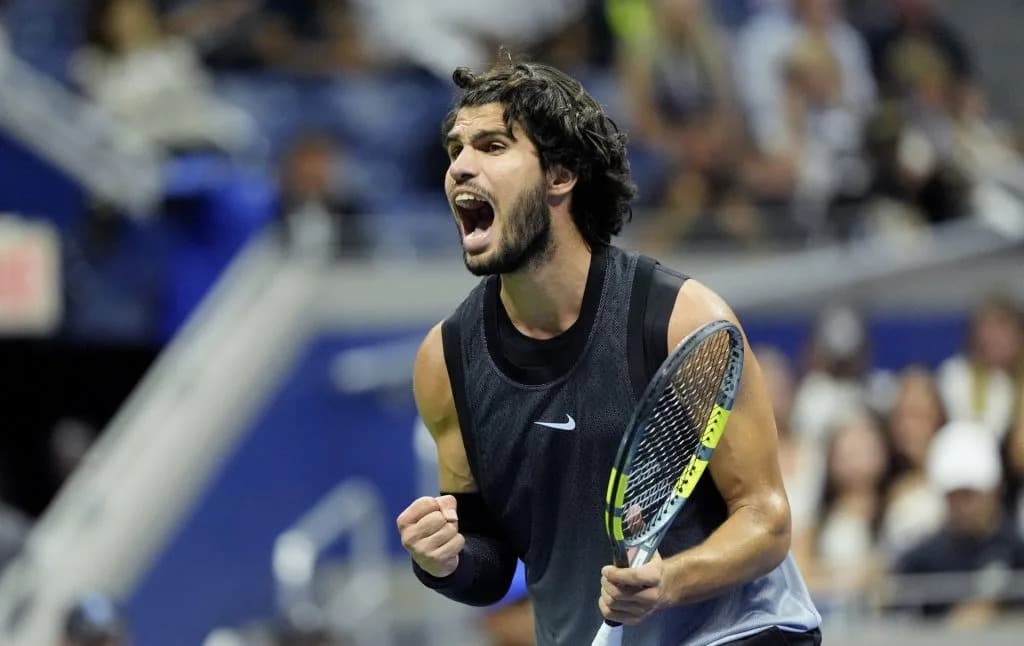
At two sets to one down, with his body clearly rebelling, Alcaraz could have faded. He did the opposite. He dug in, summoned his reserves and stormed through the fourth set 6-1, turning the match into a physical and emotional tug-of-war. The defending champion prowled again, the sickness obvious but the fight undimmed.
“It was close, it really was close,” Alcaraz said afterwards. “I’m just a little bit disappointed about not getting the win at the end. But I’m just happy, I’m proud of myself about how I fought. Physically I was really tired, but I found a way to push myself up and physically give extra.”
The fifth set became a test of nerve as much as talent. Break points came and went. Both men flirted with disaster on serve, both escaped. With the clock creeping towards the small hours, every rally felt heavier, every miss more costly.
The match, inevitably, went to a deciding first-to-10 tiebreak.
Shelton struck first, then again. The American’s serve – still explosive deep into the fifth hour – gave him just enough daylight. Alcaraz chased, clawed back mini-breaks, refused to go quietly. But at 10-7, the contest finally snapped in Shelton’s favour, the Ashe crowd erupting as the defending champion’s reign ended on a last, desperate swing.
For Shelton, it was a moment to soak in.
“I always say that this is the greatest sports city in the world. This is the greatest stadium in the world,” he told the crowd, grinning through the fatigue. Then came the line that captured the absurdity of the hour: “I’m just hoping that my best friend and my sister over there don’t have to be at work at 6am, in three hours. It’d be huge from their employers to let them have the day off.”
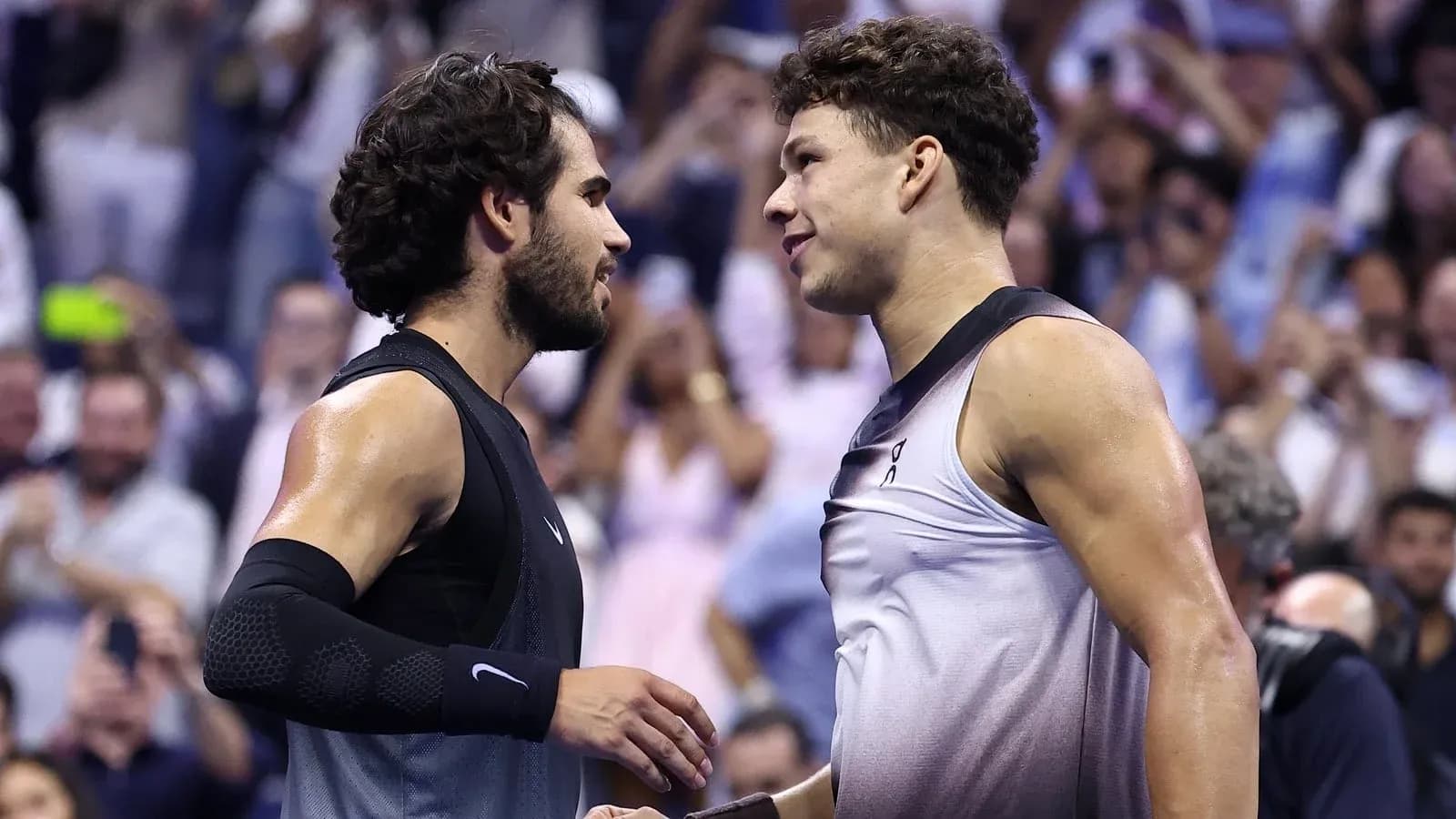
He glanced back at the court, at the man he had just beaten.
“Sharing the court with Carlos is an absolute honour and I cherish every moment that I have out here.”
Alcaraz’s brave stand falls short
For Alcaraz, this US Open was always going to be a test of body as much as game. A wrist injury had kept him away from competition since April. Returning to the furnace of New York, he needed to find form quickly and trust that his body would hold.
For four sets, it barely did. He battled through visible sickness, fought off waves of fatigue and still managed to drag the match into a decider. The champion’s movement, that usual elastic glide, occasionally stiffened. Yet he kept chasing, kept swinging, kept believing.
He leaves without the trophy but with his edge intact. The disappointment stung, but the manner of his resistance – and the quality of the match – offered its own reassurance.
Tiafoe mounts a classic Arthur Ashe comeback
Shelton was not the only American to script a late-night epic on Ashe.
Earlier on Tuesday, Frances Tiafoe produced a comeback worthy of the stage, recovering from two sets and a break down to beat compatriot Alex Michelsen 5-7 3-6 7-5 6-3 7-6(6) in an all-American quarter-final.
For two and a half sets, Tiafoe looked drained of the spark that had lit up his early campaign. Michelsen, composed and fearless, drove the rallies, took the ball early and pushed the 11th seed to the brink.
Then the match flipped.
Tiafoe wrested back momentum late in the third set, refusing to let Michelsen close the door. At 5-5, he tightened his patterns, attacked with more conviction and, under a wall of sound from the Ashe crowd, snatched the set 7-5 with a forehand winner that sent the stadium into uproar.
From there, he surged. The fourth set went 6-3 to Tiafoe as his game finally caught fire, the serve landing, the forehand cracking, the crowd sensing another classic in the making. Michelsen, who had done so much right for so long, suddenly found himself hanging on.
The fifth set, like Shelton’s later, came down to a tiebreak. Tiafoe held his nerve, edged it 8-6, and booked a third career semi-final at the US Open with arms spread wide to a fanbase that has adopted him as one of its own.
Arthur Ashe Stadium has seen its share of American nights. This one delivered two – one a stirring rescue act, the other a dethroning of the champion in the small hours.
Now the question hangs over New York: with Shelton and Tiafoe both still standing after nights like these, how far can this American charge really go?