Ben Shelton's Historic US Open Journey: Aiming for Glory
For 23 years, American men have walked into Arthur Ashe Stadium carrying history on their backs and walked out with the same weight still there. Andy Roddick swung until his shoulder gave out. Andre Agassi made one last charge. James Blake, Mardy Fish, Sam Querrey, John Isner, Tommy Paul, Taylor Fritz – all pushed into the second week at the majors, all ran into the same brick wall of European dominance.
Now it’s Ben Shelton’s turn to try to smash through it.
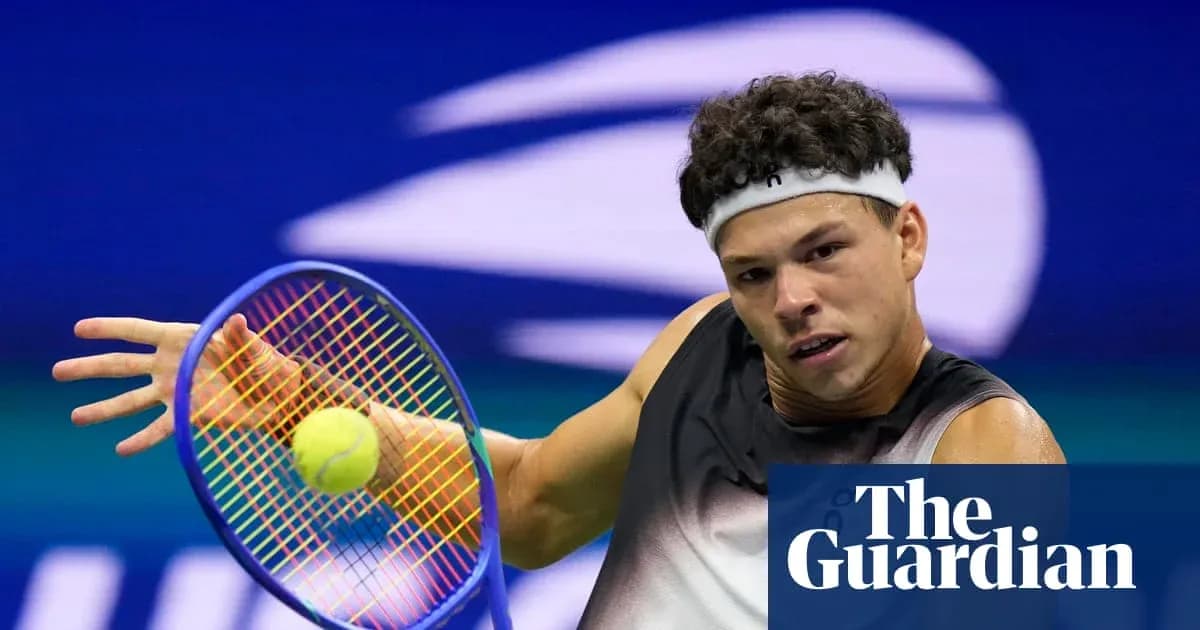
On a feverish Friday night in New York, the 23-year-old from Atlanta stormed into his first grand slam final, coming from a set down to beat Frances Tiafoe 4-6, 6-3, 6-3, 7-5 in a wild, all‑American US Open semi-final under the Ashe lights. One more win and he becomes the first American man to win a major since Roddick here in 2003.
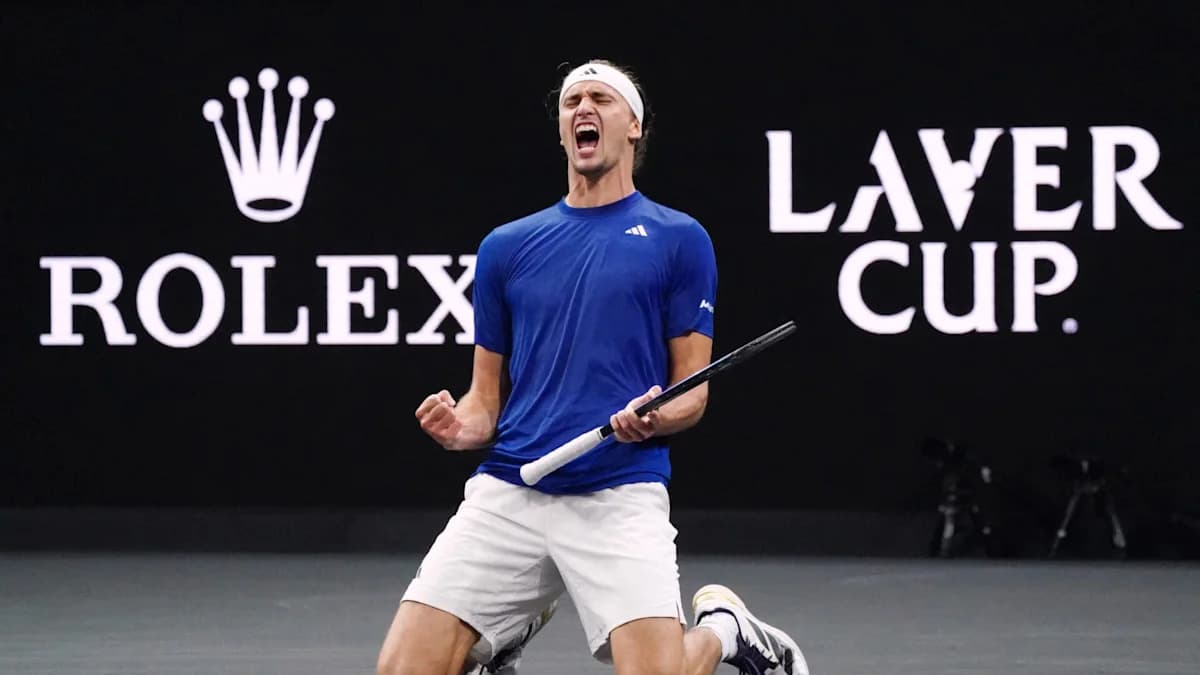
Shelton, the No 8 seed, will face top seed Alexander Zverev on Sunday afternoon, having ridden that monstrous lefty serve and a growing, hardened baseline game to turn back the 11th seed. He landed 75% of his first serves, cracked 20 aces, and found a late break in the fourth set just as a tiebreak – and a fifth set – loomed.
“It’s amazing to be in this position,” Shelton said. “Obviously we’re not done here. The job is not finished. Super excited to get another opportunity to go out there and show my best on Sunday.”
Ashe locked in from the first ball
The crowd knew exactly what it had in front of it. No casual buzz, no wandering conversations echoing around the upper deck. Nearly 24,000 people locked in on every point, riding every swing of momentum, cheering both men with the kind of full-throated noise that makes Ashe feel like a boxing arena.
Tiafoe drew first blood. At 4-4 in the opening set, Shelton held a comfortable 30-0 on serve, then suddenly lost the plot. Four of the next five points went Tiafoe’s way, capped by a double fault on break point. The 28-year-old closed the door with a cool love hold. First set Tiafoe, 45 minutes gone, the more experienced man in control.
Shelton’s answer was sharp and immediate. He broke at love for 2-0 in the second, only to give the break straight back. That’s when he leaned fully into the weapon that has carried him from college champion to top-10 star in a blur.
Serving at 3-all, he unleashed a four-ball sequence that felt like a warning shot to the rest of the sport: 125mph, 144mph, 139mph, 140mph. The last two were aces, the kind that leave a racket swinging through air and a returner staring at the back wall. He broke in the next game, then sealed the set with a first serve timed at 149mph. The match had tilted.
From shot-maker to problem-solver
The third set turned into a grind. Rallies lengthened. Patterns mattered. Tiafoe, who had wriggled out of so many tight spots this fortnight, dug deep again. He survived break points at 1-1, but he couldn’t dodge the next storm.
At 2-2, Shelton ripped through a cluster of backhand winners and broke at love, then dragged Tiafoe into a brutal 15-minute, 20-point service game at 5-3. Tiafoe saved three set points, holding off wave after wave, before finally cracking on the fourth with a forehand into the net. Shelton was a set away.
“His game is starting to get more polished,” Tiafoe said. “Instead of just being a shot maker, he’s actually staying tough in the rallies.”
The fourth set opened a door for Tiafoe that he may replay in his mind for a long time. Shelton, serving first, slipped to 15-40. Danger. He wiped away one break point with a 140mph ace, erased the next with a 144mph serve that Tiafoe couldn’t control. Hold secured, crisis averted.
From there, neither man blinked. They traded holds to 5-5, the match seemingly drifting toward a tiebreak that might have dragged this semi-final into a fifth set and deep into the night.
Shelton refused to let it get that far.
He held for 6-5, then stepped hard on the gas in Tiafoe’s next service game. Two extended rallies went his way for love-30. One more point, and he had three match points in his pocket. Tiafoe saved the first. On the second, he double-faulted. Ashe, roaring all night, fell suddenly quiet as the reality sank in. After 3 hours and 16 minutes, Shelton had his final.
Calm in the chaos, history in reach
Shelton admitted he surprised himself with how he handled the moment.
“I was honestly shocked with how calm I was out there today, especially towards the end of the match,” he said. “Calm, confident, focused. I think that that’s what it takes to be in these positions and win at the highest level.”
The significance of what he had done stretched far beyond one night’s work. Shelton is the first black American man to reach the US Open singles final since Arthur Ashe in 1972, and the first black American man in any grand slam singles final since MaliVai Washington at Wimbledon in 1996.
He insisted he’s tried to keep that history at arm’s length, at least while the tournament is still alive.
“Yes, I can think about how cool this moment is and what I’m playing for,” he said. “At the end of the day, I’m here in New York, I’m hanging out with my team, I’m with my homies playing a little bit of tennis and I’ve been able to downplay the moment pretty well.”
There was no sign of the marathon he had endured in the quarter-finals, where he stunned defending champion Carlos Alcaraz in five sets in a match that ended at 3.33am on Wednesday. That victory was his first over a top-three opponent after 17 failed attempts and snapped Alcaraz’s 18-match winning streak at the majors.
Tiafoe had emptied his own tank to get here, rallying from two sets down and two points from defeat to beat Alex Michelsen in a final-set tiebreak. Yet once again, the semi-final proved his ceiling in New York. Three times in five years he has reached this stage. Three times he has fallen short.
“That’s why I just want to win it, man,” Tiafoe said. “The love is incredible. It’s something that gives me definitely tears in my eyes from a kid starting how I did, and the love I have here is crazy.”
From Gainesville courts to the brink of a major
Shelton’s rise has been fast, but not accidental. The 2022 NCAA singles champion from the University of Florida turned professional that same year and made the Australian Open quarter-finals only four months later. He reached the US Open semi-finals that summer too, hinting at what might come.
The years since have been about refinement. The serve was always there, a cannon in search of a complete arsenal. He has spent the intervening time layering on the rest: a sturdier return, a more reliable baseline game, sharper concentration, even improved sleeping habits. The payoff in 2026 has been obvious – titles in Dallas, Munich, Stuttgart and Montreal, and now a US Open final.
“I feel that I’m a different player. I feel like I have so many more tools. I feel like I know my identity, am comfortable in my own skin, and I know what it takes for me to be playing top-level tennis.”
One obstacle remains, and it’s a familiar one. Shelton has never beaten Zverev. They have played five times across 2024 and 2025. Zverev has won all five. None of those meetings came on a stage like this.
Shelton sounded undaunted.
“Problem-solving has been the name of the game here,” he said. “I‘m looking forward to the challenge, being able to problem-solve on Sunday. I know what I’m up against, and I’m also the most confident I’ve ever been in my game.”
For two decades, American men have been chasing a ghost in their own backyard. On Sunday, with Ashe roaring and history pressing in from every corner of the stadium named for a pioneer, Ben Shelton walks out with the chance to end the wait in one swing.