Ben Shelton Advances to First Grand Slam Final After Thrilling US Open Semifinal
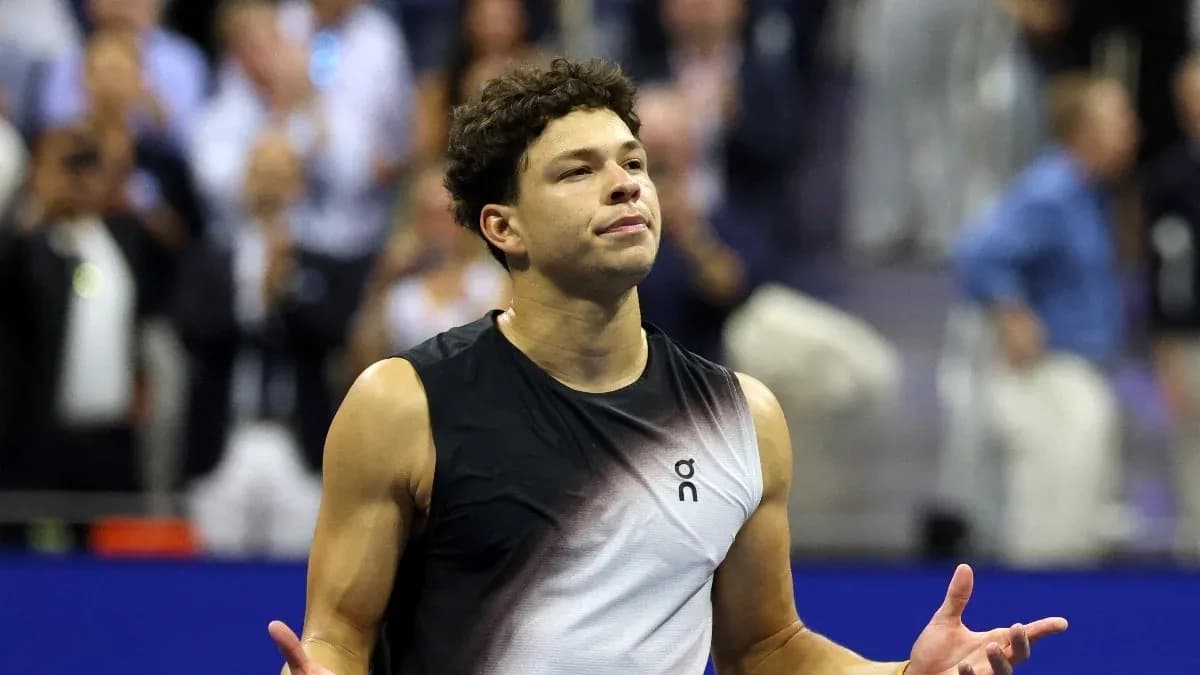
Ben Shelton walked off Arthur Ashe Stadium with his tongue out, a grin across his face and his first Grand Slam final finally in his pocket. The celebration took a moment to arrive. The meaning of it all did not.
The 23-year-old American beat close friend Frances Tiafoe 4-6, 6-3, 6-3, 7-5 in a bruising, breathless US Open semifinal, turning a night loaded with storylines into the biggest win of his young career. For the first time since the glory days that haunt this place, there will be an American in the US Open men’s final – and it is the left-hander with the lightning serve and the growing sense of purpose.
From promise to presence
A year ago, Shelton’s run stopped in the semifinals. This time, he came back to the same court, the same stage, and went one step further. He credits something simple, and hard-earned: growing up.
“I think I’ve grown up. I’m more mature, more focused. I know what my goal is, I know what my job is out here, and I’m 100 percent committed to those goals,” he said, sounding less like a prospect and more like a contender who knows exactly where he belongs.
Arthur Ashe, though, tests more than just forehands and footwork. It tests attention. The stadium was dotted with stars, the kind of faces that can pull a young player’s eyes off the ball and onto the big screen.
“It’s not easy, playing here on Arthur Ashe,” Shelton admitted. “You’re playing in front of all your favourite athletes and movie stars. So to keep your head down and focus for over three hours is not an easy task. I keep looking up at the screen like, ‘Oh, shoot, Jalen Brunson’s here.’”
He laughed about it. Then he locked in again. That, in many ways, is the difference between last year’s semifinalist and this year’s finalist.
A brother across the net
This was never going to be a cold, clinical contest. Shelton and Tiafoe share too much history, too much affection. When the draw placed them on a collision course in the last four, it felt like a celebration of American tennis as much as a fight for a final.
“First on Foe, he’s like a big brother to me, to be honest,” Shelton said. “Every time we get to take this court together, Arthur Ashe, and play each other is super special.
“This is where we want to be at the end of this tournament. This is both of our favourite tournament in the world, favourite court in the world. And to be able to light it up in front of you guys is the best feeling that there is.”
For two sets and more, they did exactly that. They lit it up.
Tiafoe, the elder statesman of the pair at 28, struck first. He took the opening set 6-4, absorbing Shelton’s pace and punishing any short ball. From 0-2 down in the second, he surged back to 3-3, feeding off the crowd, feeding off the moment. At that stage, the momentum was all his. Shelton’s early control had evaporated, his errors mounting, his shoulders tightening.
Then came the first turning point.
Shelton’s reset
Serving at 4-5 in the second, Tiafoe blinked. Shelton, who had just been dragged back from a break up, refused to let the set slip. A sharp backhand winner dragged the game to break point. Tiafoe pushed a forehand long. The door creaked open.
Shelton kicked it down.
Serving for the set at 5-3, he raced to 40-0 as Tiafoe sprayed errors, three in quick succession. He briefly stumbled, dropping a point, but closed it out when another forehand from Tiafoe flew wide. The match, level at one set all, had a new center of gravity.
From there, Shelton’s game hardened. The serve started to land with more authority. The backhand, often questioned, turned into a weapon.
At 2-3 in the third, he pounced. Tiafoe, suddenly loose on the backhand wing, fell behind 0-40. Shelton drilled a backhand winner to earn those three break points, then another to seal the break. It was ruthless, clean hitting under pressure, the kind of tennis that separates a good run from a defining one.
He tightened his grip on the set with a statement hold to love. Two booming aces, a forehand that ripped through the court, and a rattled Tiafoe left without answers. Shelton didn’t drop a point in that game. The scoreboard read 5-3; the tide felt irreversible.
Moments later, the third set was his, 6-3. The comeback was complete. The semifinal had turned into a climb that only Shelton looked capable of finishing.
Nerves, noise, and a finish
The fourth set carried the weight of history. An all-American semifinal, a night session on Ashe, the promise of a home finalist – these are the occasions that can shrink a player’s game or supercharge it.
Shelton chose the latter. He held firm on his serve, matched Tiafoe stride for stride in the rallies, and refused to let the moment swallow him. Tiafoe kept swinging, kept searching, but the clean, free-flowing tennis of the early stages never fully returned.
At 6-5, with Tiafoe serving to stay alive, the tension snapped.
The final point came not with a thunderous winner, but with a jolt of cruelty: a double fault from Tiafoe. The stadium gasped. Shelton did not pump his fist or collapse to the court. He walked straight to the other side of the net and wrapped his friend in a long hug.
The rivalry vanished. The brotherhood remained.
There was a grin, the trademark tongue wag, a few quiet words between the two before Shelton finally turned to his box. At first, the celebration felt almost restrained, as if his body hadn’t caught up with the scale of what he had just done.
Then he reached his team.
He threw his arms around his father and coach, embraced the rest of his box in a tangle of relief and joy. Up in the stands, his girlfriend Trinity Rodman beamed, part of a small circle that has watched him chase this moment for years.
Now it is here. A first Grand Slam final. A chance to turn potential into something permanent, etched into the record books rather than just whispered about.
Shelton has grown up on Arthur Ashe. The question now is simple: how much further can he go on the sport’s biggest stage?