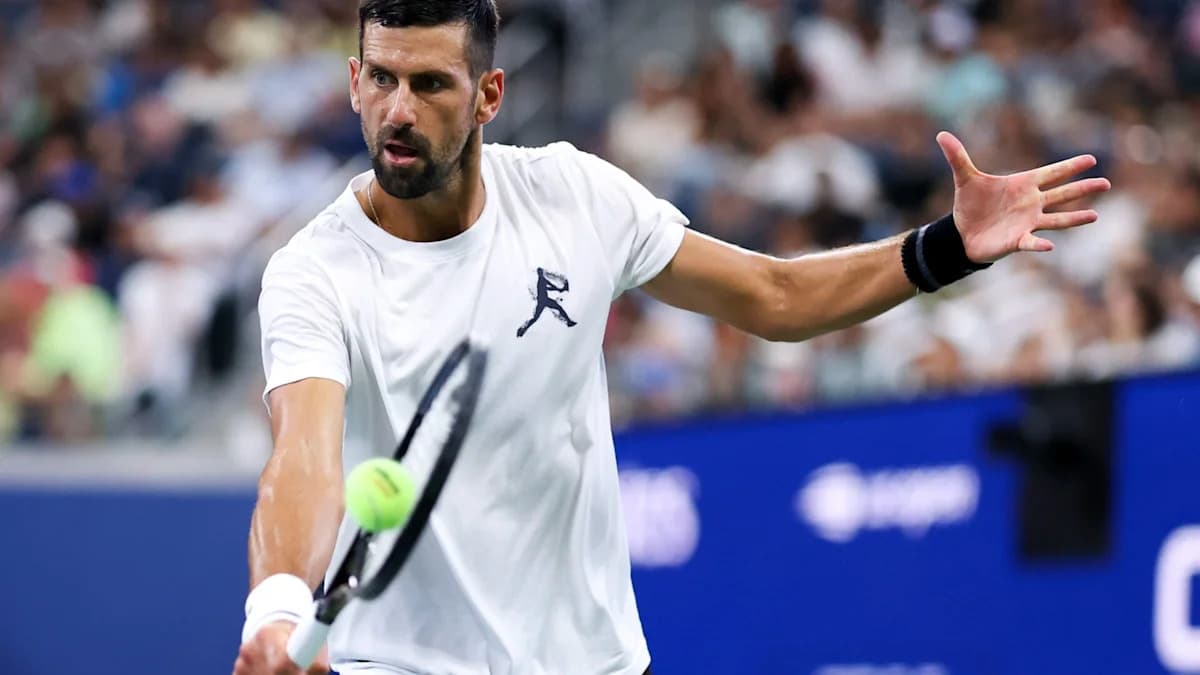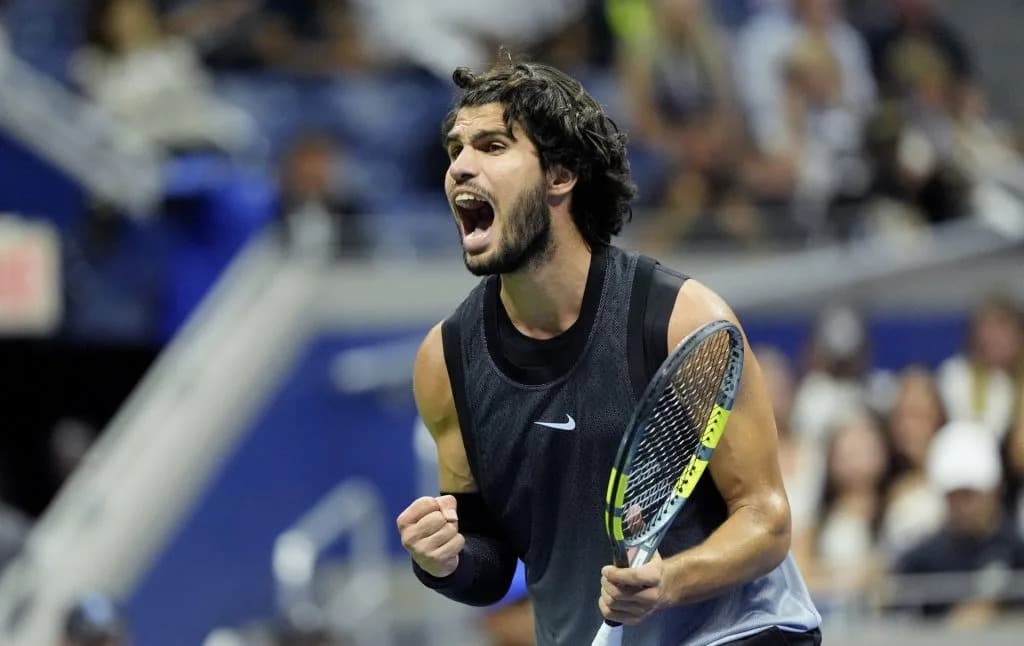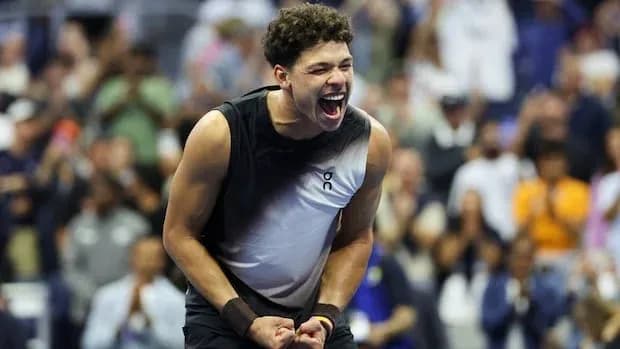
Ben Shelton's Epic U.S. Open Victory Over Carlos Alcaraz
Ben Shelton stood on the baseline at 3:33 a.m., shoulders loose, eyes fixed, the defending U.S. Open champion across the net and history hanging in the air.
One swing. One serve. One chance to end Carlos Alcaraz’s reign.
He uncorked a 146 m.p.h. ace, a blur that would have flown past Alcaraz even if the Spaniard had started the night fresh, never mind after 4 hours and 28 minutes of trench warfare.
Arthur Ashe Stadium erupted. Shelton dropped his shoulders, exhaled, and the scoreboard told the rest: 6-7 (5), 6-1, 6-3, 1-6, 7-6 (10-7). A marathon, a classic, and the latest-finishing match in U.S. Open history.
“I’m tired. It was a war,” Shelton said afterward. No exaggeration. “Carlos is one of the greatest champions of our sport. It was the most enjoyable match I’ve had in my career, for sure.”
A champion pushed to the edge
Alcaraz arrived in New York as the man to beat again, riding an 18-match winning streak in Grand Slam tournaments and still glowing from his Australian Open title in January. But this was his first event since April, his right wrist finally sound enough to trust on the biggest stage again.
The rust didn’t show in his fight.
He clawed, scrambled, and refused to go quietly, even as the night turned into morning and his body rebelled. He vomited before the start of the final set, then walked back on court and kept swinging, still hunting the trophy that had defined his breakthrough in 2022.
“I’m leaving happy and my head held high,” Alcaraz said. “The truth is, I wanted to win … but also our goal was to leave the tournament having played matches and staying healthy.”
That balance between ambition and realism framed his night. The shot-making was still there, the competitive fire untouched. The legs, and perhaps the lungs, finally met a wall named Shelton.
New York at 3 a.m.
The U.S. Open sells its soul on these nights. The lights, the soundtrack of late trains and late drinks, the sense that anything can happen after midnight in Queens.
Thousands stayed. At 3:30 a.m., Arthur Ashe Stadium still looked one-third full, a stubborn crowd wrapped in hoodies and flags, refusing to miss a point. They roared for Alcaraz, but they roared louder for the kid from home.
“Ben! Ben! Ben!” mixed with “USA! USA!” as Shelton stepped up to serve in the match tiebreak.
“It’s incredible,” Shelton said. “I always say that this is the greatest sports city in the world; I say that this is the greatest stadium in the world. I’m just hoping that my best friend and my sister over there don’t have to be at work at 6 a.m. in three hours.”
The line drew laughs, but it captured the scene: New York refusing to sleep, a young American refusing to blink.
Shelton had already seized control earlier, ripping through nine straight games from early in the second set to a 3-0 lead in the third. Alcaraz answered with a fourth-set surge, then surged again in the deciding tiebreak, ripping off four straight points to lead 5-3.
The pressure finally told the other way.
Shelton leaned on the serve that regularly climbs past 140 m.p.h., backed it up with fearless first strikes, and watched as a few Alcaraz errors cracked open the door. He barged through it, and on match point, the ace finished the job.
Tiafoe’s great escape
Shelton’s reward is a semifinal that feels more like a statement about American men’s tennis than a single match: No. 11 seed Frances Tiafoe awaits.
Their meeting guarantees a U.S. player in the men’s final for the first time in years, with the drought for an American men’s Grand Slam title stretching back to Andy Roddick’s 2003 U.S. Open triumph.
Tiafoe had to drag himself there.
For two sets, Alex Michelsen owned the night session on the other side of the draw. The 21-year-old, ranked No. 46, had not dropped a set all tournament and looked determined to keep that streak intact, bullying his way to a 7-5, 6-3 lead and serving at 5-4 in the third.
He could not close the door.
Tiafoe, who reached the U.S. Open semifinals in 2022, finally caught fire when the margin for error disappeared. He broke back, stole the third set 7-5, then rode the wave, taking the fourth 6-3 and surviving another fifth-set match tiebreak, 10-6.
The final scoreline — 5-7, 3-6, 7-5, 6-3, 7-6 (10-6) — told the story of a comeback that was as much about stubbornness as shot-making.
“It wasn’t good, let’s put it that way. It wasn’t good,” Tiafoe admitted of his sluggish start. “Three out of five is a blessing, because you have time to get it together. I definitely waited for the last minute.”
Michelsen, for all his promise, dropped to 0-6 in five-set matches. On this stage, that kind of scar lingers.
A day of deciders, a draw blown open
The Shelton–Alcaraz epic capped a day that felt endless. Three of the four singles quarterfinals went to match tiebreaks, starting with Aryna Sabalenka’s gritty escape against Wimbledon champion Linda Noskova to keep alive her bid for a third straight U.S. Open crown.
Alcaraz, fittingly, had been here before. He owned the previous record for latest finish in New York, a 2:50 a.m. end time in his 2022 quarterfinal win over Jannik Sinner, a match that launched him toward his first Grand Slam title at 19.
This time, the clock turned against him.
What remains is a men’s draw with its defending champion gone, its narrative reset. On the opposite half, top-ranked Alexander Zverev leads a group of quarterfinalists who have never lifted the trophy at Flushing Meadows.
A new U.S. Open champion is certain. An American finalist is guaranteed.
Shelton and Tiafoe now walk into that vacuum, one coming off the win of his life, the other off a rescue act that kept his tournament alive. One of them will step onto Ashe again with a chance to end a 21-year wait.
On a court that never really sleeps, who blinks next?