Boris Becker Rules Out Zverev Coaching Reunion as New Opportunities Await
Alexander Zverev has finally walked through the door that seemed bolted shut for so long. In 2026, he turned a career of near-misses and “almost everything but the Slams” into the season that changed his place in tennis history.
Roland Garros first. The US Open later. A Wimbledon final in between. By the end of this surge, the German stood at world No. 1, his résumé suddenly carrying the weight to match the long‑running hype, even if some still question the legitimacy of his rise to the top of the rankings.
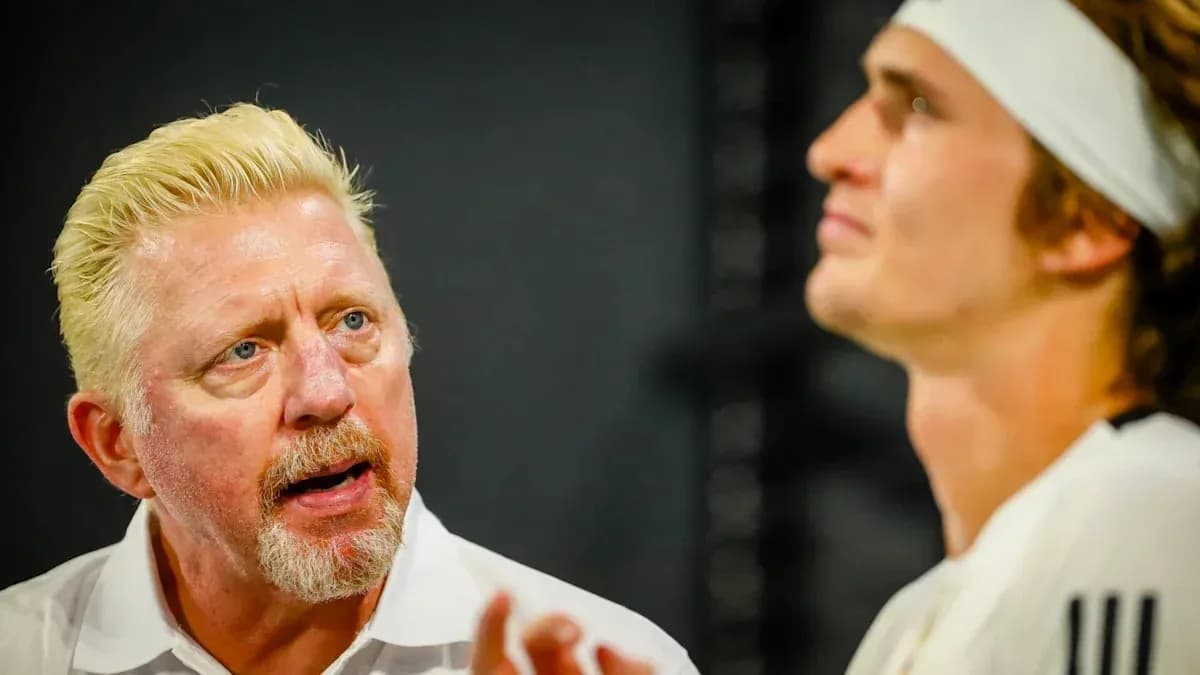
In German men’s tennis, only one name still stands clearly above him: Boris Becker. The three-time Wimbledon champion and former world No. 1 has long been the benchmark, and at times, a mentor. The two have worked together on and off, their partnership a symbol of one era handing the baton to the next.
That baton will not be coming back.
“I have to be the boss in the ring”
Speaking to Der Spiegel, Becker was asked bluntly whether he would consider coaching Zverev again. His answer landed with the same finality as a slammed locker door.
“I have to be the boss in the ring. If a family member then has a different opinion, in a language I don't understand, in this case Russian, then it's unacceptable.”
No ambiguity. No softening. Just a clear line drawn.
Becker painted the picture of his previous role in Zverev’s camp: in the box at many matches, on the practice court, actively supporting a player many in Germany see as his natural heir. The collaboration brought results on court, but not, it seems, lasting harmony off it.
“We've had our ups and downs. I'm 30 years older than him; I have children his age. You have to tell these young people what they don't like to hear sometimes,” Becker said.
That is the classic coach’s creed: uncomfortable truths, hard edges, the occasional clash. And Becker knows how that dynamic can fuel a champion.
“That might motivate them even more; they think, ‘What's he talking about? I'll show that old guy.’ That's okay. The main thing is that he wins. And he did this year.”
The praise for Zverev’s breakthrough is real. So is the distance between them.
Respect, but no reunion
When Zverev finally claimed his first Grand Slam title in Paris earlier this year, Becker was quick to salute him. It was a landmark moment for German tennis, the first men’s major singles title since the Becker era and a confirmation that Zverev’s talent could, at last, withstand the pressure of the biggest stages.
Yet even with that shared pride, Becker’s comments underline a relationship that remains complicated. Respect is intact. Trust, at least in a working sense, is not.
The issue, as Becker frames it, is control. A modern player’s box is a busy, multilingual, multi‑opinion environment. Zverev’s family presence is strong, his inner circle vocal. For a coach who insists on being “the boss in the ring,” competing voices — especially in a language he does not understand — cross a line he will not accept.
So while Zverev moves forward as a double Slam champion and world No. 1, he will be doing so without Becker returning to his corner.
Becker eyes ATP return – just not with Zverev
That does not mean Becker is done with coaching.
“There have been several inquiries; of course I won't mention any names! Let's see what happens next year,” he revealed.
The interest is there. His appetite, clearly, is too. A figure of his stature — a multiple Slam winner, former No. 1, and experienced coach at the top level — will always attract suitors, especially in a tour packed with talented players searching for that final push.
The question now is not whether Becker will coach again, but who will be willing to hand him the authority he demands and the space he insists upon.
As for Zverev, his 2026 season has already carved him into German tennis history, just behind Becker in the all‑time conversation. The titles are finally catching up with the talent. The world No. 1 ranking sits next to two Slams and a Wimbledon final.
He no longer needs Becker to validate his career. But as both men look ahead — one as an active champion, the other as a coach waiting for his next project — the more intriguing storyline might be this:
If Zverev keeps winning at this pace, how long before the debate shifts from “behind Becker” to “alongside him” in German tennis folklore?