Katie Boulter Suffers Heavy US Open Defeat to Muchova
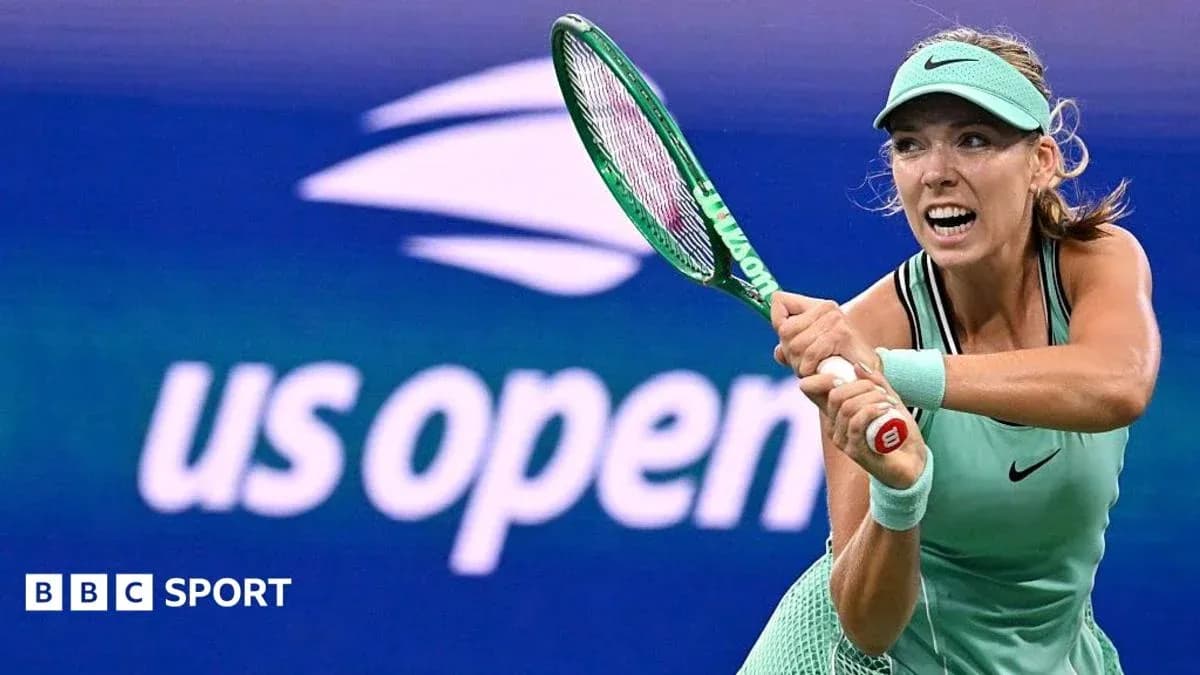
On a wet New York day when Louis Armstrong Stadium offered shelter and a stage, Katie Boulter walked into the spotlight and endured one of the harshest nights of her career.
Moved from an outside court because of heavy rain, the British number one found herself under the roof, under the lights and, very quickly, under siege. Karolina Muchova needed just 58 minutes to hand out a 6-1 6-0 beating that stripped away any illusion about where this contest stood.
One game. That was all Boulter managed against the Czech seventh seed, last year’s Wimbledon runner-up, who dissected her with smart drop shots, clean hitting and a calm authority that never wavered.
“It was a bad day at the office – times two,” Boulter admitted afterwards, a blunt verdict on a match that never really started for her.
Overwhelmed by the stage
This was supposed to feel like a bonus. Fans with day-session tickets suddenly found an extra match on Armstrong, a 14,000-seater usually reserved for bigger names and bigger occasions. Instead, they watched a mismatch.
From the opening games, Boulter looked unsettled. The roof trapped the noise, the murmurs, the movement. The environment, she said, got inside her head.
“I struggled with the conditions. I struggled with the roof, the noise, I let things distract me,” she said. “I let it get to me. I'm not usually aware of everything going on. It made me feel a little bit uncomfortable. I have to deal with it better.”
She never did. The serve, so often the anchor for her aggressive game, simply deserted her.
Eight double faults. No aces. Just 33% of points won behind her first serve. Every time she tried to reset, the numbers dragged her back down.
Muchova didn’t need a second invitation. She broke Boulter seven times out of seven. The British player could not protect her serve once. Twenty-two unforced errors spilled off her racket, against only four winners. The contrast was brutal: Muchova struck 14 winners with just nine unforced errors, mixing feathered drop shots with heavy, accurate groundstrokes that pinned Boulter back.
The pressure told early and never relented. The first set went in 28 minutes. The second felt even shorter.
A harsh verdict from the commentary box
From the stands and the commentary box, the diagnosis was swift and unsparing.
“I would be really humbled [if I was Boulter], I would sit down with my team and say ‘OK, we need to change something big time’,” former world number five Daniela Hantuchova told BBC Radio 5 Live.
She went straight to the heart of the problem.
“First of all, it was very obvious today that it was the serve. I feel like it needs to be cleared up because she was losing the rhythm and not using her legs. That's the number one thing.
“If I am Boulter, I would be on the practice court tomorrow. If she still wants to invest everything into her tennis then she needs to be on the court.”
It was the sort of public challenge that cuts through the polite language often used around heavy defeats. No hiding place. No soft landing.
British fortunes split in New York
Boulter was not the only Briton to fall short.
Jacob Fearnley also failed to reach the third round, beaten 6-3 6-3 3-6 6-3 by Argentina’s Tomas Martin Etcheverry. Fearnley at least landed a set and asked questions late on, but he, too, ran out of road.
Francesca Jones provided the one bright note. Returning to complete her rain-delayed first-round match against Magda Linette, she finished the job and moved through, salvaging something from a difficult day for British hopes.
For Boulter, though, the story of this season’s majors remains unforgiving. Just two wins across the four Grand Slam tournaments. Since her first-round exit at Wimbledon, she has taken only two victories from six matches. The ranking – 62 in the world – flatters the form line of recent months.
Off-court joy, on-court questions
This summer has brought Boulter real happiness away from the court. In July she married Australia’s Alex de Minaur, the world number seven, a relationship that has often been in the public eye and warmly received within the sport.
But tennis does not pause for romance. The tour keeps moving, the rankings keep shifting, and nights like this one in New York pose awkward questions.
The gap between where Boulter wants to be and where she is right now felt stark under the Armstrong roof. Muchova looked like a contender. Boulter looked like a player searching for answers, out of rhythm and out of sorts on one of the game’s biggest stages.
She called it a bad day at the office. The numbers, the manner of the defeat and the pattern of her season suggest it may need to be more than that – a line in the sand, and the moment she decides what comes next.