British Tennis Faces Challenges Despite Rising Talent
British tennis will once again watch the second week of a major from the outside looking in.
For the fourth time in the past five Grand Slams, no British player has survived to the business end, this time at the US Open. All nine singles contenders were gone by the end of the second round at Flushing Meadows. On paper, that sounds bleak. In reality, the mood around the sport is more complicated.
“I always think there's things that British tennis could do better. So yes, definitely,” said Francesca Jones, the British women’s number three. “Do I think it's something that's concerning? No, not at all. The level is getting better and everyone is dangerous on their day.”
The inquests that followed underwhelming campaigns in Melbourne, Paris and at Wimbledon have become a familiar soundtrack. This time, though, the numbers come with caveats, context and a few genuine reasons for optimism.
Fery’s breakout and a shifting narrative
The standout story of the British season belongs to Arthur Fery.
Ranked 114 in the world and in the Wimbledon main draw only thanks to a wildcard, the 24-year-old tore through the field to reach the semi-finals at the All England Club. No one had him on their pre-tournament radar as a second-week threat. He finished as the only British player to reach the last 16 of any Slam this year.
For the Lawn Tennis Association, Fery has become more than a surprise semi-finalist. He is a poster boy for a system they insist is finally starting to produce.
LTA chief executive Scott Lloyd sees a bigger picture forming.
“We obviously want more and more competitors in the second week of Slams – just like the British public,” he said. “But the fact we've had four different British players make Grand Slam semi-finals since 2021 – you have to go back 30 years before Andy Murray to have four – shows there is no question that the direction of travel has improved.
“We've just got to keep driving for more – and that's what we're trying to do day in and day out.”
That “direction of travel” is being measured in depth as well as headlines. Nine Britons made the US Open singles main draw this year, the highest number since 1981. And that tally did not include 2021 US Open champion Emma Raducanu or former world number four Jack Draper, both sidelined with long-term injuries.
Rankings rise, expectations follow
Once the dust settles in New York, five British men are set to sit inside the world’s top 100: Fery, Cameron Norrie, Jan Choinski, Toby Samuel and Jacob Fearnley. It is the strongest male presence since February 2024.
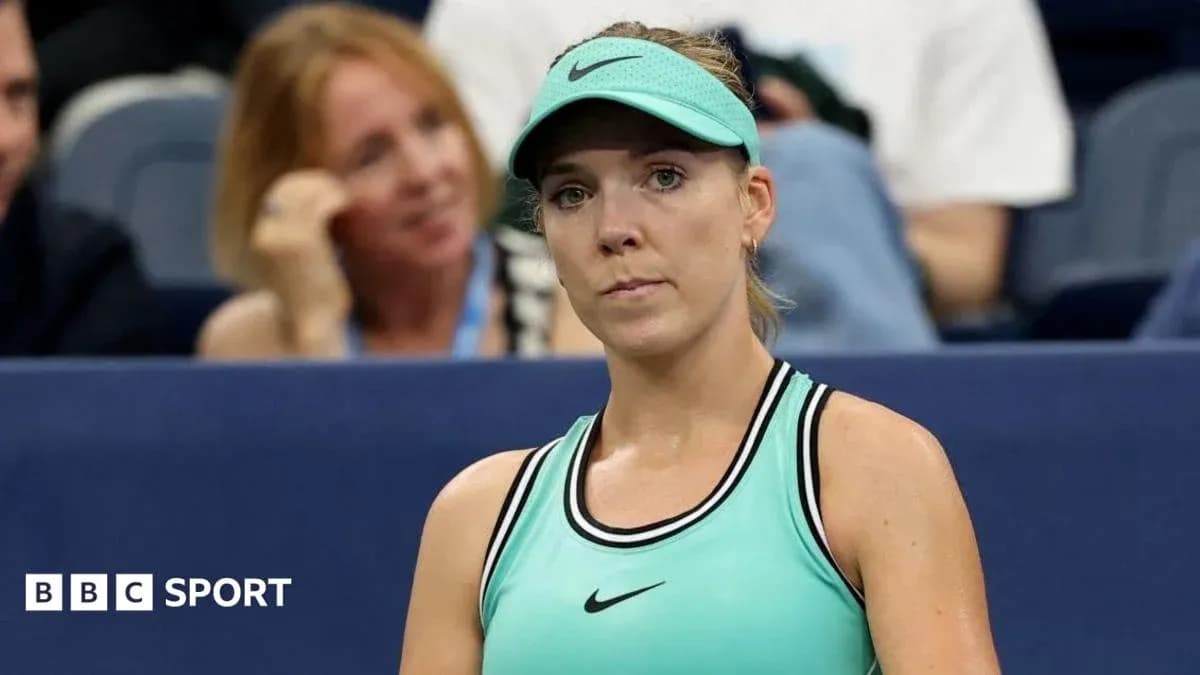
On the women’s side, Katie Boulter and Raducanu will be the two British names in the top 100. Jones and Harriet Dart, both of whom reached the second round at Flushing Meadows, are hovering just outside.
LTA performance director Michael Bourne points to the broader trend.
“We've sent 12 players to the world's top 100 over the past eight years and four of those have played Grand Slam semi-finals,” he said. “I'm not sure what other period in the modern era where we've had that level of productivity. Hopefully the number in the top 100 will rise over the next year.”
The numbers offer a counterweight to the empty second week. Yet the debate never goes away. Should a nation with Britain’s history, infrastructure and the financial muscle that comes with hosting Wimbledon be satisfied with “productivity” rather than consistent contenders?
Plenty say no.
Injuries, comparisons and a crowded field
The injury list has been brutal.
Draper, once tipped as the next standard-bearer of the men’s game, has barely played over the past year because of an arm problem. On the women’s side, Sonay Kartal – who broke into the top 50 last year – has slid out of the top 100 after a long-term back issue.
Those absences matter. Yet they do not fully explain why Britain still trails other Grand Slam nations in top-100 representation. The United States, Australia and France all boast deeper pools and, like Britain, enjoy the financial boost of hosting a major. Then come the traditional talent factories: Spain, Italy, the Czech Republic, Argentina. All produce more top-level players from far smaller domestic markets.
Copying their blueprint sounds tempting. Bourne insists it is not that simple.
Britain, he argues, operates in its own “tennis ecosystem”, with different geography, facilities and sporting culture. Lloyd pushes the same line.
“We're competing in one of the most internationally elite sports out there and the landscape is vastly different to 40 or 50 years ago in terms of the number of countries which have representation at the top,” he said. “We're ambitious, we want to drive for more, but we honestly believe the indicators are positive. We're moving in the right direction and stronger than where we have been historically.”
The message from the top is clear: judge the project over years, not one barren fortnight in New York.
Talent is there. Can it afford to stay?
If the pathway looks better at the elite end, the real battle lies much further down.
Draper, Raducanu and Fery all entered the LTA system early and climbed through the structure. They are the model. The challenge now is to make sure they are not the exception.
Lloyd says 4.3 million juniors play tennis annually in Britain, with 1.9 million picking up a racquet every month. Both, he claims, are all-time records. Courts are busy. Interest is there.
The problem starts when raw enthusiasm meets the hard cost of chasing excellence.
Bourne concedes that Britain needs a “higher base” of coaches and says one of the LTA’s key strategies is to invest time and money in developing them. Without enough quality coaching at grassroots and county level, the sport’s much-discussed “pipeline” never really flows.
Chris Marshall has seen that struggle up close. A senior performance coach with more than 25 years’ experience, he runs the Young Champs programme to offer free and discounted coaching to children. He knows exactly what the bill looks like for families outside such schemes.
“To fund a 12-year-old at county level right now requires anywhere from £500 to £1,000 a month for coaching, travel, and tournament fees,” he told BBC Sport. “It is a massive, stressful financial barrier that makes the sport a non-starter for the vast majority of British families.
“We can't sit around lamenting the lack of British interest in the second week when we are restricting the pipeline that feeds it.”
That is the fault line running through British tennis. At the top, administrators point to rising numbers, Slam semi-finals and record junior participation. At the base, too many parents stare at the monthly costs and quietly walk away.
The Grand Slam season ends with no British name on the second-week schedule. The question now is not just who can break that pattern next year, but how many potential Ferys and Raducanus are being lost long before they ever get close to a main-draw wildcard.