Carlos Alcaraz Dominates Tommy Paul to Reach US Open Quarter-Finals
Carlos Alcaraz is back on Arthur Ashe Stadium doing what, by now, feels inevitable: bending a Grand Slam to his will.
The defending US Open champion walked through Tommy Paul 6-4 6-3 6-4 to reach the quarter-finals, and he did it with the kind of cold, ruthless clarity that turns hype into hard history.
No strapping on the wrist. No hesitation on the forehand. No mercy.
Alcaraz hunts a new slice of history
Alcaraz, already the youngest man to complete the career Grand Slam, now stands three wins away from another landmark. If he lifts the trophy next Sunday, he will become the only man in the Open Era to successfully defend major titles on all three surfaces: grass, clay and hard courts.
He has already locked down Wimbledon in 2023 and 2024, and Roland Garros in 2023 and 2024. New York would complete a staggering set.
You would never guess he spent more than four months out with a wrist injury earlier this year. The 23-year-old is moving with his usual electricity, and against Paul he added a brutal efficiency. The American arrived with belief, talking up his chances and insisting he always backs himself against the game’s elite.
On this evidence, belief was nowhere near enough.
Six in a row, 14 sets straight
Paul, seeded 20th, had reason to feel he belonged on this stage. He is quick, inventive, and on home soil. Yet Alcaraz has his number. This was the Spaniard’s sixth consecutive win over the 29-year-old, and he has now reeled off 14 sets in a row in their rivalry.
The scoreline looks straightforward. The tennis was anything but gentle.
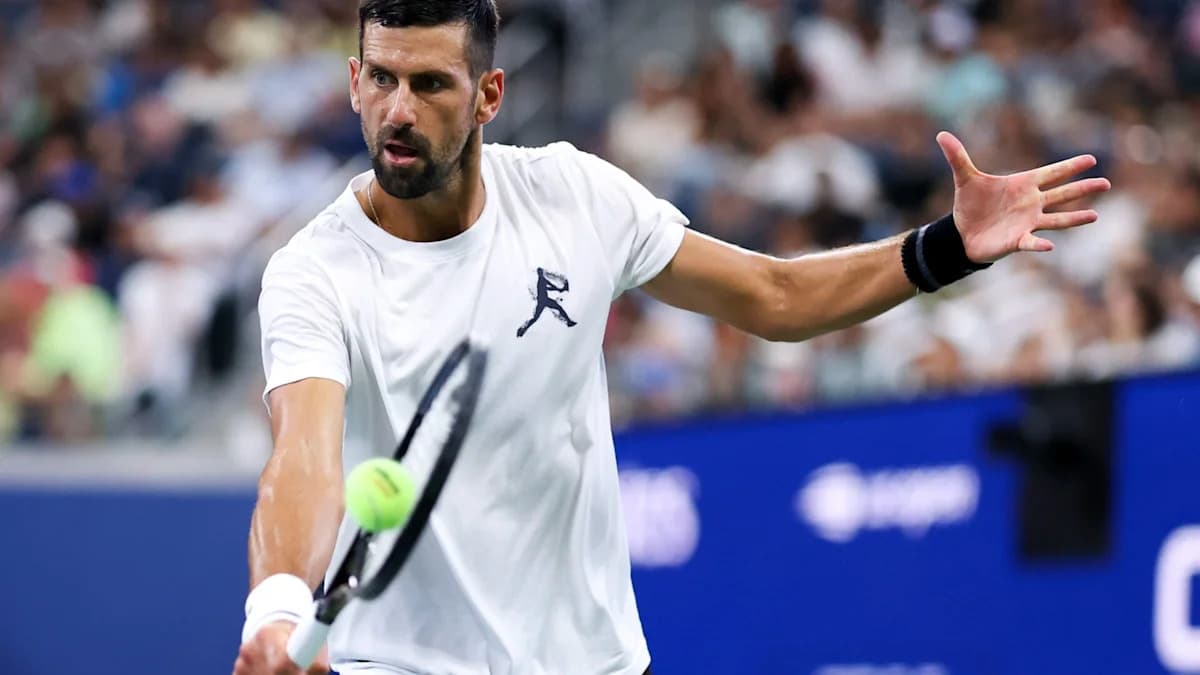
Alcaraz came out intent on imposing his style, stepping inside the baseline, hammering forehands and taking time away from Paul. He hunted the American’s serve, piling pressure on the return games, forcing Paul to hit closer and closer to the lines just to stay in rallies.
The pressure finally told in each set. A break, then a stranglehold. Paul chased, lunged, improvised. Alcaraz simply tightened the screws.
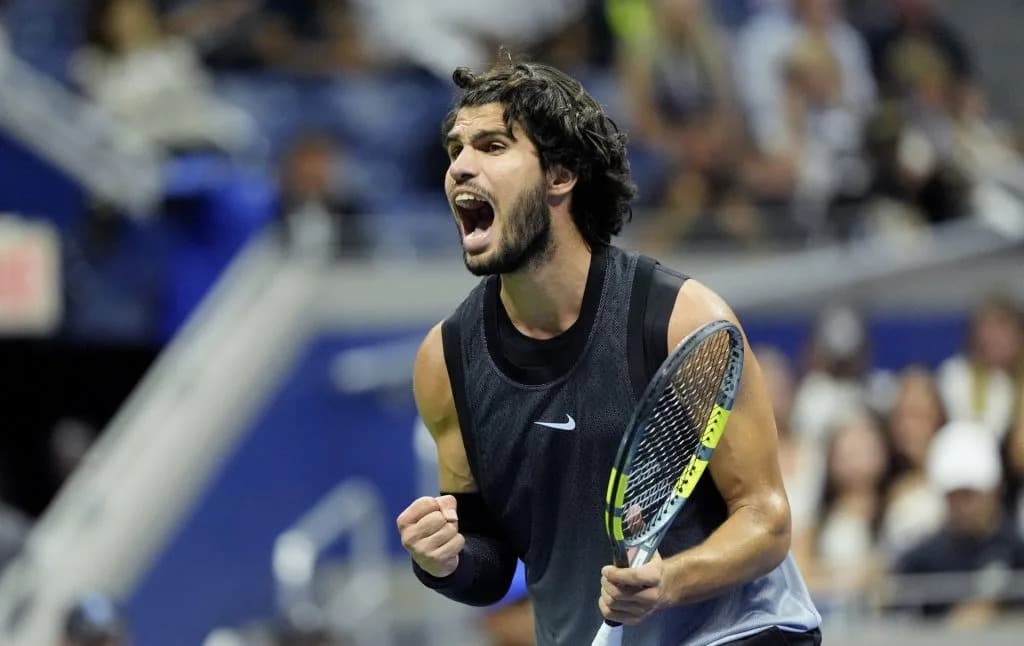
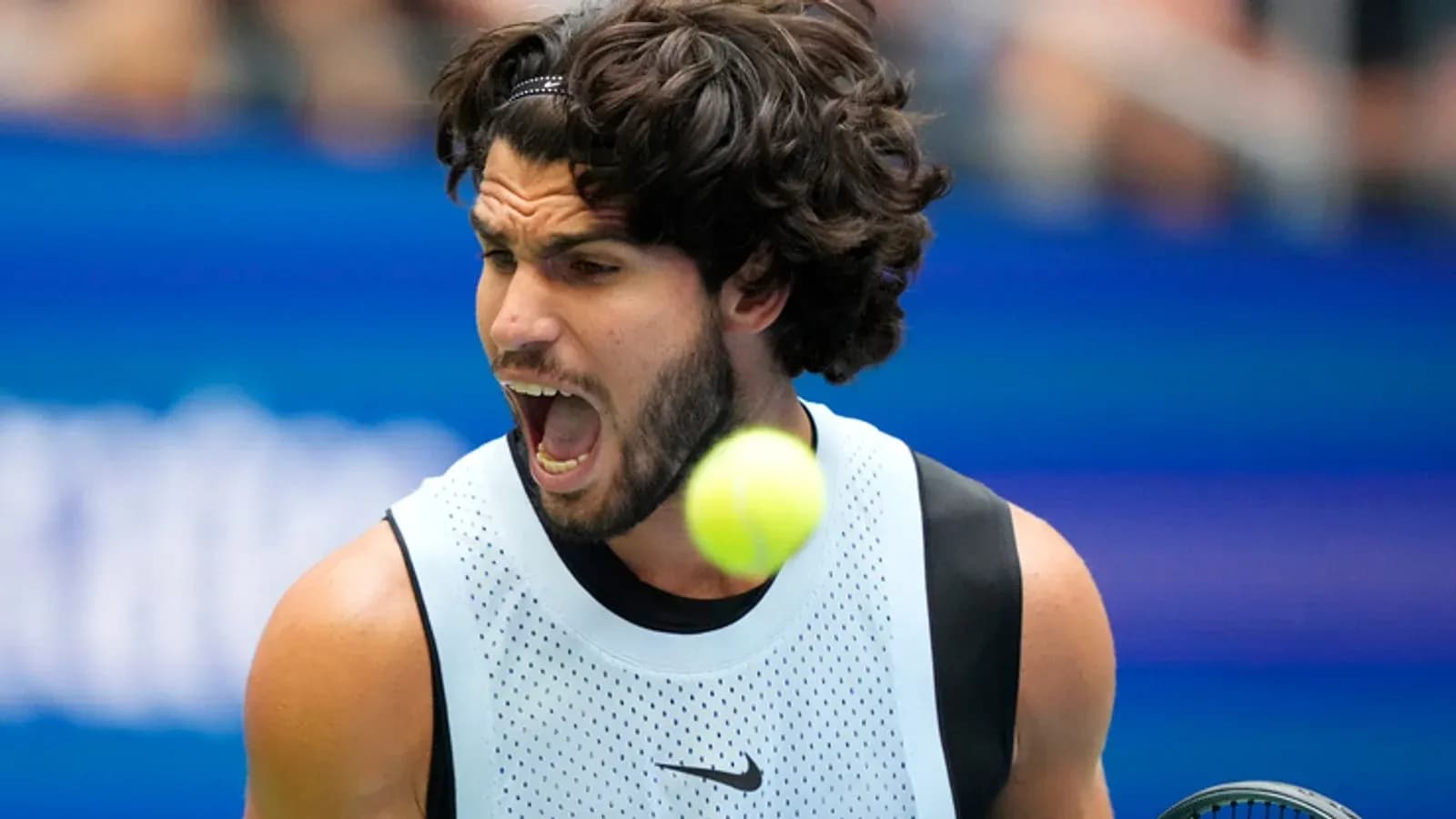
Even when there was a flicker of danger, he snuffed it out with a snarl.
Serving at 4-5 in the third, Alcaraz faced two set points. The crowd sensed a lifeline for Paul. Instead, they got a reminder of why the Spaniard is already a multiple major champion. Two heavy, fearless forehand winners erased both chances. Within minutes, the match was over, wrapped up in two hours and 21 minutes.
“I played my game. I tried to put my style on today’s match,” Alcaraz said, outlining the plan that had just dismantled one of the home hopes. He spoke of being ready to run, ready for the battle, but also of staying relaxed and clear-headed. It showed.
Asked if he is back to full power after that long lay-off, he didn’t hesitate. “I think so,” he said. His tennis backed it up.
‘Different class’ and ‘another stratosphere’
From the commentary box, the verdict was just as emphatic.
Tim Henman called it “a pleasure to watch Alcaraz go through the gears”, noting how he has “just got better and better as this tournament has gone on”. Paul, Henman said, “gave it everything he had but, at the end of the day, Alcaraz was different class.”
The forehand drew particular praise. Henman has seen great ball-strikers come and go, yet he put Alcaraz’s right arm right at the top of the list. The way he lashes the ball, he said, with such ferocity and such margin, “it’s unbelievable”.
Martina Navratilova went even further on the bigger picture. For her, the speed of Alcaraz’s rise defies the usual rules of development.
“Normally, when people have that many options to their game, it takes a while to figure out how to play the game,” she said. “But not Carlos, he’s just in another stratosphere.”
That is what this fortnight is starting to feel like: a young champion, fully fit again, rediscovering his own altitude.
Sabalenka survives a wild one
On the women’s side, Aryna Sabalenka’s title defence is still alive, but only after a jagged, uneasy win that said as much about her competitive steel as it did about her form.
The world No 1 beat Taylor Townsend 6-4 6-3 in a strange, scrappy contest that featured 11 breaks of serve in just 19 games. It was not clean. It was not calm. It was enough.
Sabalenka has spent 99 weeks at the top of the rankings. To make it 100, she needs to win a third straight US Open and hope Elena Rybakina, the current No 2, falls before the semi-finals. The margin for error is slim. Her tennis, at times, looked just as tight.
Townsend, roared on by the New York crowd, dragged Sabalenka into awkward patterns. The American attacked, came forward, tried to turn the match into a net-rushing spectacle. It worked in bursts. Sabalenka’s serve wobbled, her rhythm flickered. She found herself a break down in the second set and staring at a long night.
That was the turning point. Sabalenka reset, dug in on return, and went after Townsend’s serve with the same ferocity she usually reserves for her groundstrokes.
“I was like, ‘okay, you are down the break, just try to return the serve and put as much pressure on her as possible’,” she said. From there, she locked in, thinking “ball by ball”, and turned the set around. Once she had the scoreboard back under control, the match followed.
Navratilova graded the performance honestly. “It was good enough. It was pretty solid,” she said, pointing out that Townsend actually hit more winners, but that Sabalenka’s returning and passing shots carried the day. The American’s forays to the net met a wall of clean, punishing strikes.
“Overall, I would give Sabalenka a ‘B’ because she lost her serve so many times, but she played really well when it mattered,” Navratilova added.
‘She meant business’
From courtside, Annabel Croft saw something else: the theatre.
“There was a lot of ferocious intensity to what Sabalenka brought onto this court,” she said. When Sabalenka broke back in the second set, she let out a huge shriek, a roar that told everyone inside Arthur Ashe that the world No 1 had no intention of going quietly.
“The passion, the aura, the mentality, the personality, she brings so much to every court,” Croft said. “She’s a great showwoman and puts on a show whenever she plays tennis. She understands this isn’t just sport, it’s entertainment as well.”
Sabalenka has not dropped a set so far in New York. For all the turbulence on serve against Townsend, she still looks physically strong and mentally stubborn. Croft’s conclusion was blunt: “She is going to take some beating. She doesn’t look as vulnerable as I was expecting.”
Next up is a quarter-final against Wimbledon champion Linda Noskova, who survived a marathon of her own against Marta Kostyuk. The Czech edged a gripping repeat of their SW19 semi-final 7-5 5-7 6-4, only after Kostyuk saved five match points — two late in the second set and three more in the decider.
Noskova finally closed it out, but not before the match had veered into the kind of nerve-shredding territory that can either drain a player or harden them.
So the stage is set: Alcaraz surging, Sabalenka snarling, Noskova rising. In a tournament already heavy with storylines, the question now is simple: who can stop them?