Carlos Alcaraz's Grand Slam Comeback: A Winning Return
Carlos Alcaraz did not ease his way back into grand slam tennis. He walked on court after more than four and a half months without a singles match and, almost instinctively, reached again for the outrageous.
Serving at 5-4, 30-15 in the opening set against Roman Safiullin, he slid a serve wide, chased his own delivery to the net and watched a dipping backhand skid straight at his feet. For most players, that’s a problem. For Alcaraz, it was a chance. One soft, velvet half‑volley later, the ball floated over the net and died. Winner. Statement. Old magic, new chapter.
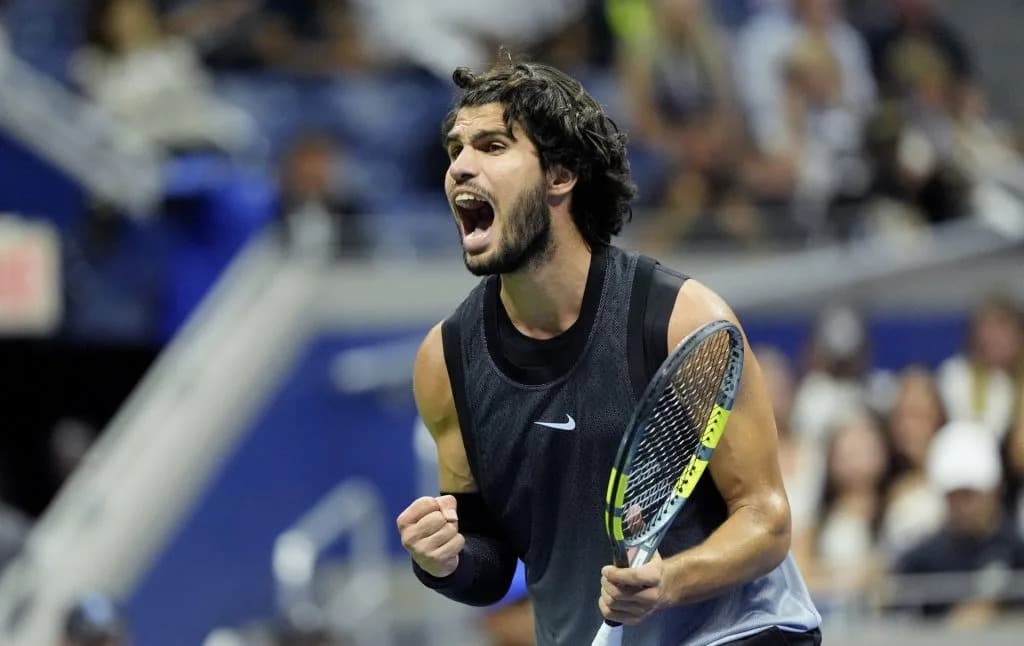
The smile that followed said as much as the scoreline that would come. A quick hold, then a relentless, almost ruthless march to a 6-4, 6-4, 6-4 victory. No sets dropped, no real drama on the scoreboard, but a thousand little checkpoints passed in his head and in that once-fragile right wrist.
This was not a gentle reintroduction. No warm-up events, no best-of-three easing-in period, no gradual load. Straight into a major, straight into best-of-five, straight into a first-round opponent who hits a brutally heavy ball. Safiullin’s power off both wings made this more than a routine comeback assignment; it was a live test of whether Alcaraz’s wrist could withstand full-throttle pace.
It held. More than that, it flourished.
From the first games, Alcaraz attacked with the shot that has terrified the tour for two years: his forehand. Any lingering doubt, any temptation to protect the wrist, he smothered under sheer aggression. He ripped through the ball, took it early, changed direction at will. By the end, he had unloaded 20 forehand winners against just nine unforced errors on that side, numbers that tell their own story of intent.
When he did fall behind in service games, he didn’t retreat. He hit his way out of trouble, leaning again and again on that ferocious forehand to reset the pattern and seize control of rallies. The more he swung, the freer he looked.
“It’s pain-free right now,” Alcaraz said afterward, a line that will echo around the locker room and far beyond. “I felt great. I don’t know how it looked from outside but, from inside, my feeling was that I was hitting normal. I was playing pretty normal, playing my style, and the arm, the wrist, everything felt great. I’m going to still take care of it, obviously, these days and before the matches and everything, but I’m just really happy it’s pain-free finally.”
One element, though, still sits under the microscope: the serve.
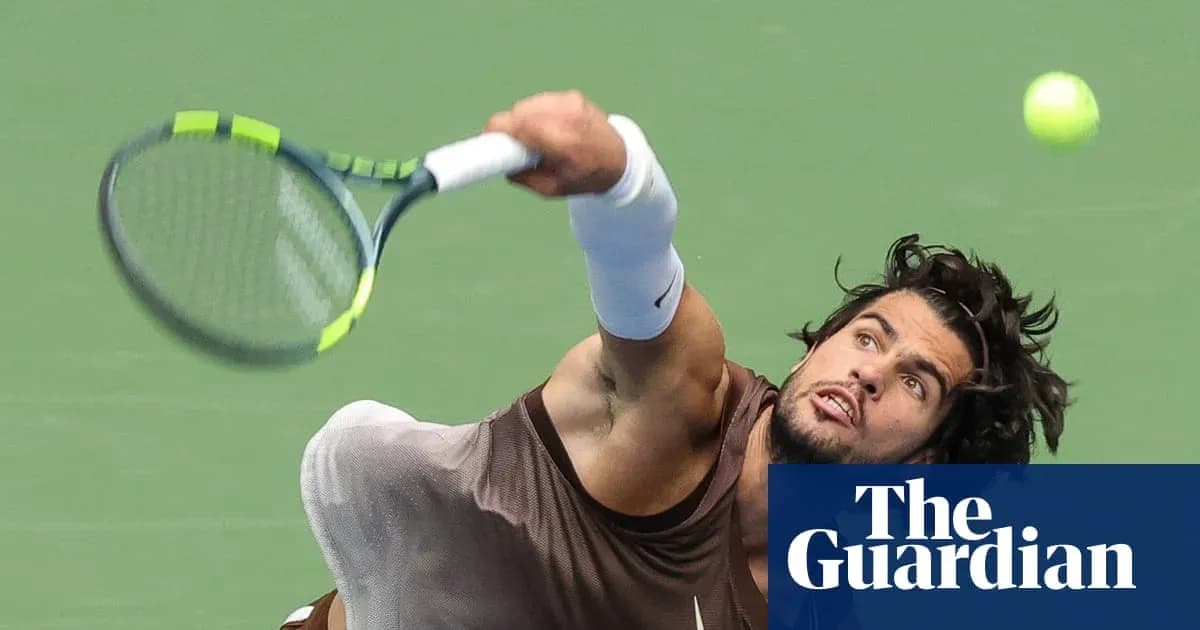
The radar told a quieter story than the forehand. Alcaraz kept his first-serve speeds down, averaging around 113mph. The tape beneath his arm sleeve, visible again during changeovers and practice sessions, hinted at caution. He is clearly not yet ready to unleash his full serving power, and that choice has consequences. Without a steady stream of cheap points from the line, every service game demands more physical and mental work, more exchanges, more stress on that same wrist he is trying to protect.
At this stage of a comeback, it is logical. Sensible, even. But in the brutal arithmetic of a grand slam, where the matches stretch and the opponents harden, the lack of free points could define how long this run lasts.
For now, Alcaraz is refusing to look that far ahead. His world, at least publicly, has shrunk to a simple daily equation: wake up, assess the body, compete if he can.
On this first day back, surrounded by family and familiar faces, that equation produced something close to perfect. His parents and brothers watched from the box, his team clustered around them, and even rapper Travis Scott took in the occasion. The setting felt less like a tentative return and more like a premiere.
“It was a difficult day for me, to be honest, but at the same time, a really beautiful one,” Alcaraz said. “Started the day really nervous. Really, really nervous, thinking: ‘I’m going to make it, I’m going to compete again.’ I had more nerves than usual, but just happy, because for me, my goal here is to compete, to enjoy, and let’s see how my body’s going to react after the matches, after the competition again.
“I don’t know how far I’m going to go in the tournament. I didn’t know if I was going to lose this one, if I’m going to make the second round, final. I don’t know how far I’m going to go. But what I just really want to do is enjoy every time that I’m going to walk into the court feeling the energy from the people, feel the competition, walking up, I’m thinking, all right, it’s match day. That’s what I’m going to do this tournament.”
The rankings, the draw, the projections can wait. On day one, the essential questions were simpler: Could he swing freely? Could he trust the wrist? Could he still find that audacious half-volley at 5-4, 30-15?
He answered all of them. The real test now is how many more times this fortnight he gets to walk out and ask them again.