Carlos Alcaraz Returns Strong at U.S. Open
NEW YORK — Carlos Alcaraz walked into Arthur Ashe Stadium with questions swirling around his wrist and his readiness. He walked out with both looking just fine.
The 23-year-old Spaniard, playing his first match since April, brushed aside Roman Safiullin 6-4, 6-4, 6-4 on Monday, moving freely, striking boldly and, most importantly, playing without a hint of pain in the right wrist that had cost him the French Open and Wimbledon.
“I was playing pretty normal, playing my style, and yeah, the arm, the wrist, everything felt great,” Alcaraz said. From the inside, he insisted, it felt like business as usual.
From the outside, it looked like a warning.
Alcaraz back in his element
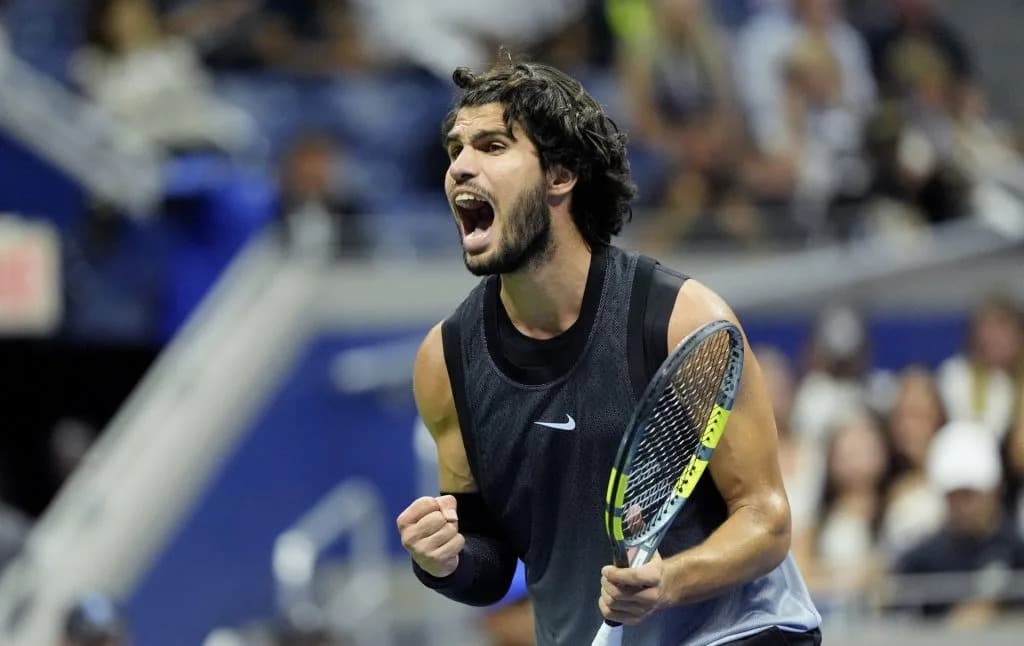
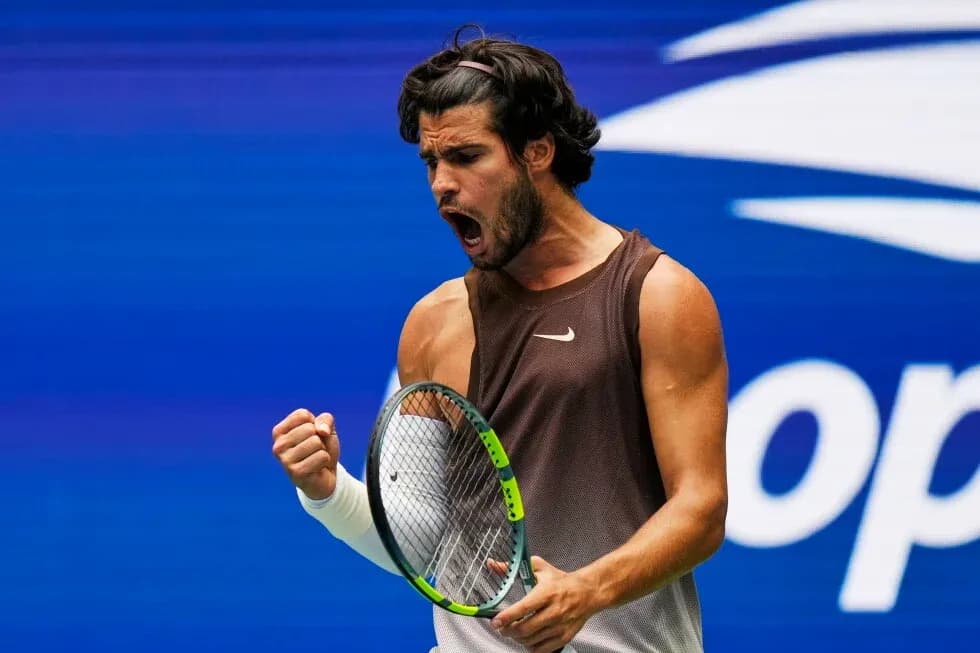
If there were nerves, they surfaced only in his own admission. On court, Alcaraz grew into the match, his body language loosening as the night went on. The second seed teased the Ashe crowd, cupping his hand to his ear, demanding more noise, more energy, more of the New York chaos he thrives on. A delicate volley winner in the final game brought a fist pump that felt less like relief and more like confirmation.
He has not played a warmup tournament. He chose to come straight into the furnace of Grand Slam tennis and see what the wrist would allow.
“I had more nerves than usual,” he said. “My goal here is to compete, to enjoy, and let’s see how my body’s going to react after the matches, after the competition again.”
He did not pretend to know where this comeback leads.
“I don’t know how far I’m going to go in the tournament. I didn’t know if I was going to lose this one, if I’m going to make the second round, final. I don’t know how far I’m going to go. But what I just really want to do is enjoy every time that I’m going to walk into the court feeling the energy from the people, feel the competition.”
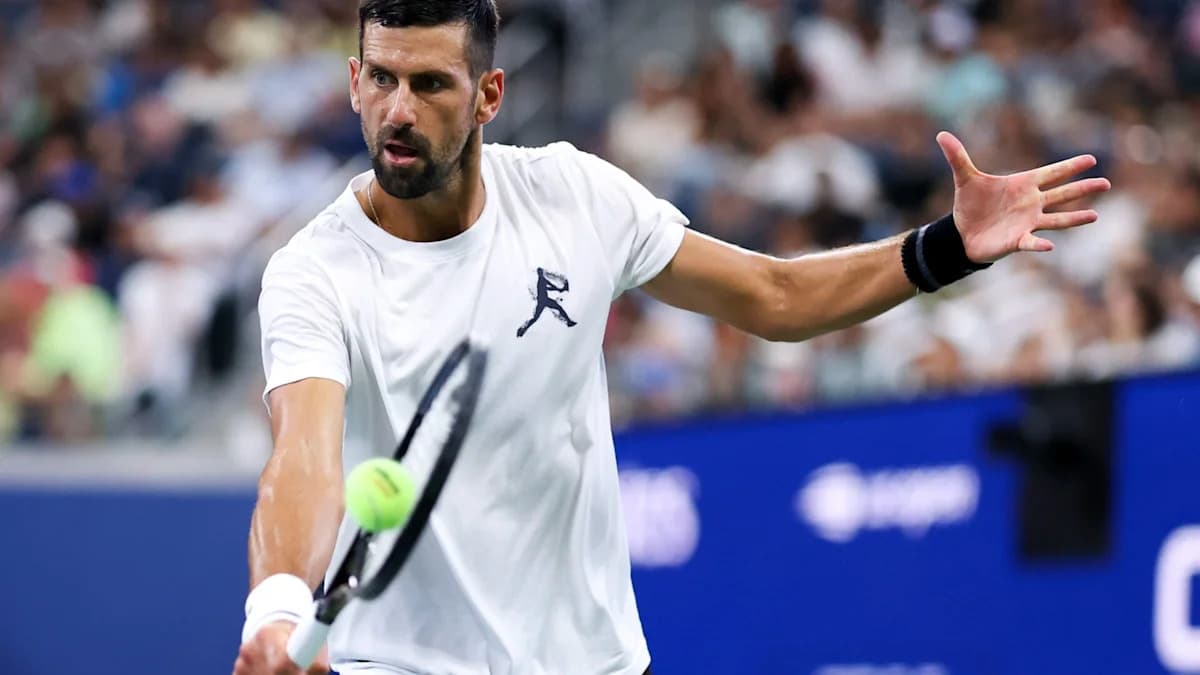
That uncertainty sits in sharp contrast to the chaos around him. No man has defended a U.S. Open title since Roger Federer strung together five in a row from 2004 to 2008. The draw has cracked open: top-ranked Jannik Sinner is out with a knee injury, and No. 4 Novak Djokovic crashed out in the first round on Sunday, his first opening-round loss at Flushing Meadows after a 19-0 start and four titles among his men’s-record 24 majors.
In a tournament suddenly stripped of its usual certainties, a healthy Alcaraz starts to look like the most familiar force of all.
Sabalenka steadies the stage
Before Alcaraz took the court, Aryna Sabalenka had already done her part to restore a sense of order to a shaken event.
While Djokovic’s exit rattled the men’s draw, Sabalenka, a two-time U.S. Open champion, delivered a composed 6-4, 6-4 win over Camila Osorio to begin her bid for a third straight title in New York — a feat last achieved by Serena Williams from 2012 to 2014.
Sabalenka has made Ashe her annual late-summer stage. She has reached the last three U.S. Open finals, rebounding from a loss to Coco Gauff in 2023 by winning in 2024 and then defeating Amanda Anisimova last year to retain the crown.
“I feel like this is one of my favorite stadiums,” she told the crowd. “I really experienced the best emotions here in this stadium.”
On Monday, she also brought a new look. Gone was the black mesh that sat over her orange Nike outfit during last week’s mixed doubles with Djokovic, an outfit that sparked criticism on social media. In its place: orange mesh over orange, a brighter, day-session version of the same theme.
Sabalenka shrugged off the online chatter, saying the only thing that mattered was that she liked the outfit. The reason for the switch, she explained, was far more mundane than any fashion storm suggested.
“To be honest, I didn’t know that I have a day dress,” she said. “I thought I have a black dress with orange underneath. I figured (out) when I went to Nike that I actually have day session and night session, which is just like black and orange for the day.”
The clothes were light; the context was not. Sabalenka arrived in New York after a run of poor results — fourth-round exits in Toronto, Cincinnati and at Wimbledon. Those stumbles have left her ranking under threat. Even if she wins the title again, she needs help to stay at No. 1: Elena Rybakina, currently No. 2, will overtake her by reaching the semifinals, and could claim the top spot without winning a match if Sabalenka fails to lift the trophy.
On Monday, though, the tennis was sharp, the ball striking heavy and decisive. For a day, at least, the No. 1 looked like it still fit.
Wawrinka’s farewell, Tsitsipas’ defiance
Elsewhere, the day carried a different kind of emotion.
Stan Wawrinka, the 2016 champion, played the last Grand Slam match of his career, losing to Matteo Berrettini. At 41, the three-time major winner from Switzerland leaves behind one of the most punishing backhands and one of the most respected résumés of his era.
“I’m going to miss it for sure. I’m going to miss it big time,” Wawrinka said, summing up what many in the sport will feel about his departure.
On the other side of the age and expectation divide, Stefanos Tsitsipas signaled that he is not ready to be written off. Unseeded at the U.S. Open for the first time, the former world No. 3 rallied from a set down to knock out No. 10 seed Arthur Fils, 4-6, 7-6 (3), 6-1, 6-4. Fils had arrived on a high after winning the title in Cincinnati; Tsitsipas sent him out with a reminder of his own pedigree.
Asked if he can rediscover the level that took him to two Grand Slam finals — both losses to Djokovic — and to the brink of the sport’s summit, Tsitsipas did not hesitate.
“Why not?” he said.
Seeds hold, tempers fray
The women’s draw saw several familiar names move through. No. 8 Iga Swiatek advanced, as did 2017 champion Sloane Stephens. Two-time champion Naomi Osaka was scheduled for the night session, another echo of recent U.S. Open history.
On the men’s side, No. 8 Ben Shelton survived a brutal start to turn his opener around. Broken three times in a 28-minute first set, he looked rattled and rushed as Tallon Griekspoor stormed through 6-1. Then the American flipped the script, blasting his way to a 1-6, 6-1, 7-6 (3), 6-2 victory that showcased both his resilience and his ability to seize momentum when his serve starts to click.
In the women’s field, No. 6 Linda Noskova, fresh off her Wimbledon title, moved on, as did No. 7 Karolina Muchova, the player she beat in that All England Club final. No. 10 Amanda Anisimova, last year’s runner-up in New York, also progressed.
Not everyone from that Czech wave advanced. No. 28 seed Sara Bejlek, who stunned Sabalenka in Cincinnati, could not repeat the upset magic and fell in three sets to Cristina Bucsa.
The day’s rawest snapshot, though, belonged to a first-round duel that stretched across two days.
No. 26 seed Emma Navarro edged Lois Boisson 7-6 (6), 6-7 (1), 6-3 in a match that began Sunday and finished Monday after rain delays. When the final point landed, an ESPN camera caught the sport in a single frame: Navarro facing the stands, fist clenched in triumph, while behind her Boisson repeatedly smashed her racket into the court.
One image, two stories. The U.S. Open rarely does it any other way.
And with Alcaraz moving freely again, Sabalenka hunting history, and giants already toppled, the question now is simple: who will own the next defining shot of this wild New York fortnight?