Carlos Alcaraz Returns to US Open: Defending Champion's Comeback
Carlos Alcaraz walks back into New York with seven majors to his name, a defending US Open champion again, and a wrist that has dominated his life for four long months.
The physical pain was one thing. The silence in between was worse.
A champion wrestling with doubt
The 23-year-old Spaniard has not played a singles match since mid-April, his season ripped apart by a wrist injury that refused to be rushed. As he circled dates on the calendar and then crossed them out, the questions in his head grew louder.
"Once I started to practice a little bit but didn't know when I'm going to [return], those thoughts were really difficult to deal with," Alcaraz admitted. He did not know if Cincinnati was realistic, if the US Open would come too soon, or if the entire American swing would vanish.
That uncertainty became the real opponent.
"Those intrusive thoughts were the most difficult things to deal with in this process," he said. Not the rehab. Not the drills. The not knowing.
Now, at last, he has his answer. He is here.
Back under the lights of Flushing Meadows
Alcaraz returns to the scene of some of his most vivid work. He lifted the trophy in New York in 2022, then again in 2025, and last year he outlasted Jannik Sinner in a final that underlined their growing rivalry and his own appetite for the big stage.
On Sunday, he opens his title defence against Roman Safiullin, the powerful Russian whose heavy ball and aggressive court position will quickly reveal just how sharp Alcaraz is after his lay-off. It is not a gentle reintroduction. It is an examination.
He has at least felt the bounce of the Arthur Ashe Stadium court again. Earlier this week, he stepped back into competition in the mixed doubles, partnering 23-time Grand Slam singles champion Serena Williams in a curtain-raiser that doubled as a test run for his wrist under match stress.
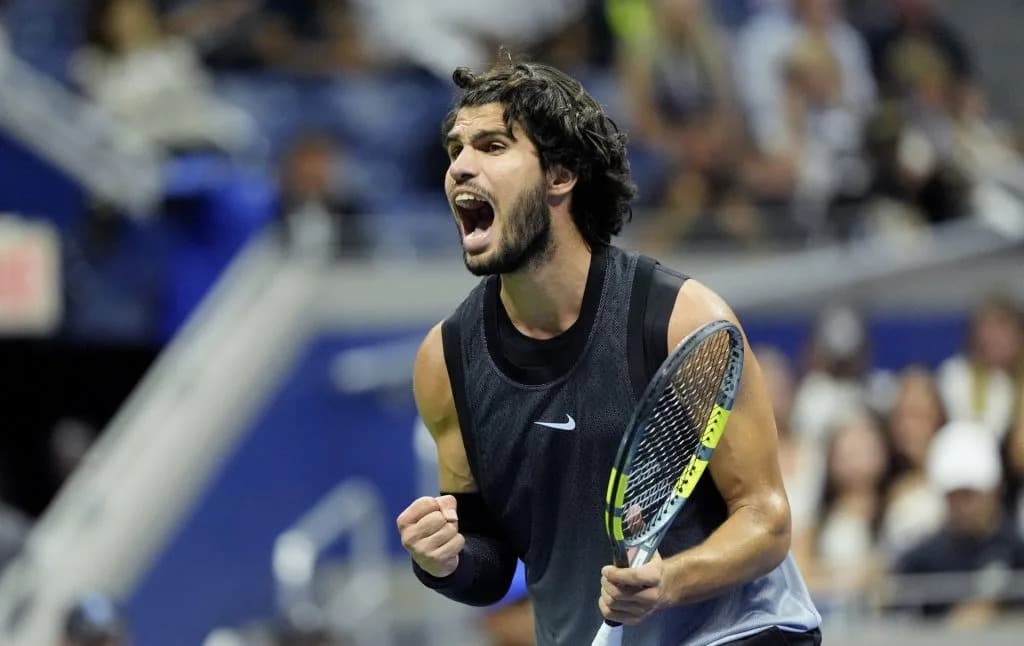
The sleeve on his right arm stayed on. It will stay on.
A fragile joint, a brutal forehand
Wrist injuries stalk tennis players. The joint is small, the forces enormous. Take a chance at the wrong time and a season, even a career, can tilt in the wrong direction.
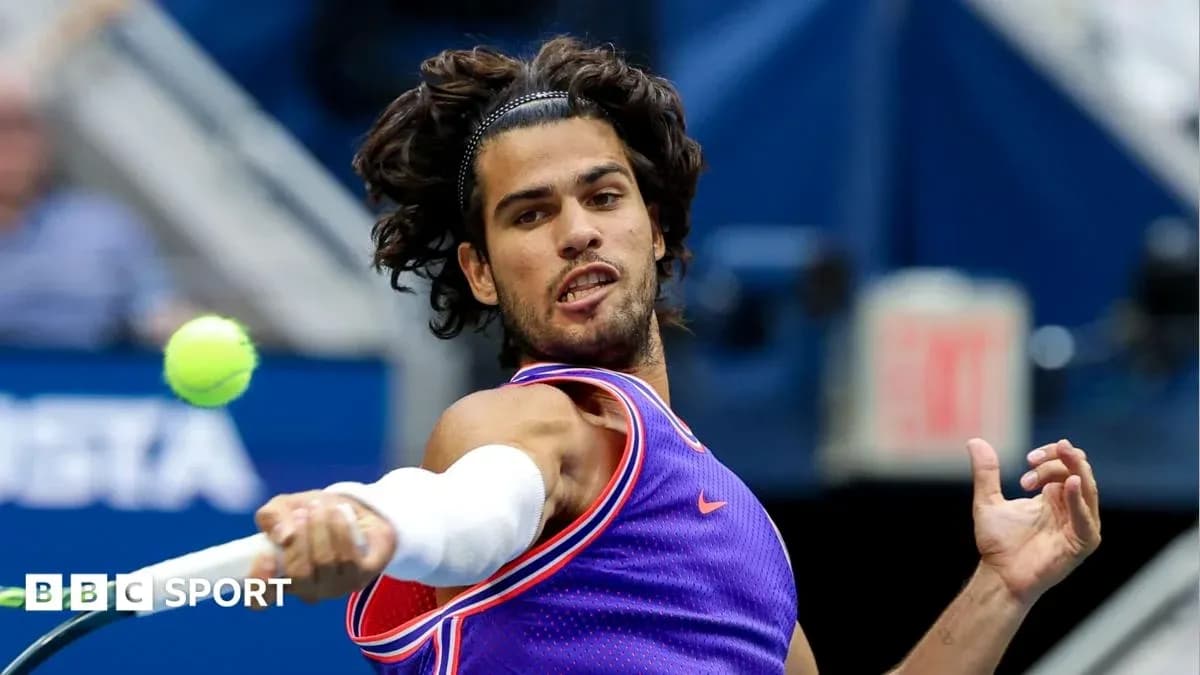
Alcaraz’s game only magnifies the risk. His forehand is a weapon built on violence and whip, a stroke that drives huge loads through the joint of his playing wrist. The condition he has been managing is thought to be tenosynovitis, an inflammation of the sheath that protects the tendon on the inside of the wrist.
This is not the sort of issue a player can simply grit his teeth through. It demands patience. He has had to find some.
He still trains with a compression sleeve on the arm, a visible reminder that the area remains under protection, even as he insists the joint is ready for the rigours of best-of-five.
Mind over mileage
On Friday, Alcaraz stood in front of the microphones and cut through any notion that this was an ideal build-up.
"It's really challenging. Probably, you know, in terms of preparation and everything, it is not the best time," he said. Seeded second despite his absence, he knows he is stepping into a Grand Slam draw without the usual bank of matches, without the familiar rhythm of week-to-week competition.
Yet there was no sense of a player bracing for damage limitation.
"We, my team and me, believe that I'm ready."
That word – belief – ran through his assessment. He spoke of leaning fully on the people around him, the staff who have monitored every session, every twinge, every data point.
"I've got to trust my team, I've got to trust my people that tell me it's going be fine," he said. "I just have to go 100%, and right now I think with the practices I have done so far, it's been all good."
The fear that once crept in as he stared at an uncertain timetable has been pushed to the edge of his mind.
"I'm trying to stay away from any fear and I'm playing normal."
The unknown waiting on Sunday
What “normal” looks like when the stadium fills, when Safiullin starts swinging freely and the rallies stretch, remains to be seen. Training courts do not replicate break points. Practice sets do not mimic the weight of a title defence.
But Alcaraz has made it back to the one place those intrusive thoughts could never reach: the arena.
The wrist is strapped, the doubts are quieter, and the US Open is about to discover whether four months away have merely paused his rise, or given it a sharper edge.