Carlos Alcaraz Surges Past Jaime Faria at US Open
Carlos Alcaraz bends but does not break. Not in New York. Not at the US Open.
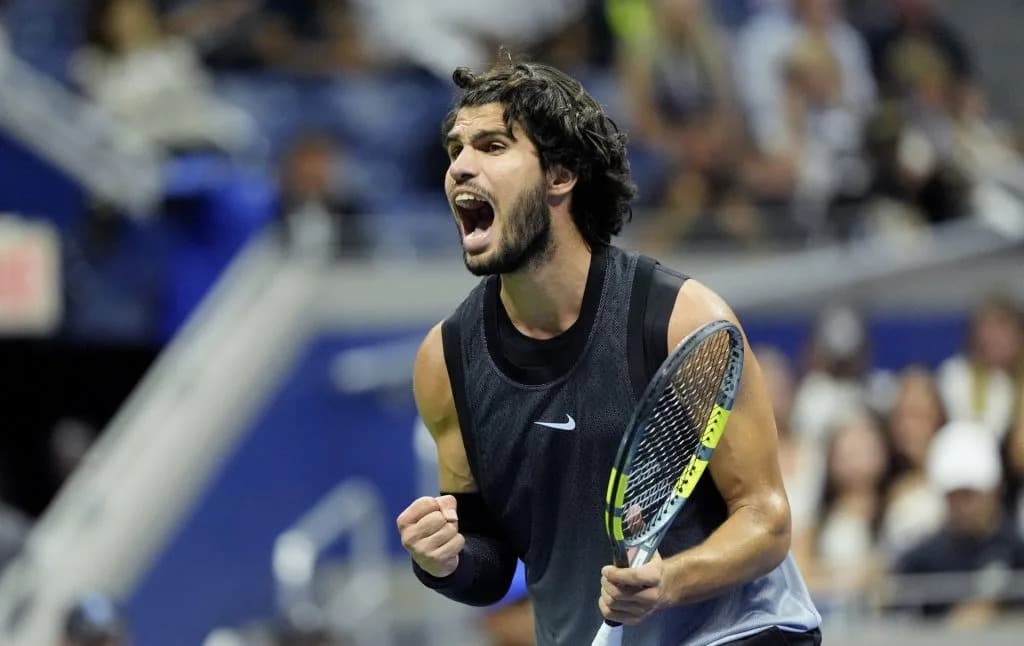
Under the lights, the defending champion flirted briefly with danger, dropped the opening set, then ripped the match away from Portugal’s Jaime Faria with the kind of ruthless surge that has become his signature in this city. The Spaniard came through 4-6 6-0 6-3 6-2, turning a nervous start into a statement of intent.
This is a comeback with teeth.
Slow start, sharp response
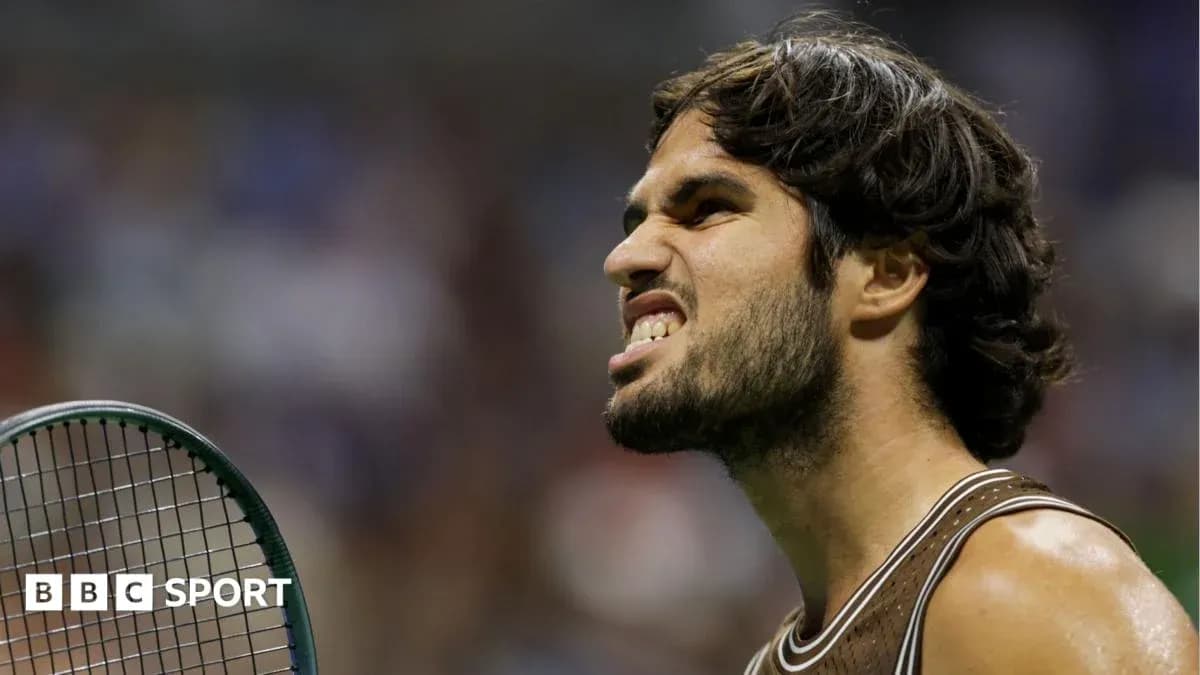
For a set, Alcaraz looked like a man still feeling his way back from a long-term right wrist injury and a four-month absence from competition. The timing on his forehand wavered. His footwork lagged half a beat. Faria, ranked 72 in the world and unburdened by expectation, took advantage and pocketed the opener 6-4.
The turning point arrived almost immediately in the second set.
Serving at 0-0, Alcaraz faced two break points. Lose that game and the night could have unravelled fast. Instead, he dug in, attacked with conviction, and slammed the door. The hold did more than protect his serve; it flipped the mood inside the stadium.
From there, the match changed shape.
Alcaraz tore through the second set 6-0, stripping Faria of time and confidence. The forehand that had looked tentative in the first set suddenly cracked through the court. The drop shots, the angles, the swagger — all of it returned in a rush.
“It was a tough match for me. I felt great in the first set, but I didn’t take time and that cost me,” he said afterward. “After that I tried to be focused, stay calm and think the good things will happen.”
They did. Relentlessly.
Wrist questions, answered for now
Coming into the final major of the season, the central question around Alcaraz was simple: how would that right wrist hold up in real battle? This is his first tournament since mid-April. Practice sessions are one thing; best-of-five at the US Open is something else entirely.
The early evidence this week has been encouraging. He described himself as playing “normal” in his straight-sets win over Roman Safiullin in the first round, and he doubled down after dispatching Faria, insisting he is not babying his forehand.
“I know once I step on the court, I’ve just got to go for it every time. I’ve got to feel normal,” he said. “I have to hit like I was hitting before the injury. I’m feeling great. There is no reason to be afraid and not hitting normal.”
The scoreline on Thursday night backed that up. Once he steadied himself, Alcaraz controlled the baseline, dictated rallies, and forced Faria into increasingly desperate shot-making. The third and fourth sets, 6-3 6-2, felt less like a struggle and more like a tune-up.
Interestingly, he welcomed the extra mileage.
“At the end, I realised that playing four sets was really good for me to test everything physically, to test my body, how I feel, and how I’m going to feel tomorrow after this match,” he said.
The real exam, of course, comes later in the fortnight. The deeper he goes, the more those five-set demands stack up on a wrist that has not yet been through that grind since April.
A wide‑open draw, and a familiar glint
The landscape around him has shifted in his favour.
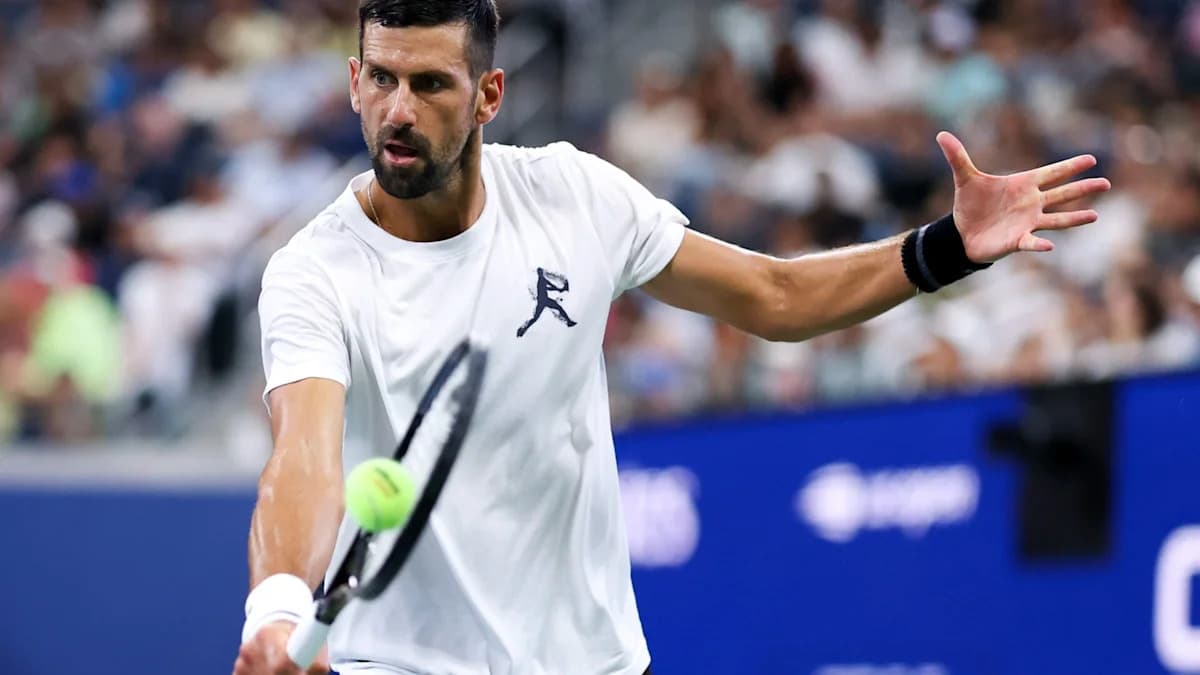
Jannik Sinner, his fiercest current rival on hard courts, is missing from New York through injury. Novak Djokovic, the 24-time major champion and the man who has shared the sport’s biggest stages with him over the past two seasons, is already out.
The draw, suddenly, looks open. Not easy — never that at a major — but inviting.
Alcaraz, a two-time US Open winner, does not need anyone to tell him what that means. The path to a third title here will still run through more dangerous opposition than Safiullin and Faria, and the physical questions will grow louder with each passing round. Yet nights like this, where he bends early and then surges away, are how champions build momentum in New York.
Next up is China’s Wu Yibing, ranked 113 in the world, in the last 32. Another step, another chance to stretch that wrist, another look at how his body responds to repeated best-of-five efforts.
Americans stir as the hunt continues
On the home front, the American charge kept its shape.
Twentieth seed Tommy Paul, a possible fourth-round opponent for Alcaraz, moved through with a 6-2 6-3 5-7 6-4 win over Croatia’s Dino Prizmic. Paul will now face 15th seed Alexander Bublik, who barely broke stride in dismissing French veteran Adrian Mannarino 6-3 6-1 6-1.
Ben Shelton, the eighth seed and one of the faces of the new American wave, stayed on course in his bid to become the first US men’s champion since Andy Roddick in 2003. He edged past Poland’s Hubert Hurkacz 6-3 5-7 7-6 (7-3) 7-5 in a tight, bruising encounter that underlined both his serving power and growing resilience.
Frances Tiafoe, twice a semi-finalist here and always a crowd magnet, handled Japan’s Rei Sakamoto 6-3 7-6 (7-2) 7-5, showing the kind of clean, aggressive tennis that makes him such a threat on these courts.
Not everyone survived the night. Spanish 12th seed Rafael Jodar suffered the heaviest blow of the men’s draw on day four, crushed 6-2 6-1 6-1 by China’s world number 124 Bu Yunchaokete in one of the upsets of the tournament so far.
New York waits on its king
So the defending champion marches on, not yet at full roar, but close enough for the rest of the field to feel the tremor.
The wrist has held. The legs are working. The game, after a shaky opening set, looked again like the complete, fearless package that has already delivered seven Grand Slam titles.
The draw is open. The questions are clear.
Now, in a city that has already seen him crowned twice, how far can Carlos Alcaraz push this comeback run?