Carlos Alcaraz Dominates US Open Quarterfinals with Astounding Forehand
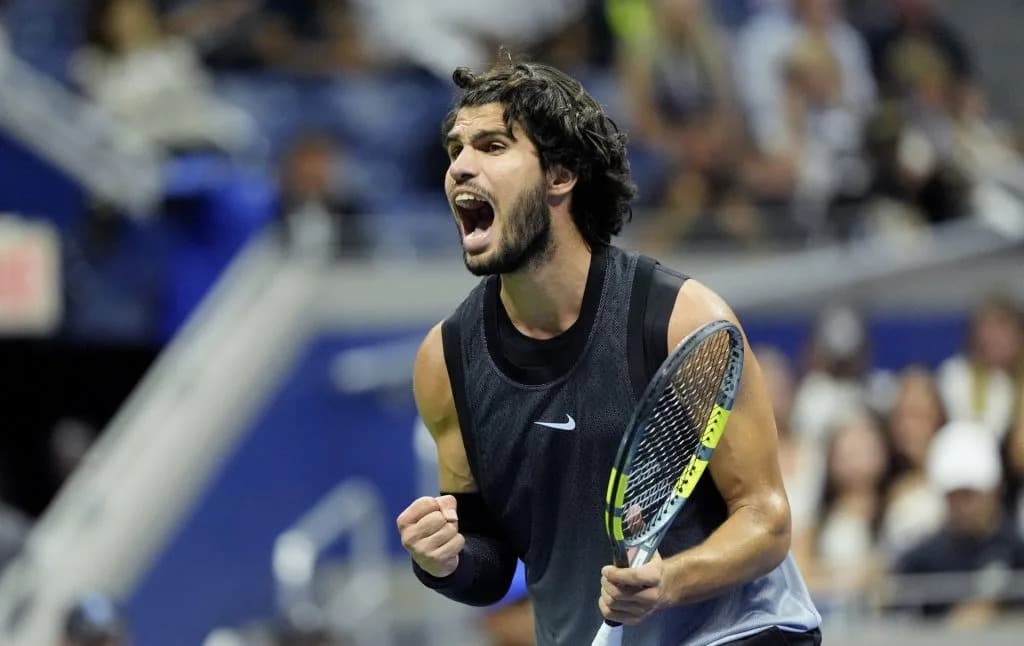
Carlos Alcaraz returned to New York with a taped wrist and a point to prove. Four matches in, the message is loud enough for everyone inside Arthur Ashe Stadium to hear: he’s back, and he’s hitting through the court like he never left.
After more than four months out with a right wrist injury, the Spaniard has stormed into the US Open quarterfinals, dismantling Tommy Paul 6-4, 6-3, 6-4 in a two-hour, 20-minute display that felt less like a comeback and more like a reassertion of authority.
He has dropped just one set all tournament. He has barely looked human.
A Forehand That Left the Other Bench Shaking Its Head
The most telling reaction did not come from Alcaraz, or even from Paul, who has seen this movie before. It came from Paul’s coach, Brad Stine, who could only half-joke his way through an explanation of what he had just watched.
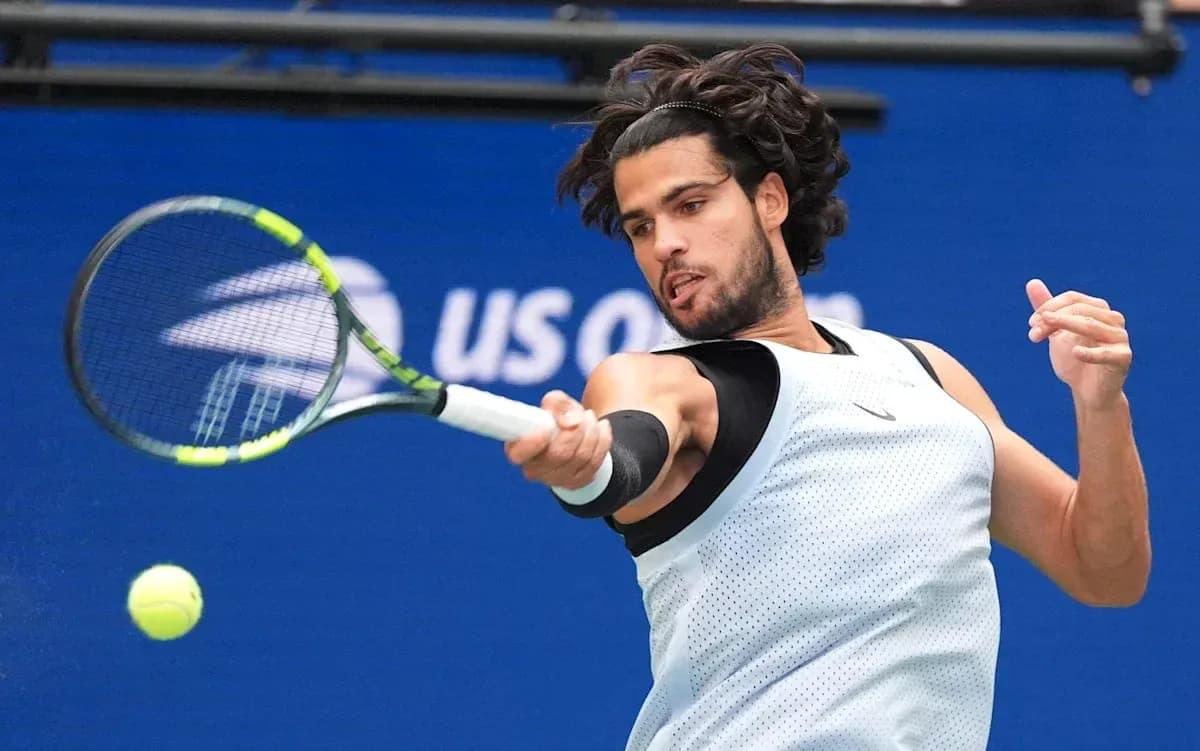
“Carlos’s forehand was absolutely astounding,” Stine told Tennis Channel. Then he went further. “I actually said yesterday to a couple of people. I want to have them do drug testing on that racket. I think there’s something. I think that racket’s juiced. It’s got to be juiced. It can’t be him, can it? Because every time he touches the ball with that racket, it just goes. It comes off like a cannon.”
From the first game, that “cannon” dictated the rhythm. Alcaraz stepped in on returns, ripped inside-out forehands that pinned Paul in the backhand corner, and turned defense into offense with a single swing. Every short ball felt like a mistake waiting to be punished.
Paul, ranked No. 21 in the world and arriving with real momentum after a win over Alexander Zverev in Cincinnati, never quite found a way to blunt that shot. He tried to change height and spin, to drag Alcaraz off balance, to slow rallies down. The ball kept coming back harder.
History in the Head-to-Head
This was not just another win for the second seed. It was a small piece of history.
With this victory, Alcaraz has now beaten Paul at all four Grand Slam tournaments, becoming only the 10th man in the Open Era to defeat the same opponent at each of the majors. Their rivalry has become a recurring chapter in his rise.
They have met nine times on tour. Alcaraz now leads 7–2. The American knows the full range of the Spaniard’s weapons better than most, and said as much before they walked on court.
“I think I’ve played him more than anybody on tour, for me, which is kind of crazy,” Paul admitted. “But yeah, we’ve had some good matches. One really bad beatdown at the French Open. But he’s the test. Him and Sinner; they’ve been playing great.”
The “test” once again proved too much. Their previous encounter at a major came in the fourth round of the 2026 Australian Open, where Alcaraz also won in straight sets and went on to lift the trophy. The pattern held in New York: when the stakes rise, Alcaraz raises his level.
From Layoff to Full Throttle
What makes this run more striking is what came before it. Alcaraz had not played a tour event since the Barcelona Open in April. For a player who thrives on rhythm and repetition, four months away with a wrist problem could have been a serious derailment.
Instead, he has returned with the same explosive first step, the same swagger between points, and a forehand that has seasoned coaches joking about equipment checks.
His movement has looked sharp, his shot selection bold. The serve has given him free points when needed, and the competitive edge that carried him to seven Grand Slam titles has not dulled with time off. If anything, the absence seems to have sharpened his hunger.
Another American Awaits
The reward for this Round of 16 win is another night under the lights and another American across the net. Alcaraz will face Ben Shelton in the quarterfinals on Tuesday, September 8, in the evening session, scheduled for 7:00 p.m. ET.
Shelton brings power, swagger, and a home crowd that loves him. Alcaraz brings a champion’s résumé and a forehand that has rival coaches wondering if the racket should be on a testing table.
One of them will leave Arthur Ashe that night with the noise at their back and a place in the semifinals. The other will walk off knowing exactly what it feels like when a “juiced” forehand takes over a Grand Slam court.