Carlos Alcaraz Returns to US Open with Electrifying Performance
Carlos Alcaraz needed only one step onto Arthur Ashe Stadium to feel it again.
The noise. The lights. The sense that, for all the talk of wrists and layoffs and lost months, this is still his stage.
After 139 days without a singles win, the seven-time major champion returned to the US Open on Monday night and brushed aside Russia’s Roman Safiullin 6-4, 6-4, 6-4, launching his title defence with a performance that mixed rust, relief and the old electricity.
The showman returns
He walked in wearing a compression sleeve on his right arm, the visible reminder of the wrist injury that had kept him out for more than four months and forced him to watch from afar as Alexander Zverev took Roland Garros and Jannik Sinner claimed Wimbledon.
He walked out grinning.
“I missed the crowd, the energy, the competition – I missed everything,” he said on court, the smile never really leaving his face. “I’m just really, really happy that I was able to compete again.”
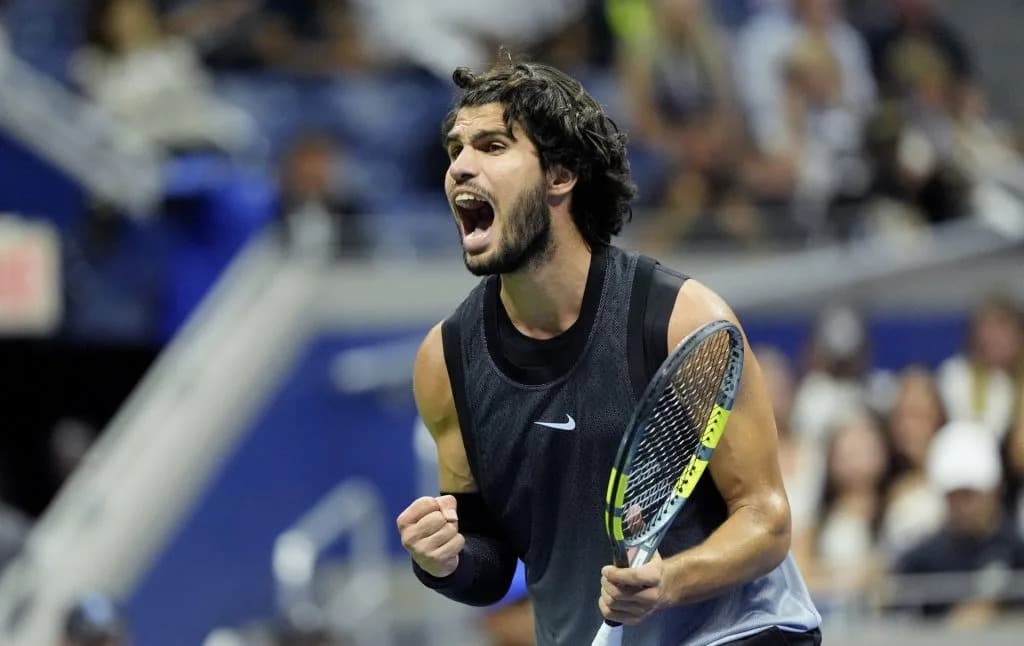
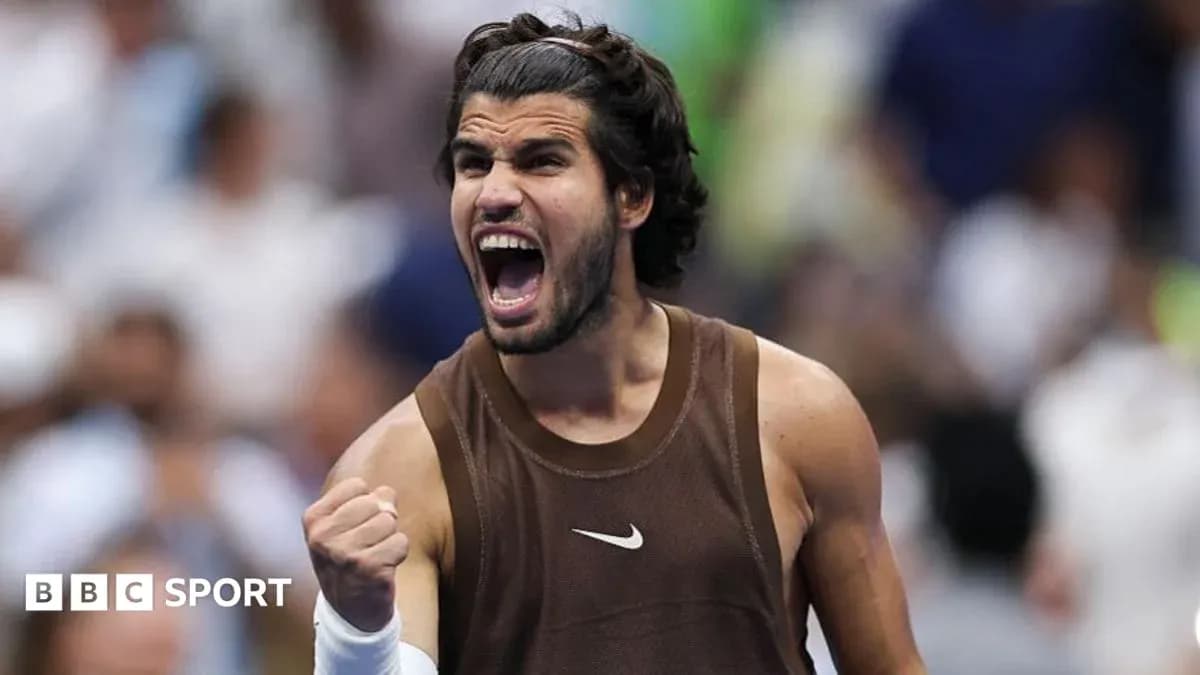
From the first game, the old habits came back. Every forehand winner – and there were plenty – drew a clenched fist and a loud “vamos” towards his box. The trademark whip on that forehand, the shot that has come to define his game, produced the bulk of his 28 winners and, crucially, the separation he needed in each set.
If there were any doubts about whether he would still enjoy it after the layoff, he answered them in the changeovers. At one point he sat in his chair, singing along to a Michael Jackson track over the stadium speakers, shoulders loose, eyes bright. This did not look like a man easing nervously into a comeback. This looked like someone who had been waiting months to feel this again.
Former Wimbledon champion Pat Cash, watching on BBC Radio 5 Sports Extra, noted how “every little win” seemed to spark a celebration from Alcaraz. It showed. He played like a man determined to squeeze every drop out of the night.
“What I really want to do is enjoy every time that I’m going to walk into the court, feeling the energy from the people,” Alcaraz said. “That’s what I’m going do this tournament. The results, it’s going to come after all.”
On Monday, the enjoyment came first. The result followed.
A crowd-pleasing finish, a few warning signs
Safiullin, ranked 99 in the world, pushed hard enough to keep the three sets honest but never quite hard enough to threaten an upset. Each time he sniffed a foothold, Alcaraz’s forehand and feel at the net shut the door.
The defining moment came late. Serving for the match, Alcaraz chased down ball after ball in a punishing rally before feathering a drop shot so delicate it almost stopped on the court. He froze, fist raised to the sky, then pointed to his ear and waved both arms, demanding more noise from a crowd already on its feet. Arthur Ashe obliged.
Yet beneath the theatre, the numbers told a more nuanced story. The defending champion’s serve, usually a weapon, misfired. He finished with just two aces against five double faults. The first-serve percentage – 68% – was solid enough, and he won 66% of those points, but the usual bite was missing.
“The serve is the shot I was struggling the most,” he admitted. He also revealed that some of the slower deliveries were deliberate, a tactical ploy to disrupt Safiullin’s rhythm. “I’m going try to serve better. The point is going to try to serve normal, but it’s a shot that I just always struggle with. But it will be back, for sure.”
Physically, he looked sharp: no limping, no obvious grimacing, no visible fear in the wrist when he uncorked those heavy forehands. Mentally, it was different. The honesty came later.
“There were some doubts in the match, I’m not going to lie,” he said. “I’ve been thinking about ‘am I going to last the best of five, am I going to last playing four sets, five sets?’”
On this evidence, he had enough in the tank. The real test will come when someone drags him deep into a fourth or fifth set. For that, he knows he needs more court time.
“I need more matches under the belt to get again into the rhythm of the tournament. I’m pretty sure I’m going to get better and better every day.”
A draw quietly opening up
If the first step back was about feeling and freedom, the path ahead is starting to look intriguing.
Next up is Portugal’s Jaime Faria, ranked 72 in the world. On paper, it is another match Alcaraz should control if he maintains this level. Beyond that, the landscape has shifted dramatically.
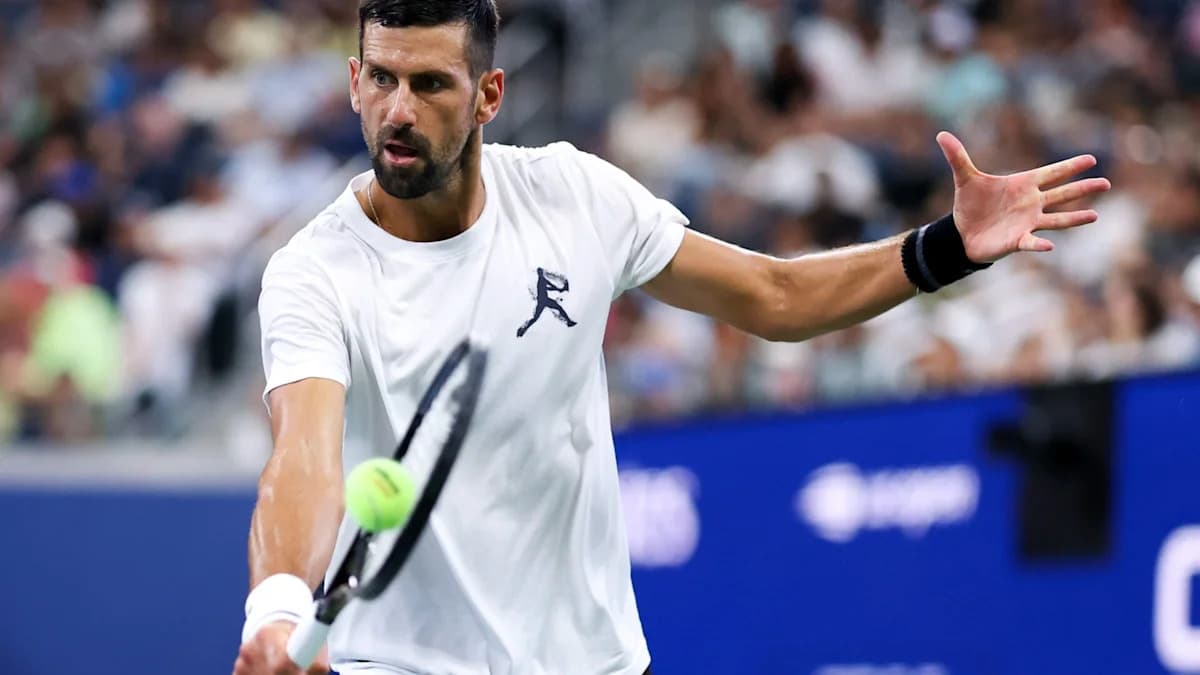
World number one Jannik Sinner is not in New York, sidelined by a knee problem. Novak Djokovic, the 24-time Grand Slam champion and the man who has defined this era, is gone too, stunned in the first round by Argentina’s Mariano Navone in one of the shocks of the tournament.
Alcaraz, seeded second, sits on the opposite side of the draw to French Open champion and top seed Alexander Zverev, meaning the two cannot meet before the final. One more obstacle fell earlier on Monday when Arthur Fils, the French 10th seed and a popular outside pick after his Cincinnati Masters title, lost to Stefanos Tsitsipas.
All of that leaves just one top-10 player as a potential opponent before the semi-finals: American Ben Shelton, whose explosive game and home support could make for a blockbuster quarter-final.
For now, Alcaraz is not talking about paths or projections. He is talking about noise, joy, and the simple pleasure of walking back into a stadium he once owned and feeling it respond.
He came to New York, he said, “to enjoy.” If his wrist holds and his serve sharpens, the rest of the field may soon discover what that looks like when he really hits full speed again.