Casper Ruud Withdraws from U.S. Open Due to Back Injury
Casper Ruud arrived in New York already walking a tightrope. On Sunday, it snapped.
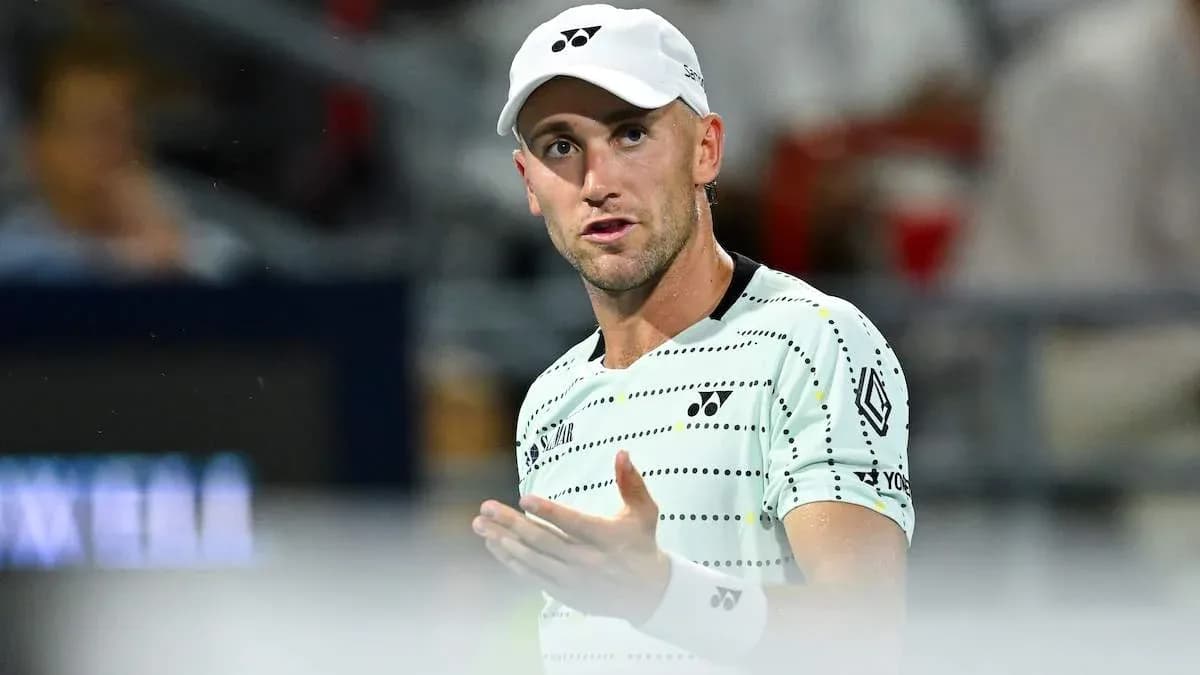
The world No. 20 pulled out of the U.S. Open before striking a ball in singles, scratching from his first-round match against Juan Manuel Cerúndolo with the lower-back injury that has stalked him since mid-August. Tournament organizers confirmed the withdrawal, a decision that ends a troubled build-up to Flushing Meadows and raises a sharper question: how much of his 2026 season is now at risk?
Lucky loser Arthur Gea steps into Ruud’s place in the men’s draw, an unexpected promotion delivered by another player’s pain.
From Cincinnati Warning Sign to New York Breakdown
The first alarm sounded in Cincinnati on August 16. Facing Christopher O’Connell, Ruud led 5-2 in the opening set, looked in control, then suddenly called for a medical timeout for lower-back pain. He retired trailing 7-5, 1-2, a jarring sight for a player renowned for his physical resilience.
“I tweaked my back in practice the day before,” he wrote on Instagram afterward, explaining that he simply couldn’t move freely. The message read like a one-off setback. It wasn’t.
Norwegian broadcaster NRK later reported that the back trouble had first flared in mid-August, and the issue never really loosened its grip. Ruud tried to thread the needle between rest and preparation, but the margin was too fine.
By Sunday morning in New York, his name disappeared from the official order of play. The decision was made.
Doubt Creeps In
The signs had been there all week.
Ruud, seeded 19th and drawn into Alexander Zverev’s quarter, tried to test his body in practice. On August 27, cameras caught him cutting short a session with Tomás Martín Etcheverry after roughly 50 minutes. Reports cited by Tennis365’s Richie Mills painted a grim picture: Ruud “couldn’t serve,” and even routine groundstrokes caused “considerable pain.”
For a player whose game is built on repetition, rhythm, and relentless baseline work, that kind of limitation is a red flag, not a yellow one.
He still pushed through mixed doubles at Flushing Meadows, partnering Diana Shnaider after Iga Swiatek withdrew to rest. The pair upset Jessica Pegula and Taylor Fritz in the first round and then lost a tight quarterfinal to Mirra Andreeva and Andrey Rublev. The back held up just long enough to finish that run, but it was a fragile truce.
Singles, with its heavier physical load and best-of-five demands, was a different calculation. On Sunday, the answer was clear.
A Star Fighting Gravity
The withdrawal lands at a difficult moment in Ruud’s career arc.
He came into New York ranked No. 20, a far cry from the peak of No. 2 he hit on September 12, 2022, after reaching the U.S. Open final. Between September 2021 and November 2023, he spent 113 consecutive weeks in the top 10, a model of consistency in a chaotic era.
That player felt like a permanent fixture at the sharp end of big tournaments. This version is still searching for traction.
Ruud’s 2026 record stood at 25–16 with no titles before the Open, his hard-court form in particular having sagged. A third-round loss to João Fonseca in Toronto underlined the slide. Since that 2022 final in New York, his best results here have been a fourth-round run and a second-round exit. A deep push this fortnight already looked unlikely. Now it’s impossible.
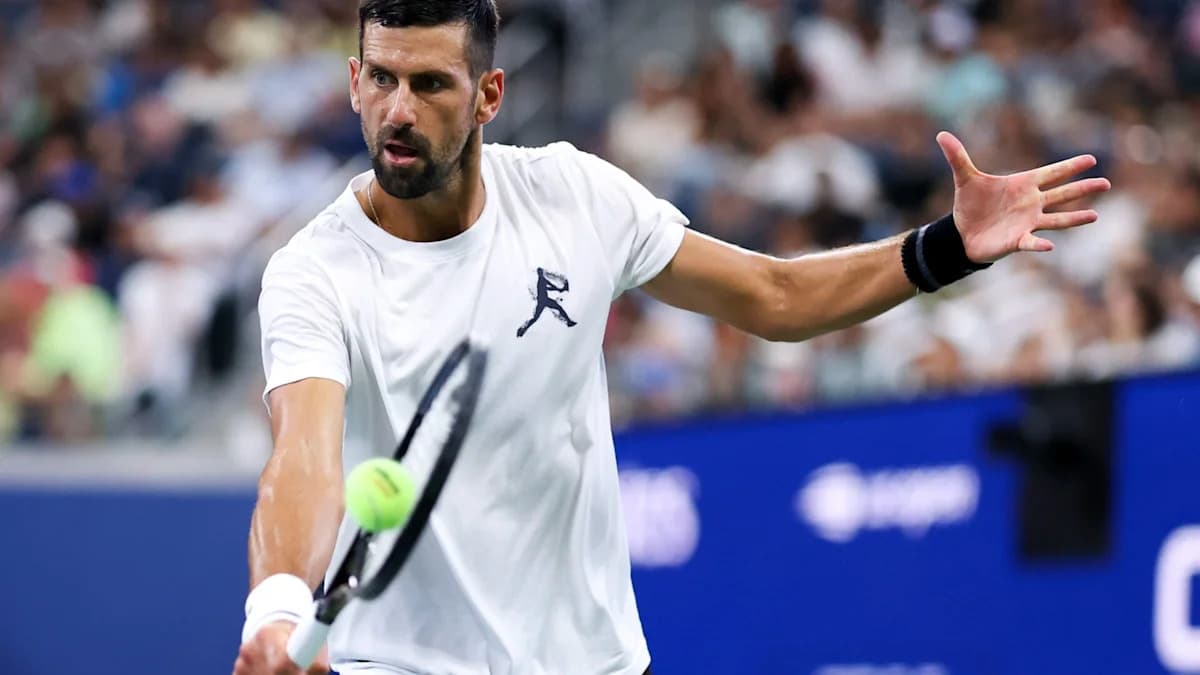
Yet the résumé remains substantial. Ruud has 14 ATP singles titles, 12 of them on clay, including last year’s Madrid Masters. He owns a landmark win over Novak Djokovic, a 6-4, 1-6, 6-4 victory in the Monte-Carlo Masters 2024 semifinals — his first career win over a world No. 1 and the first time any Norwegian beat a top-ranked player since ATP rankings began in 1973.
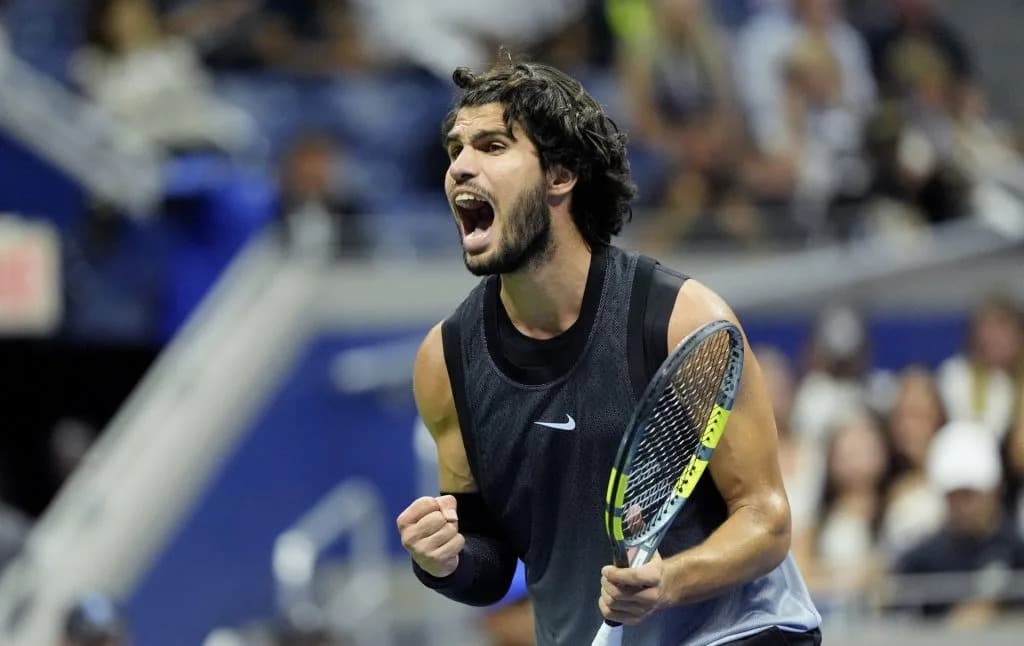
He also has a notable scalp against Carlos Alcaraz, beating him 6-1, 7-5 in the ATP Finals 2024 group stage, his only win in six meetings with the Spaniard.
Born December 22, 1998, in Oslo and coached by his father, former pro Christian Ruud, he is already the most decorated Norwegian men’s player in history: the first to win an ATP title, reach a Grand Slam final, and qualify for the ATP Finals.
Injuries That Won’t Quite Let Go
This back issue is not an isolated storm, but neither is it yet a chronic weather pattern. Ruud’s injury log is short by tour standards, but when problems arrive, they bite hard.
An ankle injury forced him out of the 2022 Australian Open. A painful left knee hampered him during a 2025 French Open loss to Nuno Borges. Now, a balky back has removed him from the season’s final major before it even began.
For a player whose strength has always been his engine — the capacity to outlast, outwork, and out-hustle opponents — repeated physical interruptions carry more than just ranking implications. They threaten his identity on court.
The immediate damage is clear: no U.S. Open singles campaign, no chance to stabilize a wobbling season, no opportunity to reclaim momentum on a stage where he once came within one match of the title.
The longer-term question lingers in the background. Can Ruud, still only 27 and already a trailblazer for Norwegian tennis, rebuild his body and game quickly enough to climb back toward the summit? Or is this the stretch where a former No. 2 starts to feel the full weight of the tour’s demands?
For now, the only certainty is that his 2026 story will be written not in New York, but in the treatment room — and in whatever comes after he walks back onto a court without wincing.