Coco Gauff's Transformation: From Yips to Serving Power
Twelve months ago, Coco Gauff cut a lonely figure on the outer practice courts at Flushing Meadows, tossing balls into a grey New York sky and serving in the rain long after most players had packed it in. The yips had taken hold. Her delivery, once simply a starting point to rallies, had become a full-blown liability, a technical and psychological knot she couldn’t untangle.
This year, that image feels like it belongs to a different player.
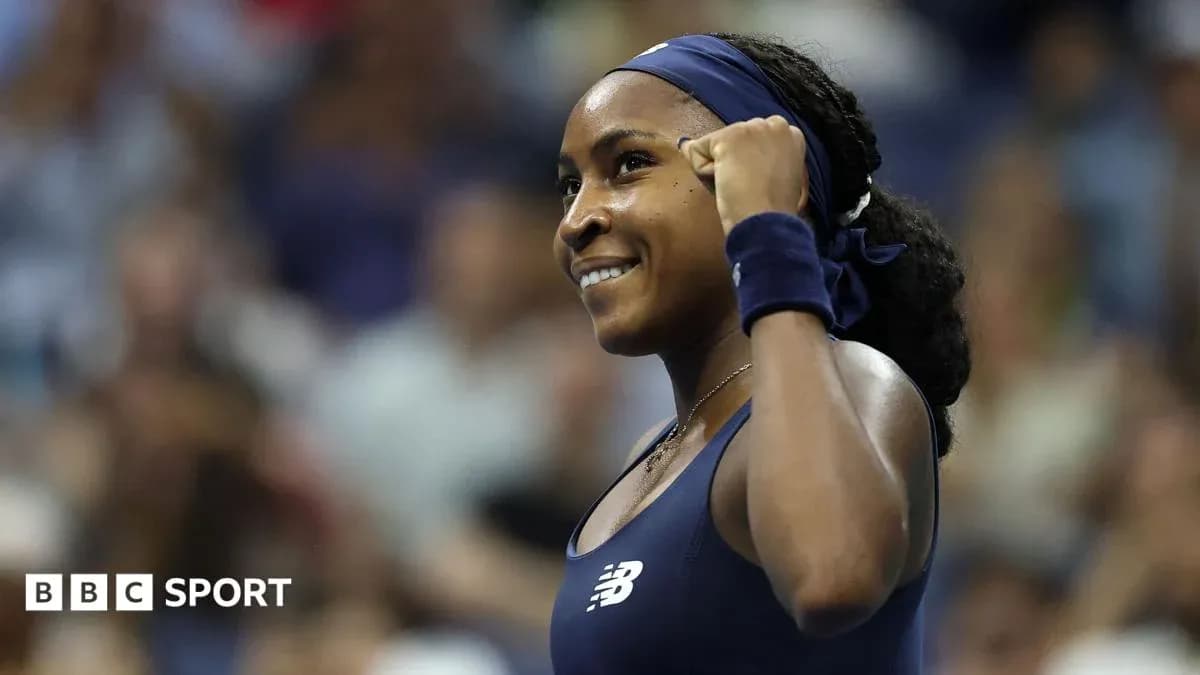
On Tuesday, the 22-year-old American walked into the US Open with a rebuilt serve and walked out of her first-round match with a straight-sets win: 6-3 6-4 over Turkey’s Zeynep Sonmez. The scoreline was tidy. The story behind it is anything but.
From yips to weapon
Gauff’s serve didn’t just hold up; it dictated. She opened the match with a hold to love that lasted barely a minute and a half, punctuated by a 112mph ace down the middle, an unreturned first serve, and another ace for emphasis. The shot that once made her flinch now set the tone.
Across the first set, Sonmez rarely got a proper look when Gauff landed her first delivery. The world number four won 93% of those points, a staggering figure that underlined just how far she has travelled in a year.
Back then, she knew the problem was unsustainable. On the eve of last year’s US Open, under the harsh glare of a home major, she made a drastic call: reshuffle the coaching team and bring in biomechanics specialist Gavin MacMillan, the man who had helped Aryna Sabalenka through her own serving crisis.
It was a bold move with brutal timing. Tinkering with technique days before a Slam, and this Slam in particular, was always going to be a gamble. The immediate results reflected that. Gauff sprayed double faults, looked tense and brittle, and bowed out in the fourth round, in tears during matches as the serve saga played out in public.
She knew all eyes were on that one shot. She knew MacMillan’s reputation. The pressure to validate the decision was immense. And the payoff, at first, was invisible.
Now it’s obvious.
Technical fixes, mental shift
MacMillan’s adjustments have been clear and simple on paper, far harder to execute under pressure: a more consistent toss, no longer drifting too far in front; a straighter wrist; a cleaner motion that allows her to hit closer to the lines without sacrificing speed.
The Cincinnati Open title earlier this month was the first major piece of evidence. Data from that run showed Gauff aiming nearer the corners while maintaining her trademark pace, a combination that turned her serve from a coin flip into a weapon.
The change isn’t just mechanical. It’s psychological. She now steps to the line believing her serve can blow through opponents, not betray her.
That belief surfaced again when the match with Sonmez threatened to wobble.
Holding firm under pressure
Gauff had broken early in the second set for 1-0 and looked ready to cruise. Sonmez, though, dug in. The Turkish player levelled at 2-2 and then pressed hard, creating three break points for a 4-2 lead. A year ago, that moment might have unravelled Gauff. The doubts would have crept in, the double faults followed.
This time, the response was ruthless. A precise ace out wide. A 115mph first serve that Sonmez couldn’t touch. The danger passed, the hold secured. Not pretty, but pivotal.
That gritty hold flipped the momentum straight back. Gauff broke immediately for 4-3, then tightened her grip on the finish. Serving for the match, she unleashed a trio of unreturned first serves, all just under 120mph, to earn three match points. Sonmez cracked on the first after a short exchange.
The contrast with last year could hardly be sharper. Then, she admitted she was just hoping the ball would land in. Now, she talks about stepping up and actively hunting aces, aiming to hit 110, 115, 120mph whenever she can, trusting that the return “is probably not going to come back.”
This is no longer a player trying to hide a weakness. It’s a contender leaning on a strength.
Seeded fourth at Flushing Meadows, Gauff will face either Spain’s Paula Badosa or Australia’s Daria Kastakina in the second round. The draw will get tougher. The scrutiny will only grow.
But the image that lingers now is no longer of a young star serving in the rain, searching for answers. It’s of a woman on Arthur Ashe, ball in hand, knowing the point is hers before she’s even tossed it.