Dan Brand: Israel's Rising Tennis Star
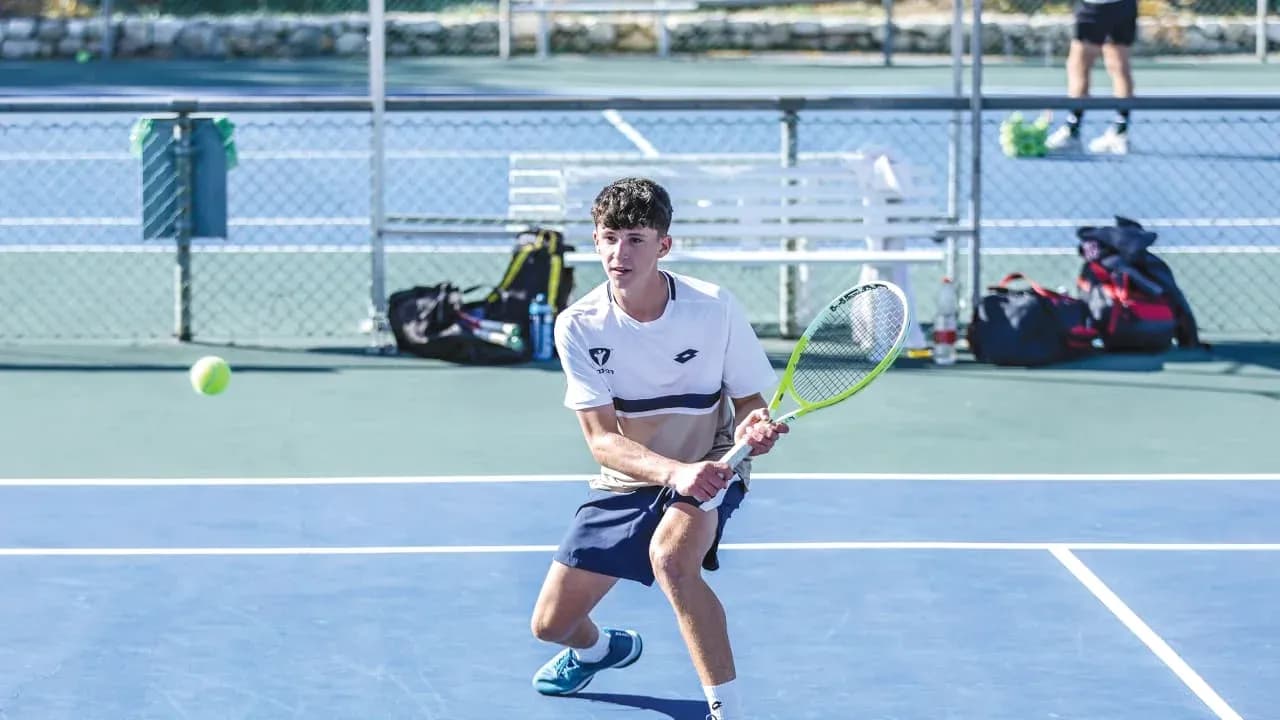
In a soccer-and-baseball-obsessed Israel, where Deni Avdija’s NBA rise and the World Cup have soaked up most of the sporting oxygen, a quieter story has been unfolding on far smaller courts. No roaring crowds, no pyrotechnics. Just a teenager from Kfar Saba, a racket, and a rapidly shrinking gap between him and the top of world tennis.
His name is Dan Brand. He is 17. And he is coming fast.
Ranked No. 24 in the world among junior boys, Brand has already planted his flag at Roland Garros and Wimbledon this year, playing both singles and doubles at each Grand Slam. The results are still those of a player learning the trade, but the trajectory is unmistakable.
At the French Open, he pushed France’s Mathys Domenc to three sets before bowing out 3-6, 7-5, 6-1 in the first round of singles. In doubles, alongside American partner Safir Azam, he reached the quarterfinals. On the Wimbledon grass, he went one better, advancing to the second round in both singles and doubles.
Next stop: New York. Brand will contest both draws at the US Open juniors, which begin September 8 in Queens.
“Dan is absolutely our next hope,” says Yoni Erlich, Israel’s Davis Cup captain and tennis director at the Israel Tennis and Education Centers. Erlich has watched Israel’s conveyor belt of elite tennis talent slow to a crawl in recent years. He knows what the country has been missing.
“He is on the right track to be in the top 20 for juniors,” Erlich adds, pointing to Brand’s “very nice wins” at a recent men’s Futures event, where the teenager reached the quarterfinals. “Hopefully in the next few years, we can see another Grand Slam player. We can only hope and be patient.”
A vacuum at the top
That hope carries weight because Israeli tennis has lived off memories for too long.
Shahar Peer climbed to No. 11 in the world in 2011, the highest singles ranking ever for an Israeli player. Andy Ram and Jonathan Erlich became Grand Slam champions, winning the Australian Open men’s doubles title in 2008 and peaking at No. 5 in the world. Before them, Amos Mansdorf carved out Israel’s best men’s singles career, rising to No. 18 back in November 1987.
Mansdorf is no longer just a name in the record books for Brand. He is the man in his corner.
The former world No. 18 has been coaching Brand since the boy was 12. “It is nice to see him coming along and moving in a nice direction. He plays clever tennis and is quite good all around,” Mansdorf says. He calls his pupil “nice, quiet, low-key, hard-working, and dedicated.”
On court, Mansdorf sees a player who “doesn’t panic,” a calm competitor who relishes the battle. The coach’s target is clear: a place in the world’s top 50 on the men’s tour. To get there, he wants Brand to grow into the full professional arsenal: a heavier, more precise serve, more power, and the ability to stay toe-to-toe with established pros.
“He likes to compete, and does everything well. We are hoping he will get stronger; he still [is] young,” Mansdorf says. The plan includes a likely deferment from the IDF and a route through “a good US college,” a path that has shaped many modern pros.
From bored with jiu-jitsu to a tennis prodigy
The story of how Brand even picked up a racket feels almost accidental.
His father, Shai, is a lawyer specializing in torts, a Brazilian jiu-jitsu black belt, and a former two-time world champion in the sport. Naturally, he tried to steer his eldest son toward the mat.
“Dan was a soccer player. His coach told the kids to try other sports. I tried to get him into jiu-jitsu, but he said it was too boring!” Shai recalls.
Tennis came next, at school. It did not take long for someone to notice.
“His coach said, ‘I trained hundreds of kids; your son is something special,’” Shai remembers. The coach pushed him to “put [Dan] in a national competition.” Shai hesitated. “It was too early.”
It did not stay early for long. As the results piled up and the talent became impossible to ignore, Shai approached Mansdorf. Brand began working privately with the former pro, who later took over as head coach at the Ra’anana City Tennis Center, a short drive from Kfar Saba.
Shai is quietly proud that his son has stayed rooted at “a local club” rather than decamping to a “fancy club” in Europe. The travel schedule is already demanding enough. As Brand’s ranking climbs, so does the number of flights, hotel rooms, and unfamiliar cities. Shai often travels with him, watching over his health and safety. When he cannot, he relies on a network of contacts around the world to keep an eye on Dan.
Through it all, he insists, his son remains “a kid who is still in a regular school.”
Dan is the oldest of three children. His mother, Ruth, is a speech therapist. Nadav, 15, and Shira, 10, complete the family. “Dan’s got his mother’s calm!” Shai says.
A teenager on tour, with homework
Brand spoke recently just after a driving lesson, grabbing a rare slice of normal life during a short spell back in Israel. He was about to leave again, this time for the ITF Grand Slam Player Development Program at the Junior Tennis Champions Center in College Park, Maryland, a pre-US Open training camp that only a select few Israelis have ever attended.
Schoolwork travels with him. He studies on his own while on the road and only returns to the classroom in Israel to sit exams. “My mother is pretty smart and helps a little with math and other subjects,” he admits, a little sheepishly.
Strip away the ranking, the travel, the Grand Slam credentials, and Brand still sounds like a typical 17-year-old. He likes playing basketball. He enjoys hanging out with family and friends, who, he says, “treat me the same as before.” On tour, he has formed close friendships with peers from around the world.
He says he has not faced antisemitic incidents on the circuit. Some players ask about the situation in Israel, he explains, and “listen and try to understand.”
On court, he describes himself as “a solid player and a counter-puncher,” someone who absorbs pace and redirects it. He knows where the gaps are. He wants to be more aggressive, to serve faster. He calls himself “a pretty focused, chill guy.”
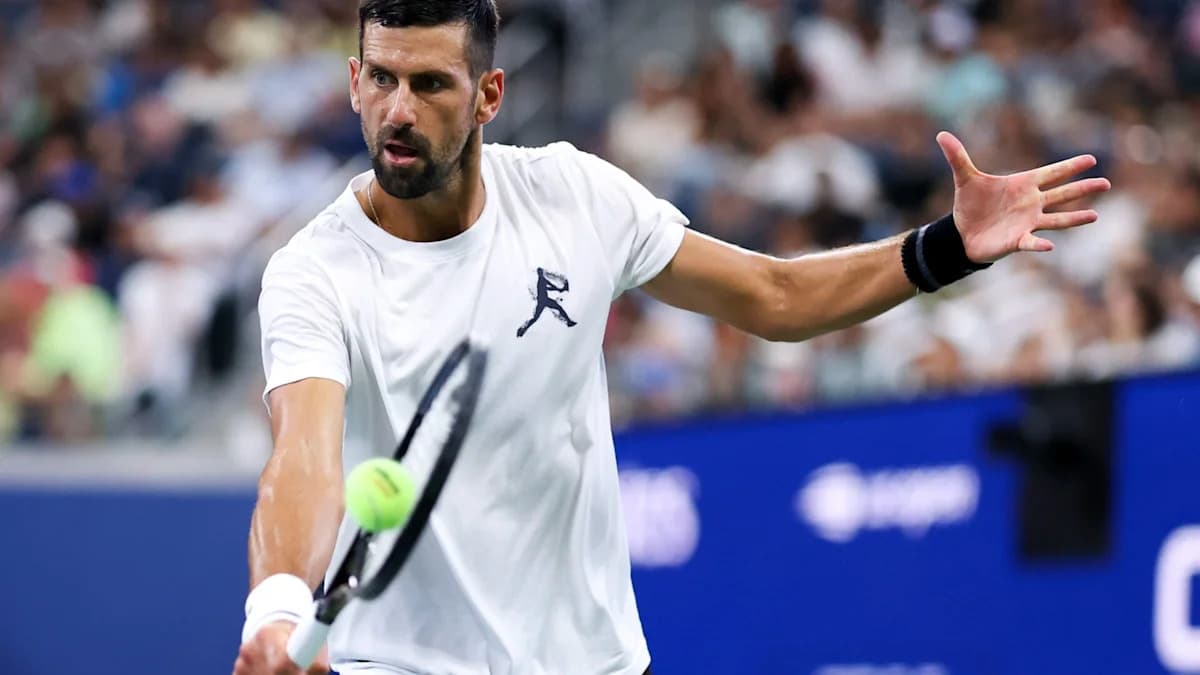
Grass courts, the rarest surface in the sport, have already won his heart. “It’s not a surface you play on every day,” he says. He thrives on routine and looks up to Novak Djokovic, the 24-time Grand Slam champion and owner of 101 ATP Tour-level singles titles, plus Olympic gold. “I like his mentality. He is so focused on the match!”
Humble, but winning big
For all the growing attention, Shai insists his son has stayed grounded. Friends at school now see him on television and hear that he is “famous,” but the teenager’s behavior has barely shifted.
“He’s a good example. He will play with, and talk with, everyone. He is shy,” Shai says. He values the way people around the world respond to his son. “Everywhere he goes, people fall in love with his son and say, ‘Dan is amazing.’” For Shai, that character reference matters “more important to me than the tournaments,” even if he beams at the results as well.
One victory stands out. In May, Brand defeated Jordan Lee 6-3, 6-2 in the final of the J300 Charleroi-Marcinelle/Astrid Bowl Charleroi Belgian International Championships. Lee, ranked eighth in the world, has since gone on to win the Wimbledon juniors title. That result, more than any ranking number, showed where Brand’s ceiling might be.
US colleges have noticed. Interest is growing as his results stack up. At home, the army is watching too. Shai says his son may receive “ilui” status from the IDF, an elevated category beyond “sportai mitstayen” (outstanding athlete). While outstanding athletes usually serve in desk roles that allow them to keep training, “ilui” athletes are exempted entirely, recognized as serving the country in other ways.
Shai, whose own military past includes combat service, expects Dan will still serve at some point. For now, tennis leads.
Playing for Israel, the hard way
The geopolitical backdrop is impossible to ignore. “After Oct. 7, you can feel people turning their backs on you,” Shai says. Some European players have not responded to Dan’s attempts to partner in doubles. Players from the US, South America, and Asia, he notes, have been more open and supportive.
Brand continues to walk on court with the Israeli flag by his name. His father knows the risks. “A kid with a flag [of Israel] is like a target,” he says. There was an option to play under another flag. Because of his maternal grandfather, Brand holds a German passport and could have represented Germany, with more funding and support.
“He would have gotten more money, but Dan said ‘no,’ – he wants to do it the hard way!” Shai says.
The next phase of that hard way runs through the United States. Before the US Open, Brand will sharpen his game at the ITF development camp in Maryland. Mansdorf will not be able to travel with him to New York, so the team will look different.
Shai will be there. So will Danny Perekalsky, CEO of the Israel Tennis Association.
A nation watching the rankings
“Dan is a really great kid. He shows a great mentality and behavior on and off the court, and he is a really great example for other kids with his behavior and style,” Perekalsky says.
He reels off Brand’s recent milestones: titles in Thailand and Belgium, and a strong run at the ITF M15 in Astana, Kazakhstan, earlier this month. There, Brand reached the round of 16, picking up ATP ranking points and edging fellow Israeli Oren Shimanov 6-3, 4-6, 7-5 in a tight match.
“He has really made a big jump in the last six months!” Perekalsky says.
The ITA has thrown its weight behind him, alongside sponsors such as Rav Bariach, the Israeli security door and locking systems company. Netanya’s Wingate Institute, the country’s National Center for Physical Education and Sport, has also taken Brand under its wing. “He is now under their care,” says Shai. “I am just looking out for my son as a father.”
Perekalsky spreads the credit. “We are proud to support Dan and to have such a developing talent! Bravo also to Dan’s family and to coach Mansdorf. Amos is doing a great job with Dan. It is not a coincidence he is achieving the results he has been in the past six months.”
He does not hide his expectations. Perekalsky believes Brand can crack the junior top 10 by January, helped by the natural turnover as older players age out of the category at 18.
“Israeli is waiting to have something to be proud of in tennis,” he says. “And we need more than one Dan. We are proud, but it is only a start!”
The next test comes in Queens, on the hard courts of the US Open. If Brand’s rise continues at this pace, the country that once produced Peer, Ram, Erlich, and Mansdorf may soon find itself rallying behind a new name. The question now is not whether he belongs on that stage, but how far – and how fast – he can go.