Dane Sweeny’s US Open Journey: A Career-Defining Moment
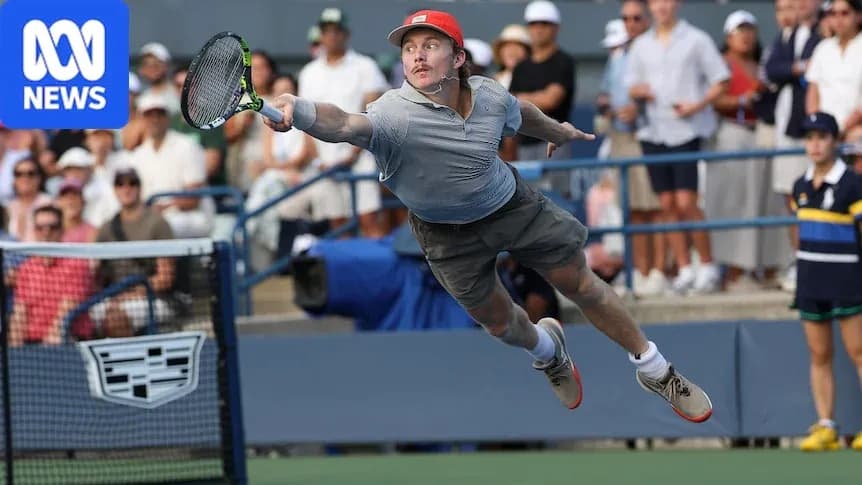
Dane Sweeny limped out of the US Open, but he may have just kicked the door open on the rest of his career.
The 25-year-old Australian’s breakout run in New York ended in straight sets in the third round, beaten 6-4, 6-3, 6-3 by 21st seed Luciano Darderi as a nagging hip complaint bit hard and refused to let go. The scoreline was blunt. The story behind it wasn’t.
By the time Sweeny walked off Louis Armstrong, Australia’s singles presence at this year’s tournament had vanished before the second week for the first time in five years. Alex de Minaur’s shock defeat to Botic van de Zandschulp had already ripped up the script. Sweeny, the late-arriving wildcard, was the last hope.
He knew it. He just couldn’t find the level to match it.
"It's been an amazing week, a career-changing week, but I can't help but feel a bit disappointed just with today's performance," he admitted. The timing wasn’t there. The rhythm that had carried him through the first two rounds deserted him. Cheap errors crept in, and Darderi, the world number 22, didn’t need a second invitation.
Sweeny’s frustration ran deeper than the defeat itself.
"I was OK to lose a match, but I really wanted to test him more and bring a good level so I could make an absolute fight out of it," he said. "Win or lose, I wanted to really make him work for the victory at least and I wasn't able to do that."
That sense of unfinished business stung because of how unlikely this run had been. Ranked 123 in the world, Sweeny only squeezed into the main draw at the last moment, when two late withdrawals freed up a reciprocal wildcard that had originally gone to Alexei Popyrin. A phone call, a reshuffle, and suddenly he was in New York with a chance he hadn’t expected.
He made it count.
In his first US Open main draw appearance, the Queenslander surged to the last 32 of a major for the first time. He banked wins, belief, and a cheque for $402,500 that changes the landscape of his career.
"The financial side of things, that will help with coaching and people you travel with," he said, matter-of-fact but fully aware of what that means at his level of the sport. Better support. Better planning. A chance to build something lasting rather than chase points week to week.
The rankings will reflect it too. Sweeny is projected to climb to around 109 in the world, within touching distance of the top 100 — and with it, direct entry into the Australian Open for the first time.
"That's exciting too. But that will take care of itself," he said. The ambition is clear, but so is the lesson from New York. "It's hard not to worry about that because we're indoctrinated to want that low number next to our name, but I can just focus on working hard, focus on improving. Particularly just staying really kind to myself and trying to enjoy the journey."
His journey, at least for now, turns back towards home with momentum and money in his pocket, but also a marker of what’s possible when things click. The regret of one flat performance sits alongside the reality that this fortnight might be the springboard he’s been waiting for.
American hopes rocked
On a day that promised a home surge, some of the biggest US names instead walked straight into the exit door.
Taylor Fritz, last year’s US Open runner-up and the men’s ninth seed, had been cruising through the draw without dropping a set. Two sets up on Francisco Cerundolo, he looked headed for another routine win. Then the match turned.
The Argentine found his range, his forehand began to bite, and Fritz’s control slipped. Cerundolo stormed back 3-6, 4-6, 6-3, 6-4, 6-4 to reach the fourth round of a major for the first time. For Fritz, it was his earliest departure in New York in four years — a jarring comedown from last year’s run to the final.
The women’s draw offered no early comfort for the locals.
Madison Keys, the 2017 finalist, looked in complete command against Zheng Qinwen, racing through the first set 6-1 and surging to a 5-0 lead in the deciding set. The match seemed over. Then it exploded into something else entirely.
Zheng, fighting not just Keys but the weight of her own recent struggles, refused to fold. Point by point, game by game, she clawed back from the brink, dragging herself level and then all the way over the line, 1-6, 7-6 (7/3), 7-5. When the final ball flew out, she collapsed to the court, overwhelmed — a player battling a career slump suddenly back in the thick of a Grand Slam run.
Waiting for her next is the ultimate test: 2022 champion and former world number one Iga Świątek, who edged past Marie Bouzková in twin tiebreaks, 7-6 (7/3), 7-6 (7/3). Świątek didn’t dominate, but she did what champions do. She found enough when it mattered.
Amanda Anisimova, seeded 10th and last year’s runner-up, couldn’t find that switch. Her difficult season at the majors continued with a 6-2, 7-5 loss to Anastasia Potapova, another early exit in a year that has never quite settled into rhythm.
On a bruising day for the hosts, only Coco Gauff held firm.
The defending champion carried herself with the assurance of someone who knows exactly what it takes in New York, dismissing Cristina Bucșa 6-3, 6-4 in the third round. No drama, no five-set swings, no blown leads — just a clean, controlled performance that kept at least one American title charge firmly on track.
Sweeny heads home with a new ranking and a new reality. The American stars stay in the draw under a sharper glare. The US Open has already stripped away comfort and exposed fault lines.
The question now is who turns that shock to their advantage before the fortnight is done.