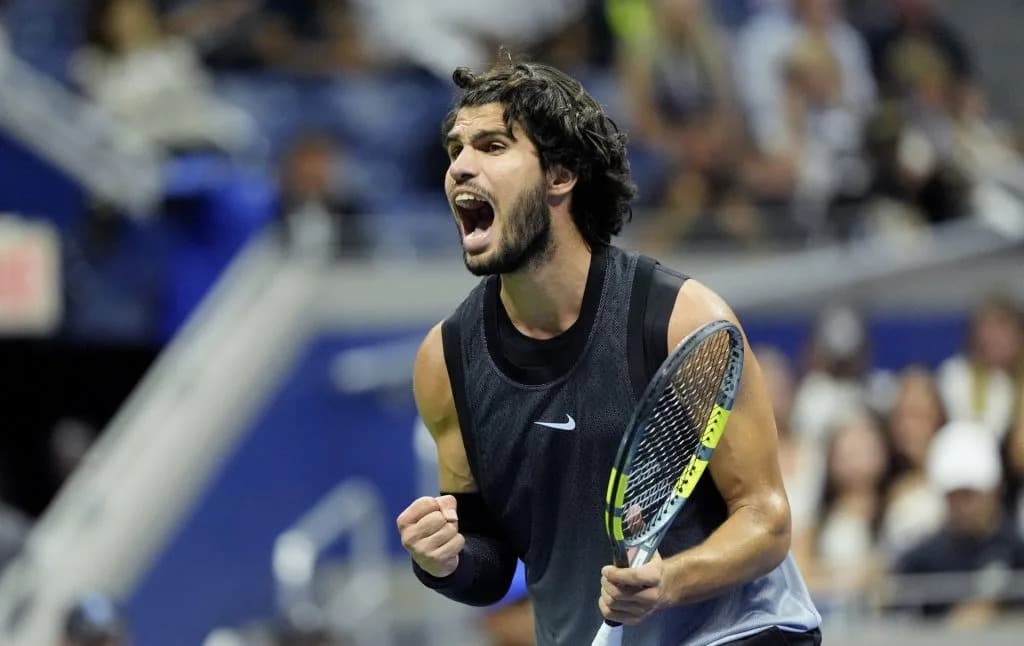
Dane Sweeny’s US Open Journey: Pain and Promise
Dane Sweeny walked off Louis Armstrong-style courts in New York with a limp, a straight-sets defeat, and the biggest week of his career sitting heavily on his shoulders.
The 25-year-old Australian, the last of his country’s singles hopes at the US Open, bowed out in the third round to 21st seed Luciano Darderi, 4-6, 3-6, 3-6. The scoreline was blunt. The story behind it was anything but.
A Late Call, a Big Stage
Sweeny wasn’t meant to be here. Ranked 123rd in the world, he slipped into the main draw at the last moment after two late withdrawals opened the door. Tennis Australia handed him a reciprocal wild card that had originally been earmarked for Alexei Popyrin.
He grabbed it and ran.
By the time he faced Darderi, Sweeny had already pushed through to the last 32 of a Grand Slam for the first time. For a player who has spent most of his career grinding away outside the spotlight, New York suddenly felt like a launchpad rather than a layover.
A Body That Wouldn’t Cooperate
Against Darderi, though, his body betrayed him. Sweeny complained of a hip issue during the match, and it showed in the numbers and the rhythm. The Australian never quite found his usual tempo, repeatedly falling out of rallies and leaking unforced errors.
He later called the week “career-changing,” but he didn’t spare himself in the assessment of his performance. The pace wasn’t there. The timing deserted him. The errors piled up. On this stage, against a seeded opponent in full flow, that combination is fatal.
The Italian controlled the key moments, snuffing out any hint of a comeback before it could catch fire. Sweeny’s serve lacked its usual bite, his movement looked hampered, and the match slipped away in three brisk sets.
A Career Reframed
The loss stings, but the numbers around it tell a different story for Sweeny’s future.
Reaching the third round brings him $402,500 in prize money and a projected rise to around 109 in the world rankings — the highest mark of his career. For a player hovering on the edge of tennis’s top tier, that jump matters.
It matters even more in the context of January. If he can crack the top 100 before the end of the season, Sweeny will book direct entry into the Australian Open main draw for the first time. No wild cards. No last-minute phone calls. Just his name, earned, on the list.
New York, then, becomes more than a one-off run. It becomes a reference point. A week he can point to and say: that’s where everything tilted.
American Hopes Cut Down Early
While Sweeny’s story was about arrival, several big American names were dealing with something harsher: early exits on home soil.
Ninth seed Taylor Fritz, a US Open finalist in 2024, suffered his earliest departure in four years, losing a five-set battle to Francisco Cerundolo. The Argentine turned the match on its head, rallying from two sets to love down to win 3-6, 4-6, 6-3, 6-4, 6-4 and reach the fourth round in New York for the first time.
On the women’s side, the most brutal collapse belonged to Madison Keys. She raced to a 5-0 lead in the deciding set against Zheng Qinwen and still lost, 1-6, 7-6 (7-3), 7-5. Zheng refused to go away, clawed back game by game, and eventually ripped the match out of Keys’ hands.
Her reward is a showdown with world No. 1 Iga Swiatek, who needed two tiebreaks to fend off Marie Bouzkova in a tight, nervy contest.
Tenth seed Amanda Anisimova also exited, beaten 2-6, 5-7 by Anastasia Potapova, while Coco Gauff steadied the home crowd with a more routine win. The American star moved past Cristina Bucsa 6-3, 6-4, a straight-sets victory that felt almost calm amid the chaos around her.
A Line in the Sand
For Australia, Sweeny’s departure closed the book on their singles presence in New York this year. But it didn’t feel like an ending.
He leaves with a sore hip, a sharper ranking, and a new standard for his own game. The next question is simple and unforgiving: can he turn one breakthrough week into a season, and a season into a career at the sport’s top table?