Elena Rybakina: US Open Champion and World No. 1
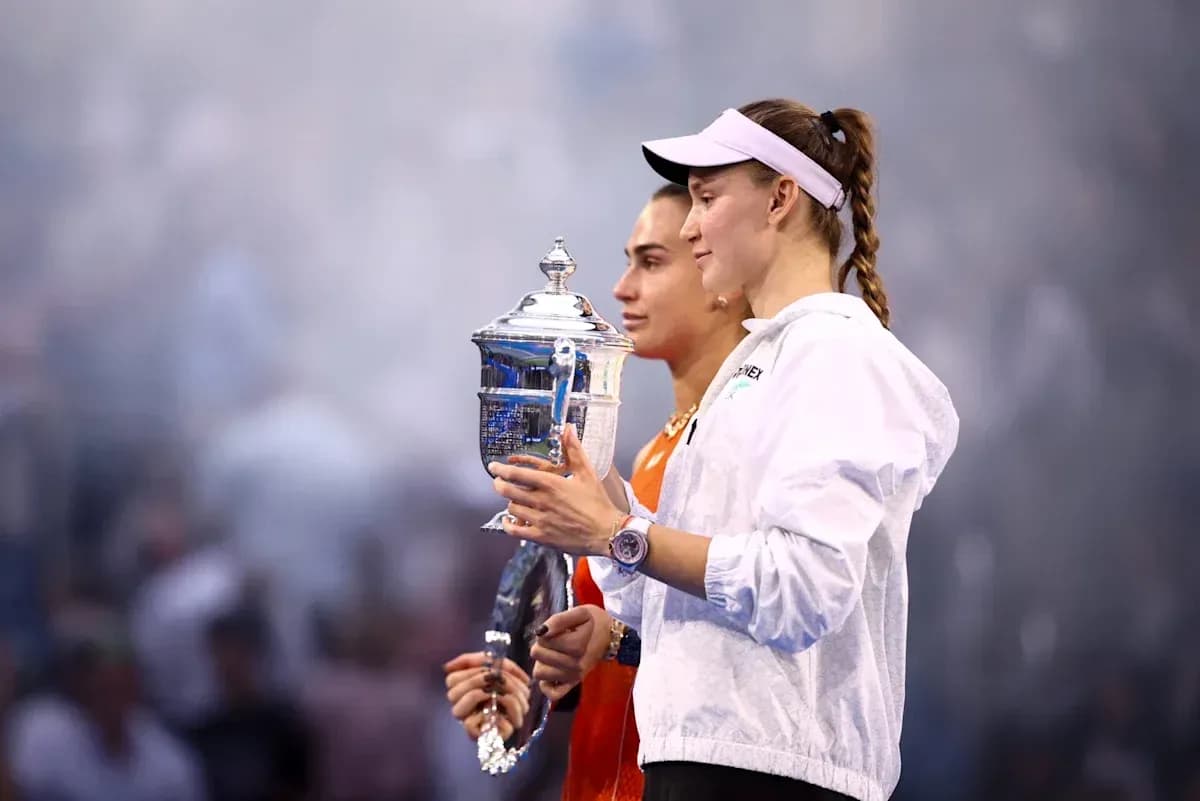
Elena Rybakina walked into New York as the new world No. 1. She walked out as the US Open champion – and as the defining force of the women’s game right now.
In a bruising, high‑quality final, the Kazakhstani star outlasted Aryna Sabalenka 6-4, 5-7, 6-2, adding Flushing Meadows to a growing collection that already includes Wimbledon 2022 and the Australian Open earlier this year. Three Grand Slams, three different surfaces, one unmistakable message: this era now runs through Rybakina.
A No. 1 who embraced the weight
The storyline wrote itself. Rybakina had only just overtaken Sabalenka at the top of the WTA rankings. Her previous best in New York? A modest fourth round. She arrived with expectation pressing down on every swing of the racket.
Instead of shrinking, she used that weight as fuel.
Former Wimbledon champion Marion Bartoli, watching Rybakina’s rise with a keen eye, could hardly believe the transformation at this tournament.
“Can you imagine that her previous best result here was the fourth round? That's extraordinary, to come here with all the pressure of the world, knowing she had the No. 1 world ranking on her racket, to actually go on and win the title,” Bartoli told Sky Sports Tennis.
The final itself mirrored Rybakina’s fortnight: not straightforward, never simple, but relentlessly controlled when it mattered most.
The turning point in the third
Sabalenka, the defending champion and one of the game’s fiercest front‑runners, dragged the contest into a deciding set by snatching the second 7-5, punishing a lapse on Rybakina’s serve late in the set. Momentum seemed to tilt. Many players would have carried that frustration into the decider.
Rybakina refused.
“The way she bounced back at the beginning of the third set tonight for me, was absolutely extraordinary,” Bartoli said. “It looked like she completely forgot what happened at the back end of that second set, when she got caught on her own service game.”
That reset changed everything. Rybakina stepped inside the baseline, hammered returns, and went after Sabalenka’s second serve with icy precision. Points that had stretched into arm‑wrestles earlier in the match suddenly became one‑way traffic.
“She just kept on moving on, and moving forward all the time. The way she attacked Sabalenka's serve all the time, putting her under so much pressure,” Bartoli added.
The scoreboard told the story: 6-2 in the third, the kind of ruthless finish that separates champions from contenders.
A ball-striker apart
Across the two weeks, Rybakina’s game looked built for hard-court supremacy. Heavy, flat groundstrokes. A serve that bails her out of danger and starts points on her terms. Calm body language that barely flickers, even as matches twist and tighten.
“The ball-striking from that young lady is just something else. She can do anything on the tennis court,” Bartoli said, summing up what so many in the game now see up close.
This wasn’t just a title; it was a piece of history. In the Open Era, Rybakina is the first US Open champion to win three-set matches in the quarterfinals, semifinals and final. That run demands more than talent. It demands endurance, clarity, and a stubborn refusal to yield.
At 27, she looks like one of the fittest players on the WTA Tour, both physically and mentally. When matches stretched, she grew. When the pressure rose, her game did too.
One major gap, one looming challenge
With Wimbledon, the Australian Open and now the US Open in her pocket, the picture is clear. Rybakina is one title away from a career Grand Slam. Only Roland Garros remains.
Bartoli didn’t shy away from that point: “She's only missing Roland Garros now from completing a career Grand Slam.”
Clay has not yet bent to her will in the way grass and hard courts have, but the trajectory is unmistakable. Each Slam has added another layer of authority, another reminder that her ceiling is still rising.
For now, though, the grind pauses. After a fortnight that tested every part of her game and character, Rybakina has earned time away from the spotlight, away from the baseline, away from the constant demand to prove herself.
She leaves New York as a three-time major champion, the world No. 1, and the first woman to carve this particular path through the US Open draw. The question no longer is whether she belongs among the greats of her generation.
It’s how far, and how fast, she intends to go from here.