Elena Rybakina: US Open Champion and World No 1
Elena Rybakina has spent years living in the shadows of her own success. A Wimbledon champion. A destroyer of serves and rallies on every surface. A permanent threat in every draw. Yet always, somehow, filed just below the iron wills and week‑in, week‑out consistency of her greatest rivals.
She walks out of New York as something very different.
Now, she is the benchmark.
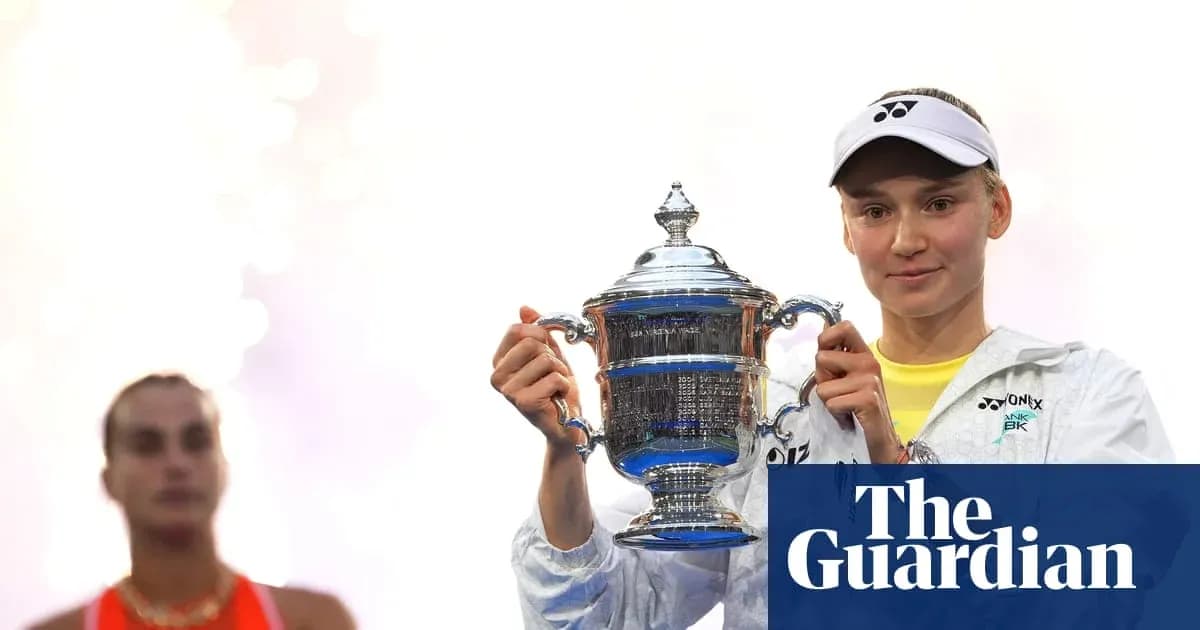
World No 1. US Open champion. Conqueror of Aryna Sabalenka, again, in a final that felt less like a coronation and more like a test of everything she has become. Under the lights at Flushing Meadows, Rybakina outlasted the top seed and two-time defending champion 6-4, 5-7, 6-2, sealing not just the title but her status as the undisputed force in the women’s game.
A title run built on grit, not perfection
This fortnight was not about flawless tennis. It was about resilience.
Rybakina arrived in New York nursing an achilles injury serious enough to leave her unsure she would even play. She carried the weight of a ranking chase that was spelled out to her in cold, clear numbers: what she needed, who she had to beat, how deep she had to go. Then came the draw. Four consecutive opponents in the second week with grand slam or Olympic titles of their own.
She didn’t flinch once.
That mental edge, hardened over two weeks of problem-solving and pain management, was what carried her into the final with Sabalenka and allowed her to play with such authority when it mattered most. Even when her biggest weapon deserted her, she found another way.
When the best serve in the world goes missing
The opening set was almost surreal.
Rybakina, widely regarded as the owner of the best first serve in the women’s game, started a grand slam final with that serve in ruins. She landed just 27% of first serves in the set – eight out of 30. For most players, that’s a death sentence against Sabalenka on a hard court.
Rybakina turned it into a showcase.
She stepped in on return and went after Sabalenka’s delivery, hammering it back to pin the Belarusian on the back foot. From the baseline she was ruthless, dictating rallies, taking time away, and driving her backhand with a precision Sabalenka simply could not match. Every neutral ball became an opportunity; every short one, a punishment.
Sabalenka, who had battled through a turbulent summer to give herself a chance at a third straight US Open crown, looked rattled early. A double fault at 2-3 handed over the crucial break. The frustration boiled over as she earned a code violation for hitting a ball into the crowd. The tension never really left her shoulders, especially as Rybakina’s second serve kept inviting chances she could not consistently take.
The first set slipped away. The mood in the stadium shifted. Rybakina, without her serve, had still suffocated the champion.
Sabalenka strikes back
Sabalenka, though, is not a two-time US Open winner by accident.
She dug in during the second set, finally finding a rhythm on serve and beginning to hit through the court with her trademark ferocity. Rybakina’s first serve started to find the box more often, but the baseline patterns grew looser. Errors crept in. The match tightened.
At 5-4, with Rybakina serving for the championship and the pressure suddenly heavy and real, Sabalenka pounced. She ripped a backhand return down the line to earn her first break points of the match – double set point. Again, Rybakina’s first serve deserted her. Again, Sabalenka stared at second serves with the set on her racket.
She couldn’t take either chance, but the dynamic had changed. The Rybakina second serve was under siege now, every delivery a test. At 6-5, Sabalenka forced a third set point and this time did not blink, unloading another backhand return winner to drag the final into a decider.
Momentum had swung. The crowd sensed it. Sabalenka roared to her chair. Rybakina walked to hers without a flicker.
Reset, reload, dominate
What happened next is why Rybakina leaves New York as the sport’s new standard.
Facing a surging, two-time champion with the stadium behind her, Rybakina simply reset. The serve that had betrayed her for a set and a half suddenly snapped back into place, as if someone had flicked a switch. She began to glide through her early service games in the third, firing down aces, hitting her spots, and piling the scoreboard pressure onto Sabalenka.
Rallies that Sabalenka had begun to control in the second set swung back towards Rybakina. The backhand, so clean all night, stayed rock solid. The forehand started to open the court again. Sabalenka, like so many opponents over the past year, found that once Rybakina’s serve and ground game clicked in unison, there was no way to keep up.
The decider became a statement. Not wild emotion. Not theatrics. Just cold, relentless, top-tier tennis.
Queen of the hard courts
The implications of this win stretch well beyond one Sunday night in New York.
By beating Sabalenka, Rybakina did more than take the No 1 ranking. She seized control of the hard-court kingdom. She now owns the three biggest titles on the surface: the Australian Open, the US Open and the WTA Finals. That is not a hot streak. That is a regime.
Her resume now carries three grand slam trophies: Wimbledon 2022, the Australian Open 2026, and this US Open. She joins a select group – Lindsay Davenport, Jennifer Capriati, Ash Barty, Angelique Kerber, Virginia Wade – as a three-time major champion. One title remains to complete the career grand slam: Roland Garros.
For a player once seen as a grass-court specialist with a big serve and a streaky baseline game, that prospect feels very real now.
A rivalry for the era
This final also wrote another chapter in a rivalry that is fast defining the era.
In the 38 years since both the Australian Open and US Open have been played on hard courts, this was only the second time the same two players contested both finals in the same season. Here, they arrived as No 1 and No 2, with the top ranking guaranteed to change hands by night’s end. The stakes were clear, the tension obvious.
They delivered again.
This was their third meeting in a major final, and once more they produced a match of punishing quality, shifts in momentum, and stretches of shotmaking that pushed both to the edge. No matter the surface, no matter the stage, Rybakina and Sabalenka seem to drag the very best out of each other.
This time, though, the final word belonged to Rybakina.
She leaves New York not just with a trophy, but with the sense that the women’s game now runs through her racket. The question for the rest of the field is no longer whether she belongs alongside the greats of her generation.
It’s who, if anyone, can stop her from taking Paris and the grand slam set.