Emma Raducanu's Journey: Lessons from Andre Agassi's 'Open'
Emma Raducanu’s route back to the sharp end of tennis has taken an unlikely turn – through the pages of Andre Agassi’s “Open”.
Five years on from that surreal fortnight in New York, when an 18-year-old qualifier tore through the US Open draw without dropping a set, Raducanu is no longer the sport’s shock new champion. She is 23, ranked 98 in the world, and fighting her body as much as the rankings list. So she has gone to someone who knows all about climbing out of a hole.
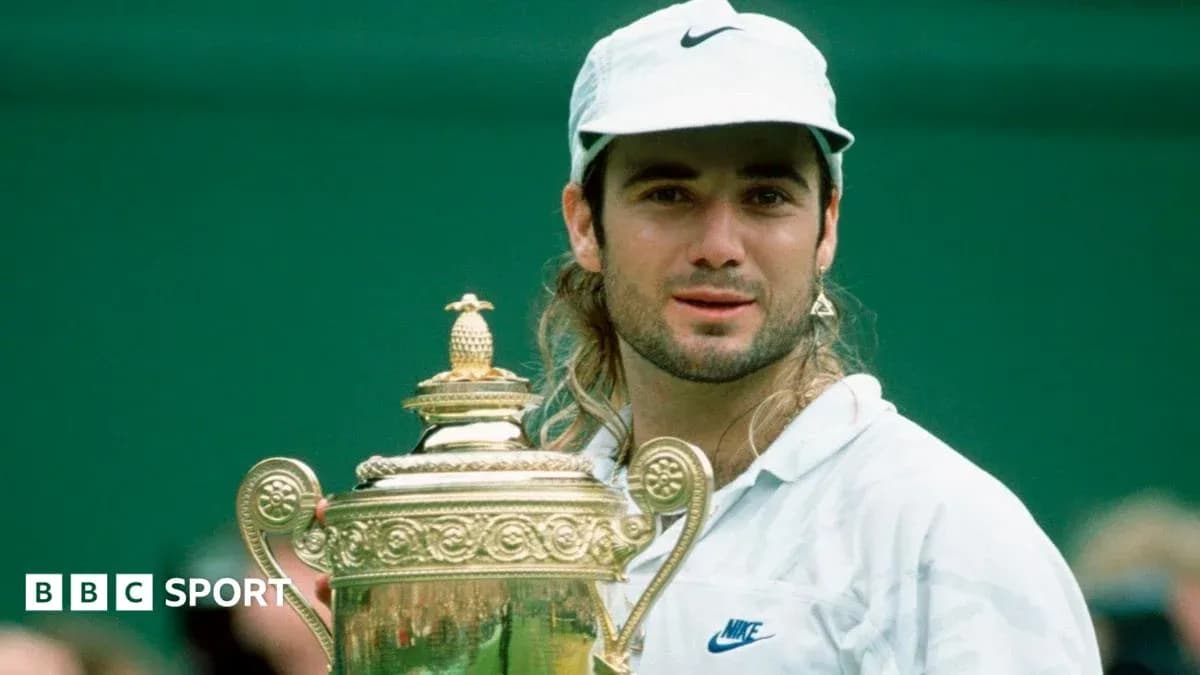
Agassi, the original teenage prodigy, was 22 when he finally landed his first major at Wimbledon in 1992. He would go on to win eight Grand Slam singles titles and complete the career Grand Slam, plus Olympic gold in Atlanta in 1996. The résumé looks pristine. The story behind it does not.
Between his peaks, Agassi went four long years without a major, tumbling to 141 in the world. That is the chapter Raducanu has been poring over.
“I was especially intrigued by the passage where he got out of his slump in the late 1990s by creating his own training regimen and finding his way back to the top,” Raducanu told Uniqlo. “It speaks in depth about his early successes and the lows he reached, perhaps as a result of them. A lot of it was so relatable.”
Those are not the words of a player still living off a fairytale. They are the words of someone trying to make sense of the cost of it.
A champion looking for a second act
Since her own high of world No 10 in July 2022, Raducanu’s ranking has drifted backwards, dragged down by a body that has refused to cooperate. A foot injury cut into her pre-season. A post-viral illness then kept her off court for two and a half months this year. The latest blow was a stress fracture in her lower right leg, serious enough to rule her out of this year’s US Open – the stage that made her and now, painfully, went on without her.
Yet the season has not been without light. At Queen’s Club in June, Raducanu pieced together one of the most convincing weeks of her career since that New York run, reaching her biggest final in five years. For a player searching for rhythm and identity, that stretch on the grass mattered.
Still, the broader arc feels familiar to Agassi. Early fame. Early pressure. The sudden sense that the sport you were supposed to love has started to close in.
Agassi has always said he wrote “Open” in the hope that someone in the game might recognise themselves in his story.
“It was literally the hope that if one person read it and it gave them hope, some tools to understand that they're not alone, they can figure it out and get to a healthier place without having to direct their frustrations at the game of tennis, then it was a success for me,” he told BBC Breakfast. “So, hearing that 17 years later it can still impact somebody, especially in this game, it does make me feel good.”
Agassi’s message: be 100% of whatever you have
Asked what he would say directly to Raducanu, Agassi did not talk about rankings or slams. He talked about perspective.
“I would encourage her to focus on being the best of herself on a daily basis, but don't judge that by results or thinking that somehow you have to be 100%,” he said. “You have to learn to be 100% of whatever percent you're at [and] be comfortable in your own identity inside of that – not what people say.”
For a player who has lived under a microscope since her teenage breakthrough, that last line cuts deep. Agassi played in an era when you could, as he put it, “just put down the paper and not read it”. Social media has stripped that luxury from Raducanu’s generation. The noise is relentless. The judgments are instant.
Agassi knows what happens when expectation starts long before a player has any real say. His father introduced him to strangers as a future world No 1. The sport was not a passion; it was an assignment. That burden, he says, made him play with “fear” until his ranking collapse forced a reset.
Only when he fell from No 1 to 141 did he begin to reconnect with tennis on his own terms. From there, he rebuilt his career and his life, channelling his energy into both his tennis and the foundation he created to provide education for under-served children.
“I had more success from that point forward than I did playing out of fear,” he said. The lesson, as he sees it, starts long before the first ranking point. “The first thing I would advise a parent to think about is that it's not their life, it's their child. You raise a child in their way and they'll never depart from it. You just have to find out what their way is.”
For Raducanu, finding “her way” is now the central project. Not just a new coach or a new training block, but a new relationship with a sport that turned her into a global headline before she had played a full season on tour.
A different stage, the same game
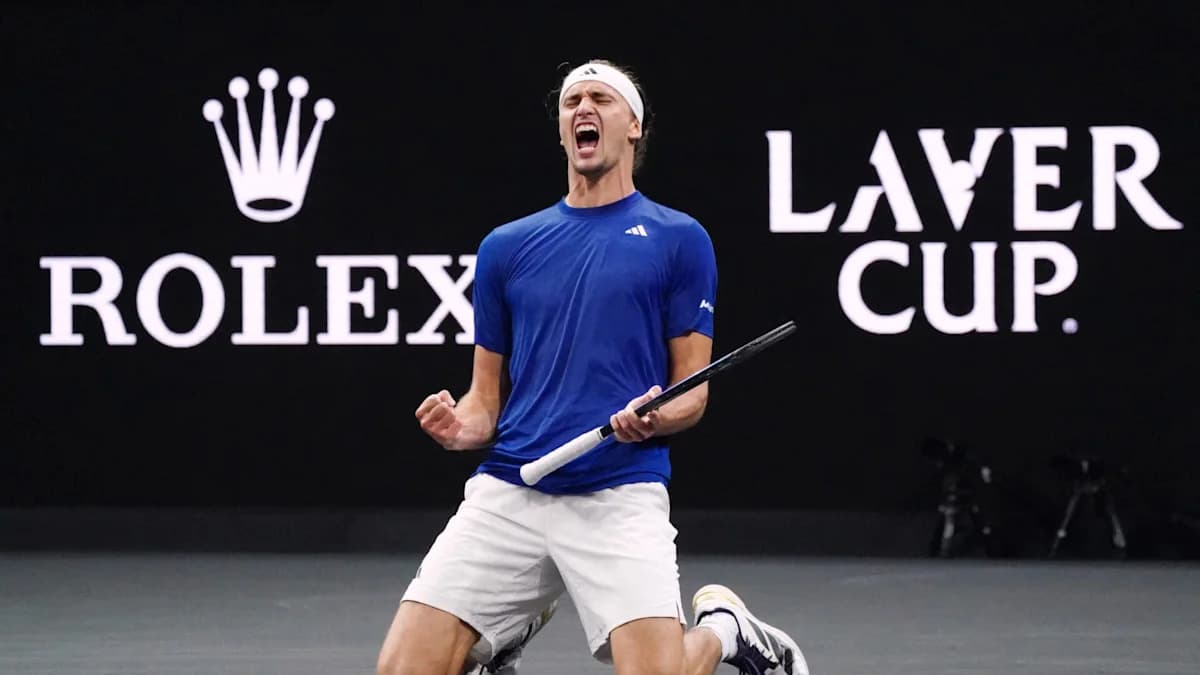
Agassi’s own journey has led him back to the team environment he always craved. Later this week he will captain Team USA at the Laver Cup at The O2 in London, from 25–27 September. It is a made-for-TV exhibition, but the players treat it as more than that, and Agassi sees what their presence says.
“Tennis is a hamster wheel of sorts – the fact that these guys make room in their schedule to play this incredible event tells you how great this event is,” he said. Team USA will face Team Europe, on European soil, in an arena where the crowd’s loyalties may be split.
“We're obviously playing Team Europe, in Europe, so I don't know where the crowd is going to have their heart. But I know one thing – they're going to see some spectacular tennis.”
Spectacular tennis is what first dragged Raducanu into the spotlight. The question now is whether, armed with Agassi’s hard-earned lessons and her own scars from the last five years, she can learn to produce it on her own terms – not for the rankings, not for the noise, but for the long career that still lies in front of her.