Félix Auger-Aliassime's Struggles at US Open
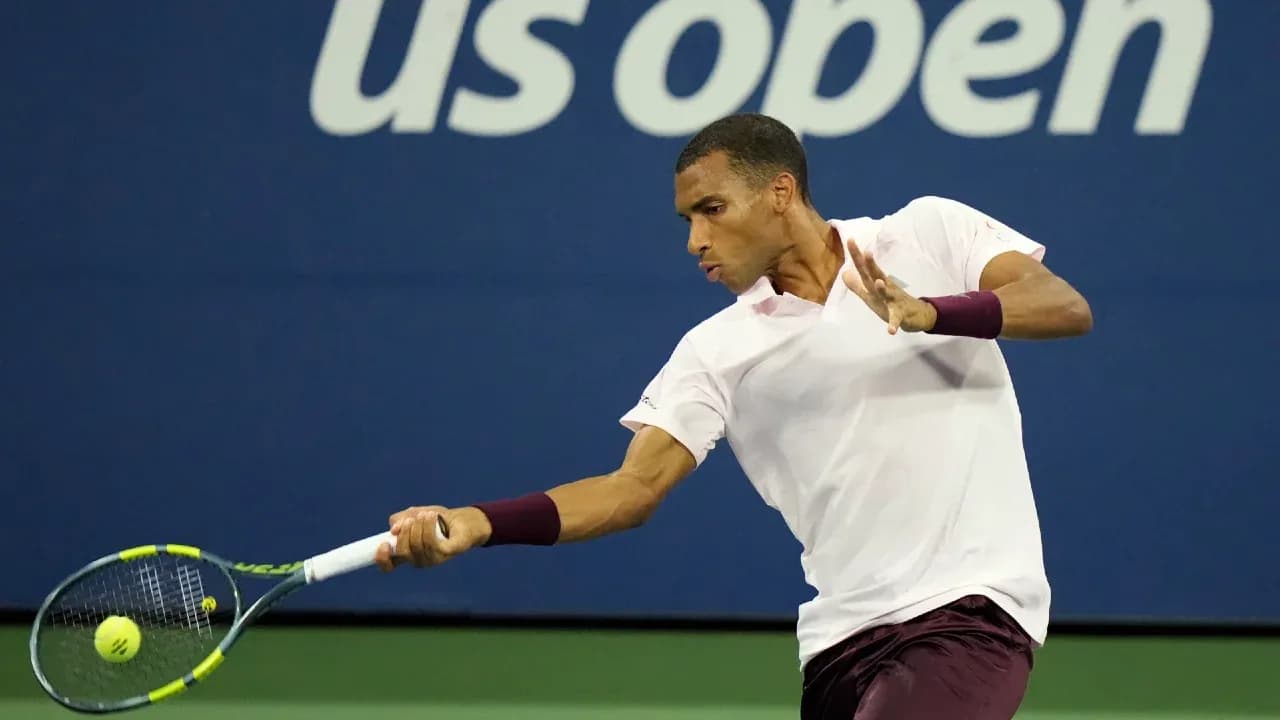
Félix Auger-Aliassime’s US Open hopes dissolved under the New York lights on Thursday, undone not by the man across the net, but by a body that suddenly stopped cooperating.
The No. 3 seed, tipped as one of the contenders in the men’s draw, fell 6-7 (5), 6-3, 6-2, 6-2 to Karen Khachanov in a second-round loss that felt stranger than the scoreline alone suggests. For a set and a half, it looked like a battle. After that, it became a struggle for basic equilibrium.
“I just didn’t feel well and was dizzy and seeing spots,” Auger-Aliassime admitted. “I thought maybe it would pass but it didn’t.”
From that moment, his match unraveled.
The serve, usually the bedrock of his game, deserted him. He landed only 58 per cent of his first serves and faced a staggering 20 break points, dropping serve seven times. Eight double faults crept into his stat line, accompanied by 47 unforced errors — far too many against a clean, disciplined Khachanov, who finished with 30. Both men struck 12 aces, but that was where the symmetry ended.
Khachanov sensed the physical dip and tightened the screws. The rallies lengthened, the Canadian’s legs looked heavier, and the Russian’s forehand began to dictate. What started as a finely poised contest turned into a one-way march.
“Karen’s a great player, but I cannot beat him or anyone in this draw feeling the way I felt today,” Auger-Aliassime said, making no attempt to dress it up.
The defeat hits harder in context. Twelve months ago, Auger-Aliassime was a semifinalist in New York, pushing deep into the second week before bowing out to eventual runner-up Jannik Sinner. This time, he exits before the weekend, with his career-high ranking of No. 4 now under threat.
What makes it more unsettling is the mystery around it all. He said he felt fine before stepping on court, no warning signs, no obvious explanation. The dizziness, the visual disturbances — they arrived mid-match and never left. He plans to undergo tests when he returns home to understand what went wrong.
There is another layer of uncertainty around him as well. The 26-year-old split with long-time coach Frederic Fontang earlier in the summer and is navigating the tour without a permanent voice in his corner. He expects to announce a new coach in the coming weeks, a significant decision at a pivotal moment in his career.
For Canadian tennis, though, it wasn’t all gloom in Flushing Meadows.
On the doubles courts, Gabriela Dabrowski delivered the kind of crisp performance that has become her trademark in New York. Teaming up with Luisa Stefani, the second seeds in the women’s doubles draw brushed aside Irina Khromacheva and Anastasia Detiuc 6-1, 6-3 in their opening match.
Dabrowski and Stefani controlled the tempo from the first game, striking 21 winners to just nine from their opponents and backing it up with four aces. The partnership, already proven at the highest level, looks settled and dangerous again. Dabrowski, who lifted her second US Open doubles trophy last year alongside Erin Routliffe, now moves on with Stefani to face the winners of Friday’s clash between Sara Errani and Lilli Tagger and American twins Kristina and Annika Penickova.
Leylah Fernandez also made a statement in doubles. Playing with Indonesia’s Janice Tjen, the Laval native stormed through Nika Radisic and Isabelle Haverlag 6-1, 6-1, barely giving the Slovenian-Dutch pair room to breathe. The Canadian-Indonesian duo will next meet Routliffe and Aldila Sutjiadi, a matchup rich with familiarity and intrigue for Canadian fans.
Fernandez’s schedule only intensifies from here. She was slated to return to singles duty on Friday in a high-profile third-round showdown with American No. 3 seed Jessica Pegula, a test of both her resilience and her flair under pressure.
On the men’s side, Denis Shapovalov was also preparing for a stern examination in the third round, set to face big-serving American Ben Shelton, the No. 8 seed. For Shapovalov, it’s another chance to steady a career that has swung between brilliance and frustration.
So while Auger-Aliassime leaves New York searching for answers — about his health, his form, and the next voice in his box — the Canadian presence at the US Open remains very much alive. The question now is whether his compatriots can turn their promising positions into the deep runs he once made look routine.