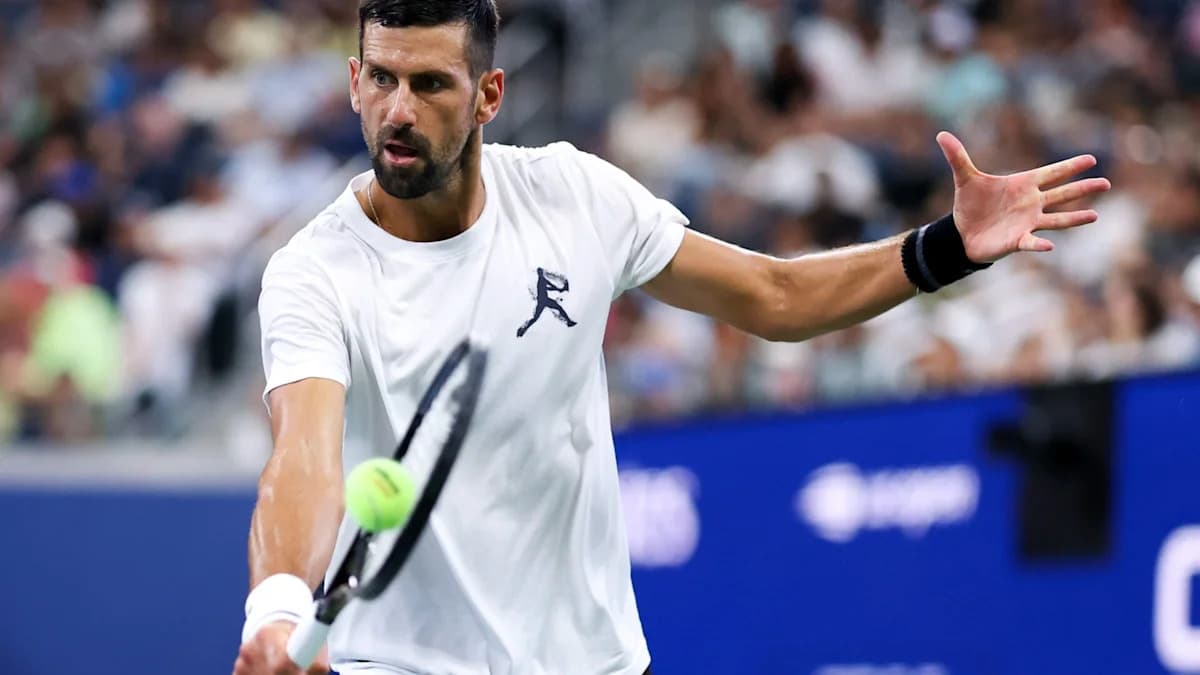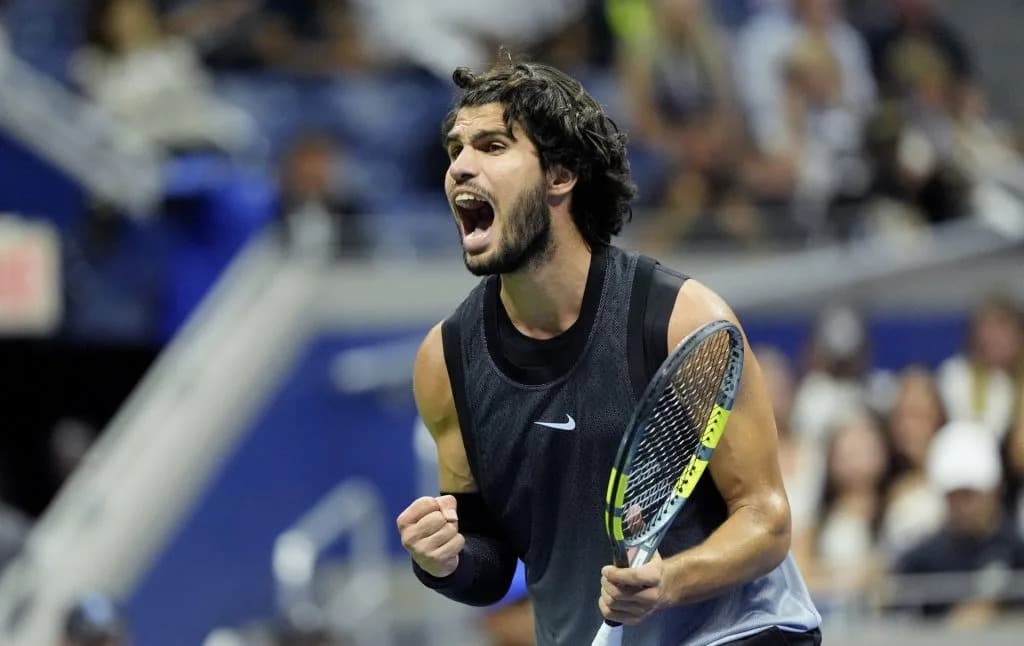
Frances Tiafoe vs Ben Shelton: A Historic US Open Semifinal
NEW YORK — The name on the front of Arthur Ashe Stadium has always carried weight. On Friday night, it will feel heavier than ever.
Under the lights at the USTA Billie Jean King National Tennis Center, Frances Tiafoe and Ben Shelton will walk into the world’s biggest tennis stadium and into a slice of history Ashe himself once imagined but never got to see.
Two Black American men. One US Open semifinal. A guaranteed place in a Grand Slam final for a player who grew up in a world Ashe fought to change.
This is not just a match. It’s a culmination.
A night Ashe was waiting for
Ashe broke tennis open and refused to let anyone quietly fix the glass behind him. He won the 1968 US Open, the 1970 Australian Open and Wimbledon in 1975, then retired in 1980 because of heart issues. Even then, he believed more Black players were coming.
"What we need is an American Yannick Noah," he told the Los Angeles Times in 1988, pointing to the charismatic Frenchman who won Roland Garros in 1983. He wanted someone with flair, with in-your-face tennis, with the presence of Julius Erving.
That player never arrived in his lifetime.
The men’s game waited. And waited.
MaliVai Washington finally surged to the Wimbledon final in 1996, becoming the first Black American man in a Grand Slam singles final since Ashe. He lost to Richard Krajicek, 6–3, 6–4, 6–3, and the moment never quite turned into a movement.
Now, at 57, Washington is watching something he always hoped would come.
"I think it’s an exciting time," he told USA TODAY Sports. "If one of them goes on to win the US Open, it will be the greatest sports story certainly of this year, and certainly of this decade."
The numbers are stark. The winner on Friday will become the first Black American man to reach a US Open singles final since Ashe in 1972, and the first Black American man to reach any Grand Slam singles final since Washington himself in 1996.
The rankings will follow. Shelton will rise to No. 4. Tiafoe is guaranteed at least No. 8 next week and can climb to No. 4 if he lifts the trophy on Sunday.
For Washington, it’s validation and warning in the same breath.
"I think it shows how the growth and progression of tennis is going in the right direction," he said. "They are two great representatives of what tennis can be and what American tennis can be. This match and the finals will likely be the two most watched tennis matches in a long, long time."
Gauff’s generation watching in disbelief
Coco Gauff, last year’s US Open champion and beaten semifinalist this year against Elena Rybakina, grew up in a sport where Black excellence was defined by women: Althea Gibson, then Venus and Serena Williams, then herself.
On the men’s side? Far thinner.
"Especially on the men’s side, I never thought I’d have the chance to see an all-Black semifinal between the guys in my lifetime," Gauff admitted. "Even growing up, just look at who was playing. I just never thought that would be able to happen."
She reached the last four again this year, sharing the stage with Shelton and Tiafoe on a weekend that has felt like a statement.
"To have also me in the semis, I think it’s really cool," she said. "I have so much respect for both Ben and Frances. I’m just rooting for a good match. Hopefully, whoever wins can bring it home."
For Gauff’s generation, this is not a theory or a slogan. It’s a bracket. It’s a night session. It’s real.
One match won’t fix everything
The temptation is to call this a turning point and move on. Washington won’t allow it.
"I don’t believe that just one match or one final or even this occasion, all of a sudden you are going to see this flood of players coming on to the tour," he said.
He knows how long the journey is. He picked up a racket at 5, reached the tour in 1989, and stunned world No. 2 Ivan Lendl at the Volvo International in 1990. His next match? A three-set loss to Bryan Shelton — Ben’s father.
To Washington, that timeline is the point.
"To come on to the tour, it’s a 15-year process," he said. "If there is not an infrastructure to bring up these young players, to encourage and to impact these young players for an extended period of time, there will not be an increase of interest in the sport."
He talks about junior tennis, college tennis, professional tennis as one long, fragile chain. Break a link, lose a generation.
"Though this match is extremely significant and it plays a role and it will be very positive for getting Black kids, but not just Black kids, but white kids, Hispanic kids, Asian kids, Native kids, it will play an important role in just getting more involved and interested in the sport," Washington said.
His message is blunt: this night can inspire, but it cannot substitute structure.
The grind behind the dream
Frances Tiafoe knows that structure saved him. The son of immigrants, the kid who grew up around the Junior Tennis Champions Center in College Park, Maryland, he turned a chance into a career.
His advice to the next wave is not romantic.
"Try to reach out to one of the local clubs where they give you a chance to play," he said. Once you’re in, he added, everything changes.
"And then once you get in that door, man, just come in there hungry, especially when you're young. You gotta be obsessed with this thing, man, because tennis is such a repetitive sport. You gotta really get them reps in. But mostly, you have to love it."
Martin Blackman, CEO of that same Junior Tennis Champions Center and former senior director for talent identification and development at the USTA, has spent years thinking about how to turn that hunger into results.
He wants to get back to the pre-pandemic model: bringing kids in from local, regional and national camps, exposing them and their families to high-level training, and nailing the basics by the time they are 12 or 13.
The match on Friday, he believes, can supercharge that work.
"It’s something to celebrate: two amazing players, two amazing representatives of sport," Blackman said. "But it’s two guys who will inspire thousands of kids to pick up rackets and try our sport. It's a watershed moment."
Washington, who climbed as high as No. 11 in the world and won four singles titles, offers the reality check every aspiring pro needs.
"You can work your but off for years, and that doesn’t guarantee you will become a professional tennis player," he said. "You have to have the infrastructure and the passion. A lot of things go into it, you just have to give yourself the best chance."
The dream is big. The odds are brutal. Both can be true.
‘You only need one’
Taylor Townsend, fresh from completing a career Grand Slam in doubles with her US Open title alongside Katerina Siniakova, sees Friday night as another crack in a wall that once looked permanent.
"You only need one," she said. "You need somebody to be able to see that it's possible, that you can."
She has lived that paradox: if you don’t see it, it’s harder to believe it — and yet someone has to be willing to be first, to walk into the unknown and carve a path for others.
"So for me, I'm so proud to be able to click on the TV and watch Frances and Ben, and one of them is going to be able to be in a Grand Slam final, and that's a beautiful thing," she said. "You know, Robin (Montgomery), myself, you know, it's been Coco, it's been a phenomenal US Open for people of color, and just being able to show people, like, it's possible, you know?"
This tournament has delivered images that once felt unlikely: Gauff in the semifinals, Townsend lifting a trophy, Tiafoe and Shelton set to decide a place in the final under Ashe’s name.
For decades, the Williams sisters carried much of that weight for American tennis. Now the cast is wider, the stories more varied, the draw sheet richer in representation.
The future, right on time
Arthur Ashe always thought in long arcs. He understood that change in tennis would be slow, contested, uneven. But he also believed in urgency.
"For some people, the future is next year," he told the L.A. Times. "But for me it’s this afternoon."
On Friday afternoon, the signage on the front of his stadium will look the same. By Friday night, the meaning behind it may feel different.
One of Frances Tiafoe or Ben Shelton will step off that court as a Grand Slam finalist, carrying a legacy that started long before either of them was born and pointing toward a future tennis has promised for far too long.
The question now is not whether this moment will resonate.
It’s whether the sport is finally ready to build everything around it.