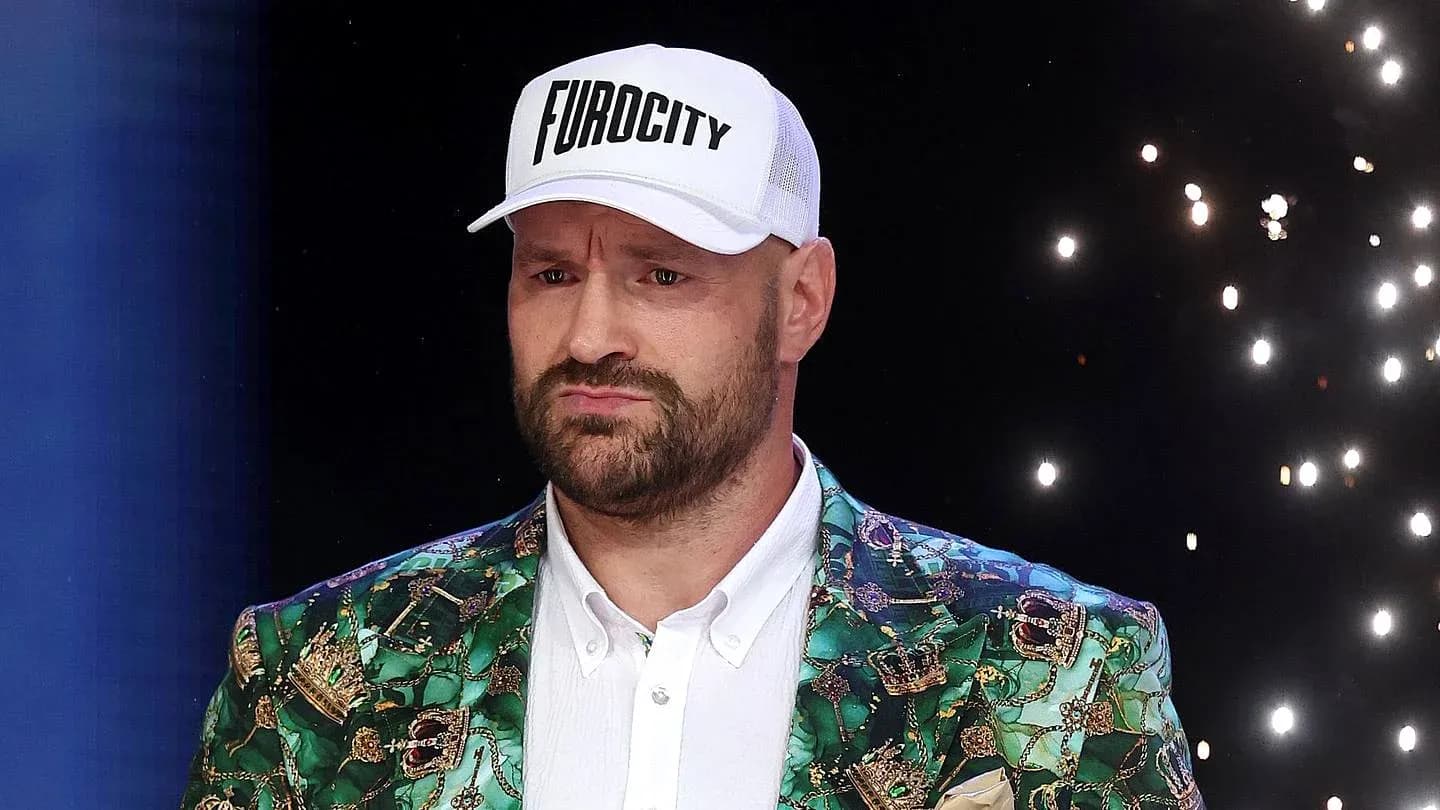
Fury Declares Wilder Finished Ahead of Joshua Showdown
Tyson Fury has never needed much help selling a fight. But in the buildup to his December 11 showdown with Anthony Joshua in Cardiff, the former unified heavyweight champion has chosen an old rival as his warning sign to the rest of the division.
Deontay Wilder, he says, is finished.
Fury turns his fire on Wilder
Fury and Wilder are forever tied together by their three-fight saga between 2018 and 2021. The first bout ended in a dramatic draw, many observers leaning towards Wilder on the cards after those thunderous knockdowns. The next two told a very different story: Fury walked him down, broke him apart, and stopped him twice, ripping away the WBC belt and, in his eyes, something even more permanent.
Now, as Fury prepares for Joshua and the final chapters of his own career, he’s looking across at Wilder and doesn’t like what he sees.
"It's silly, really, for Deontay's part. He should not be in the ring. He should be nowhere near it," Fury said in an interview with FightHype. "It's a dying shame that this man has to continue to fight when he's shot to bits. He should never have fought again after I beat him the last time. That should have been the end of it."
No softening. No qualifiers. Just a brutal assessment from a man who shared 30 rounds with the American.
‘Shot to bits’ and the Zhang warning
For years, Wilder built a career on the kind of power that changes lives. One clean right hand, and the night was over. That was the myth. That was the fear.
Fury insists that version of Wilder no longer exists.
"If you're getting knocked out by people that you probably should have knocked out yourself..." Fury said, pointing squarely at Wilder’s recent loss to Zhilei Zhang as the clearest evidence of decline.
Wilder’s defeat to Zhang wasn’t just a loss; it was a dismantling. He could not get out of the way of anything the Chinese southpaw threw. The legs that once sprang him into range looked heavy. The reactions that used to save him deserted him. He stood there, took shots, and had no answers.
Fury also dragged Derek Chisora into the argument, using their fight as another damning exhibit.
"Him and Chisora were shockingly terrible when they fought. Chisora is like 145 years old, and he was taking Wilder's knockout power shots that are not there anymore, flush in the face, not even budging him. It is a shame, because if you want to match them two five years ago, it would not have lasted one round."
Strip away the exaggeration and the barb, and Fury’s point is clear: the aura has gone. If Chisora can soak up Wilder’s best, what does that say about the once-feared finisher?
Wilder’s crossroads: Opetaia on the rise
The sport, of course, rarely waits for anyone. While Fury chases Joshua and another run at the summit, Wilder finds himself buried on the undercard in Cardiff, matched with Jai Opetaia.
It is a stark image. The man who once ruled as WBC heavyweight champion now serves as support for his old nemesis’ latest blockbuster.
Opetaia, moving up from cruiserweight, will be younger, fresher, and quicker. He sees Wilder not as a monster, but as an opportunity — a former champion whose name still carries weight on a resume. If he can stay away from Wilder’s right hand, if he can drag the older man into late rounds, his engine and movement could tilt the night in his favour.
That is the gamble Wilder is taking. One more big night. One more swing at relevance.
Fury’s harsh words, and a hint of sympathy
For all the venom in his critique, Fury’s view of Wilder isn’t entirely cold. Behind the talk of being "shot to bits" is an understanding of what it means to walk away from the ring.
"It's a hard thing to walk away from, and we've seen so many of the greats come back for whatever reason over the years, usually financial reasons, and it is a hard one to see, and it's a sad state of an affair, to be fair."
He knows the pattern. The greats rarely leave cleanly. They linger. They chase one last payday, one last roar, one last chance to prove everyone wrong. The sport encourages it, then punishes it.
Wilder, at this stage, looks determined to fight on. As long as he passes the governing bodies’ medical checks, he will keep going. The money is still there. The name still draws. The danger, at least on paper, remains.
But as Cardiff looms, the contrast is impossible to ignore. Fury stands on the brink of another colossal British showdown, talking legacy and titles. Wilder arrives as the supporting act, his future hanging on whether he can turn back time against a younger, faster man moving up in weight.
If he can’t, Fury’s brutal verdict may start to sound less like trash talk and more like the uncomfortable truth about a great puncher at the end of the road.