Germany vs Netherlands: UEFA Nations League Showdown
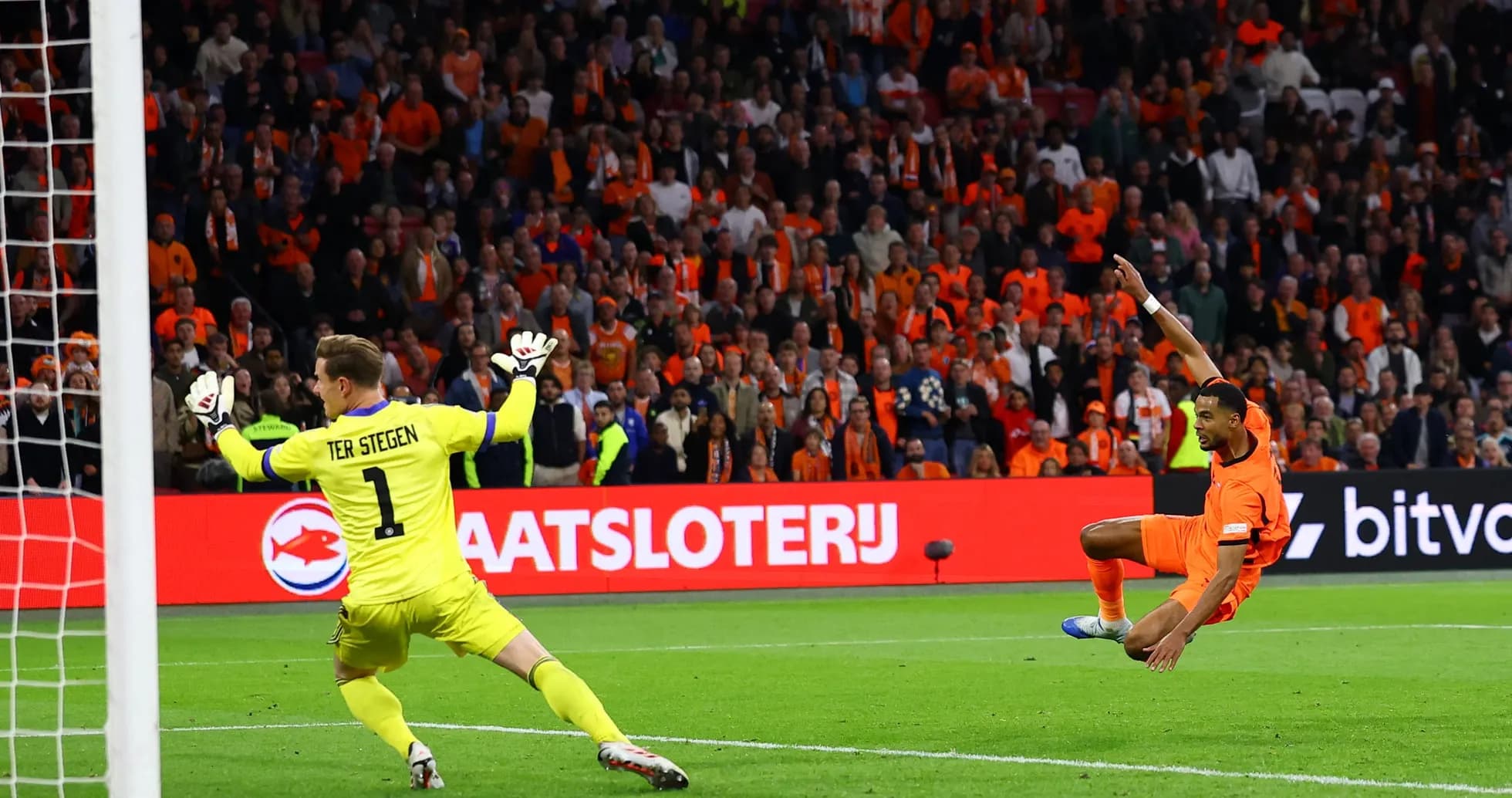
On 16 November 2026, the floodlights of Olympiastadion in Berlin will frame another chapter of one of European football’s most evocative rivalries as Germany host Netherlands in the UEFA Nations League. For Germany, it is a night of jeopardy and opportunity: third in their group but still clinging to a “Possible Play-off” path, they must protect home turf to keep hopes alive. For group leaders Netherlands, already on course for the “Play Offs: Quarter-finals”, it is a chance to stamp authority on League A - Group B and confirm their status as the group’s benchmark side.
Season Context
Germany arrive with a mixed but competitive Nations League campaign behind them. They have taken 8 points from 5 matches, scoring 6 and conceding 3, numbers that speak of a solid but not explosive side (1.2 goals scored and 0.6 conceded per match). Two wins, two draws and a single defeat underline how rarely they have been outplayed, yet also how often they have struggled to turn control into victories.
Netherlands sit at the opposite end of the spectrum in League A - Group B. Top of the table with 11 points from 5 games, they have combined attacking flair with enough defensive resilience to dominate the group. Fourteen goals scored and only 5 conceded (2.8 for and 1.0 against per match) show why they are leading: they win more, score more, and still avoid defeat, with 3 victories and 2 draws and no losses so far.
Form & Momentum
Germany’s recent Nations League form line reads WDWLD, a sequence that perfectly captures their stop-start rhythm. The ability to win is clearly there (2 victories in 5), but the balance of 6 goals scored and 3 conceded across those 5 matches points to a side that is controlled rather than ruthless. Their defensive record has been quietly impressive (only 3 goals allowed in 5 games), yet the attack has rarely cut loose, averaging just over a goal per outing (6 in 5).
Netherlands, by contrast, carry the momentum of a side that has found a winning groove. Their form string DWDWD in the standings is complemented by a broader picture from recent data: 14 goals across 5 matches underline a vibrant attack (2.8 per game), while conceding 5 in the same span shows they are not watertight but generally in control. With no defeats and multiple convincing scorelines, they travel to Berlin with the confidence of a group leader playing on the front foot.
Head-to-Head Patterns
The modern history between these nations in the UEFA Nations League has been tight and emotionally charged. Most recently, they shared the points in Amsterdam as Netherlands and Germany drew 1-1 (UEFA Nations League, season 2026, September 2026). That night underlined how slim the margins remain when these two meet. Two years earlier in Munich, Germany edged a narrow home success with a 1-0 victory over Netherlands (UEFA Nations League, season 2024, October 2024), a game decided by a single moment in an otherwise balanced contest. Earlier in that same Nations League cycle, Amsterdam produced a 2-2 thriller between Netherlands and Germany (UEFA Nations League, season 2024, September 2024), with both sides trading blows and refusing to yield. The pattern is clear: in competitive fixtures, this rivalry tends to produce close scorelines, late tension and very little to separate the shirts.
Tactical Preview
Germany are expected to lean again on the structures that have defined their current campaign. Their Nations League statistics show a preference for a 4-2-3-1 shape, used in 3 matches, with 4-4-2 appearing twice. That double pivot in midfield offers protection to a defence that has conceded only 3 goals in 5 group games, while allowing creative players like Jamal Musiala and Kai Havertz to roam between the lines. With 6 goals from 5 matches, Germany’s attack has been efficient rather than explosive, so they may look to control territory and tempo, trusting their back line’s record (0.6 goals conceded per game) to keep them in the match while waiting for moments of quality.
Netherlands, for their part, have built their group-topping run on a more assertive approach. The data points to a clear identity: a 4-3-3 has been their primary system (3 matches), supplemented by 4-2-3-1 in 2 games. That front-foot structure has yielded 14 goals in 5 fixtures, with midfielders like Tijjani Reijnders, who has already scored 4 Nations League goals this cycle, driving play from deep and between the lines. Wide forwards such as Cody Gakpo stretch defences, while Virgil van Dijk anchors a back line that, despite conceding 5 times, has still kept opponents to an average of just 1 goal per match. Expect Netherlands to press high, circulate the ball quickly through midfielders like Joey Veerman, and test Germany’s ability to defend space behind their full-backs.
The tactical battle may hinge on whether Germany’s more balanced profile (6 scored, 3 conceded) can slow a Dutch attack that has been among the most productive in League A. If Germany can impose their structure and keep the game at their preferred rhythm, the match may resemble their 1-0 win in Munich in 2024. If Netherlands turn it into a more open contest, their superior scoring record and fluid 4-3-3 could tilt the night their way.
Statistical Snapshot
- Competition: UEFA Nations League, season 2026 — 16 November 2026.
- Venue: Olympiastadion, Berlin.
- Prediction: Win or draw — Double chance : Germany or draw.
- Win Probabilities: Home 45% / Draw 45% / Away 10%.
- Model: Germany 54.7 — Netherlands 45.5.
Betting Verdict
The prediction model leans towards Germany avoiding defeat, and the odds broadly echo that view: home prices between roughly 1.80 and 1.92 imply an approximate 52–56% chance of a German win, while draw odds around 3.68–4.29 suggest roughly 23–27%, and away quotes near 3.16–3.80 point to about 26–32% for Netherlands. Germany’s strong defensive record in this group (3 goals conceded in 5 matches) and their ability to take results from recent head-to-heads at home support the “Double chance : Germany or draw” angle. Yet Netherlands’ attacking form — 14 goals in 5 games and unbeaten at the top of the group — warns against underestimating their threat, which is why the model keeps the away win probability low but not negligible. Overall, backing Germany on the double-chance market aligns best with the blend of group form, tactical matchup and the fine margins that have defined this rivalry in recent Nations League meetings.