Harriet Dart Wins First WTA Title in Guangzhou
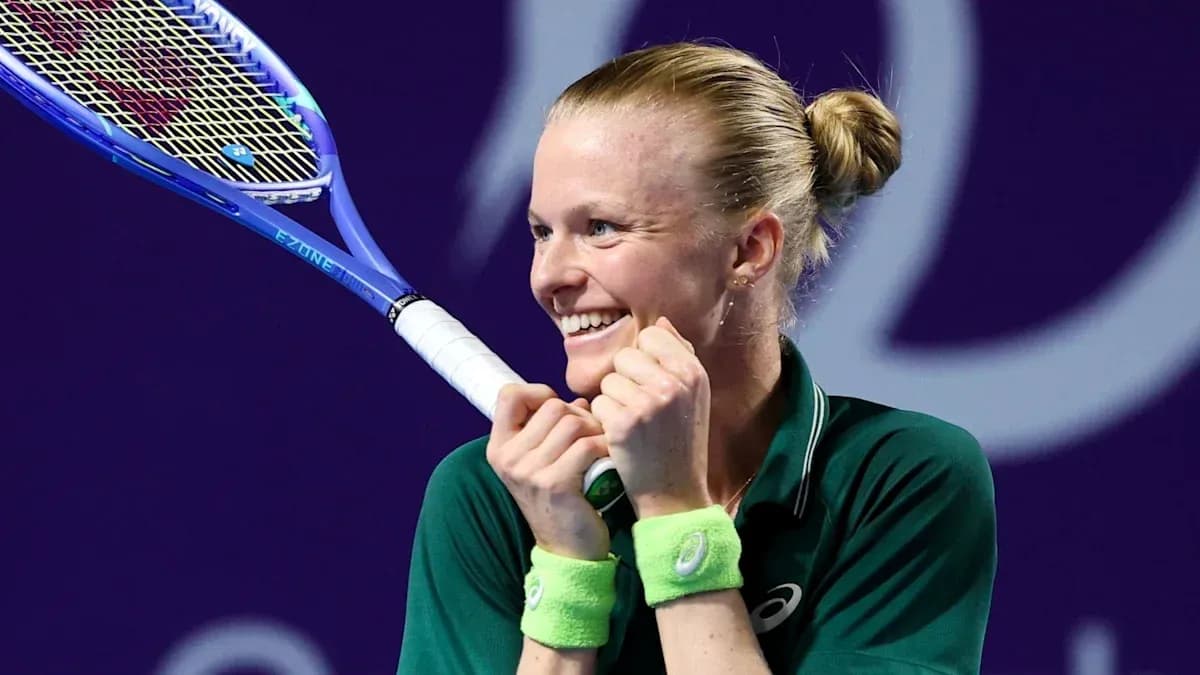
Harriet Dart has waited a long time for a week like this. Thirty years old, ranked outside the world’s top 100, and forced to come through qualifying just to make the main draw in Guangzhou, she walked off court on Sunday as a WTA Tour singles champion for the first time.
It took three sets, plenty of nerve, and all the resilience that has come to define her season. Dart beat fast-rising Austrian teenager Lilli Tagger 4-6 6-3 6-4 in a tense Guangzhou Open final, then crumpled to the court in disbelief before embracing her team.
This was not a straightforward coronation. It was a scrap.
A final that kept slipping away
Tagger, just 18 and already making serious noise on the tour after winning the 2025 French Open junior title, struck first. She took the opening set 6-4, her heavier ball and fearless hitting putting Dart under constant pressure.
Dart has lived in that uncomfortable space all week. She has made a habit of starting slowly, then clawing her way back. Against Tagger, it happened again. The British number five reset, tightened her patterns, and dragged herself level by taking the second set 6-3.
The decider turned into a test of nerve as much as skill.
Twice Dart edged ahead. Twice Tagger reeled her back. At 3-3, with momentum threatening to slip away, Dart dug in. She broke for a third time in the set to lead 4-3, a crucial surge that finally gave her some daylight.
She held for 5-3. One game from the title. One game from changing the shape of her career.
Tagger, ranked 53rd and playing in her own biggest final to date, refused to fold. Serving at 3-5, she faced two championship points. Dart, sensing the finish line, stepped in on the second and found herself with a mid-court ball that begged to be put away.
She dumped it into the net.
The chance vanished. The tension did not.
Third time lucky
Many players would have carried that miss into the next game. Dart didn’t. She shrugged off the error, served for the title at 5-4, and backed herself.
On her third championship point, she went for the serve. It hit its mark. Tagger couldn’t get it back. Dart collapsed onto the hard court, the release of a career’s worth of grind and frustration pouring out in one instant.
Her team rose as one in the stands. The emotions were raw and unfiltered. This was not a breakthrough born of hype or teenage inevitability. It was the payoff for years spent on the margins, for long spells outside the top 100, for qualifying draws and early exits and questions about whether a moment like this would ever come.
A season transformed
Guangzhou is a WTA 250 event on paper. For Dart, it feels far bigger.
The title completes a superb second half of the season, during which she has consistently struck the ball with more authority and carried herself with greater conviction. Since Wimbledon, she has won 19 of 24 tour-level matches on hard courts. Across the entire WTA Tour season, she now owns 23 wins from 34 matches – the best winning percentage of her career.
The pattern of the week in Guangzhou underlines that growth. Beating Tagger after losing the first set marked the fourth time in seven matches at the tournament that Dart fought back from a set down. She did not breeze to this trophy; she wrestled it away from opponents who had her on the ropes.
Her reward stretches beyond the silverware. The ranking boost will lift her back inside the world’s top 100, a crucial threshold for any player outside the sport’s elite. It also secures direct entry into the Australian Open main draw in January, sparing her the lottery of qualifying and giving her a clear run at the first Grand Slam of the season.
For a player who had slipped from a career high of 70 in 2024 and “languished” outside the top 100 for much of the last two years, this is a significant reset.
The Bartoli effect and a new belief
Behind this resurgence sits a notable partnership. Working with former Wimbledon champion Marion Bartoli has clearly sharpened Dart’s game and mindset. The numbers tell part of the story, but the eye test does the rest: she looks more assertive on court, more willing to take the ball early, more comfortable in tight moments.
Those tight moments defined Guangzhou. Tagger, who beat seven-time major champion Venus Williams on her way to the final, pushed Dart to the edge. The Austrian still had the composure afterwards to acknowledge what she had run into, telling Dart on court that it “wasn’t fun to be on the other side” given the Briton’s level and year.
That year now has a defining chapter. A first WTA title. A climb back into the top 100. A place secured in Melbourne.
The question now is simple: has Harriet Dart just peaked for a week, or has Guangzhou marked the start of a sustained run at the sport’s higher tiers?