Iga Swiatek Dominates Nadia Podoroska at the US Open
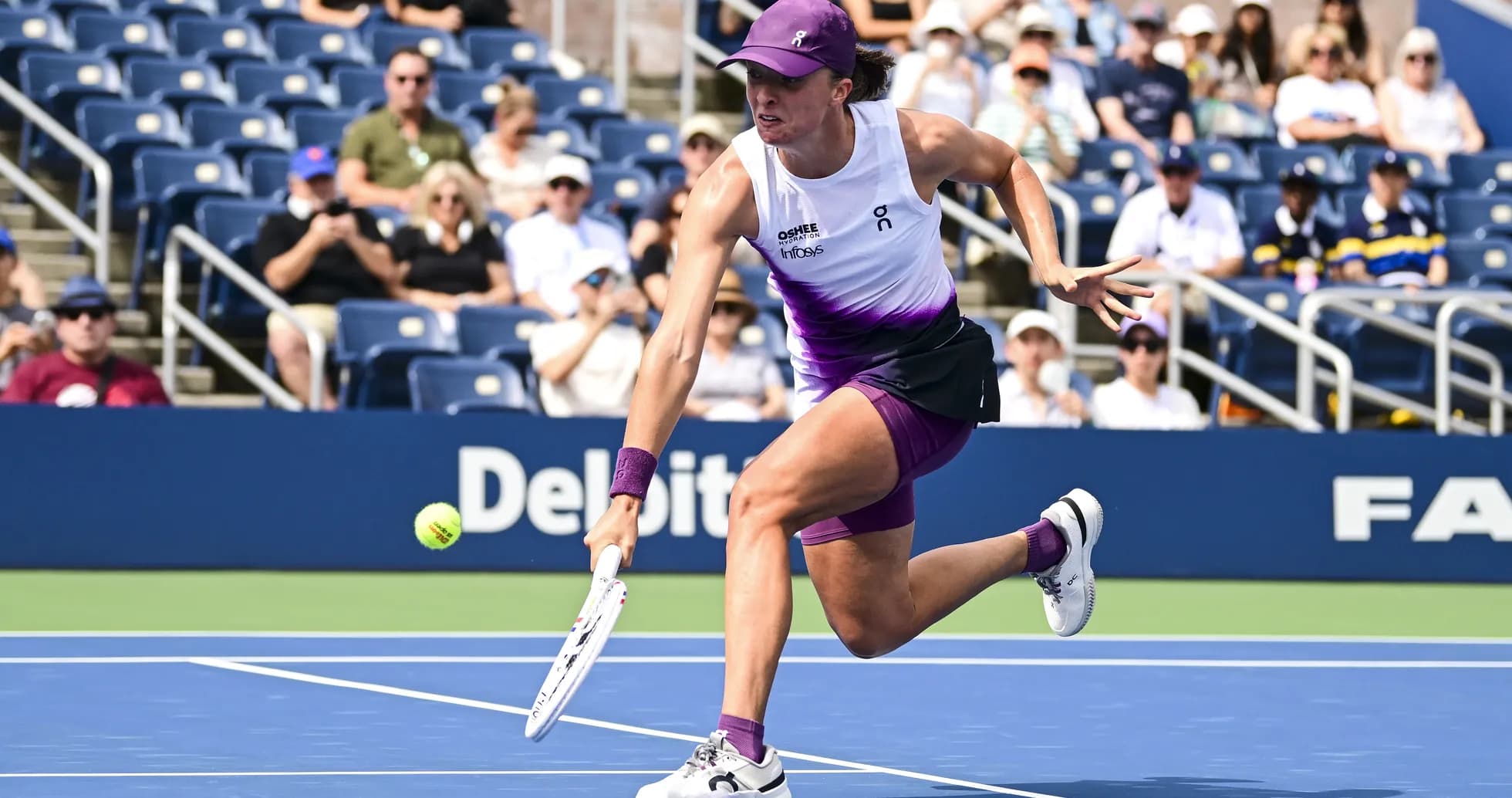
NEW YORK — Tucked away from the chaos of Arthur Ashe and Louis Armstrong, the Grandstand offered something different on Thursday: Iga Swiatek, up close and ruthless.
The World No. 8 treated the smaller stage like a private rehearsal, and Nadia Podoroska never got near the script. In a rematch six years in the making since their French Open semifinal, Swiatek tore through the Argentinian 6-3, 6-2 in a little over an hour, a performance as controlled as it was commanding.
This was Swiatek at full efficiency. She landed 79 percent of her first serves and won 78 percent of those points. She did not face a single break of serve. The numbers told one story; the feel of the match told an even harsher one. Every time Podoroska tried to stretch the rally or change the angle, Swiatek was already there, early on the ball, stepping forward, taking time away.
Only once did the match threaten to breathe.
Serving at 5-3 in the opening set, Swiatek wobbled for a moment. Podoroska, who had battled past Simona Waltert in three sets in her opener, finally carved out three break points and the Grandstand leaned in, sensing a foothold for the underdog. Swiatek slammed the door. Two unreturned serves erased the first two chances, the third dissolved in a flurry of heavy, precise hitting. They traded deuces, tension rising with each point, until Swiatek seized her second set point and watched Podoroska’s forehand drift just wide.
That was the window. It shut, and it stayed shut.
From there, the second set felt like a procession. Swiatek jumped to a 5-1 lead, reading Podoroska’s serve, dictating with her return, and gliding into the court whenever the short ball appeared. The final act came with a flourish: a sweeping crosscourt backhand, struck with full conviction, leaving Podoroska stranded and the match over in a blur.
The scoreline looked lopsided, but Podoroska did not fold. She finished with 11 winners to 12 unforced errors — a tidy, honest effort against a far superior opponent. Swiatek’s own ratio, 14 winners to 13 errors, was only marginally better on paper, yet the gulf lay elsewhere. Her serve gave her constant control, her return pinned Podoroska back, and her ventures to the net punctured any hope of a momentum swing.
This was not about highlight-reel dominance. It was about authority. About a top player walking onto a secondary court and making it feel, for an hour, like the center of the tournament.
With the win, Swiatek moves into the third round of the US Open, where Harriet Dart or 25th seed Maria Bouzkova awaits. If she serves like this in the bigger arenas to come, how many more “intimate” looks will New York get at her this fortnight?