Jelena Ostapenko Sparks Controversy in US Open Women's Doubles
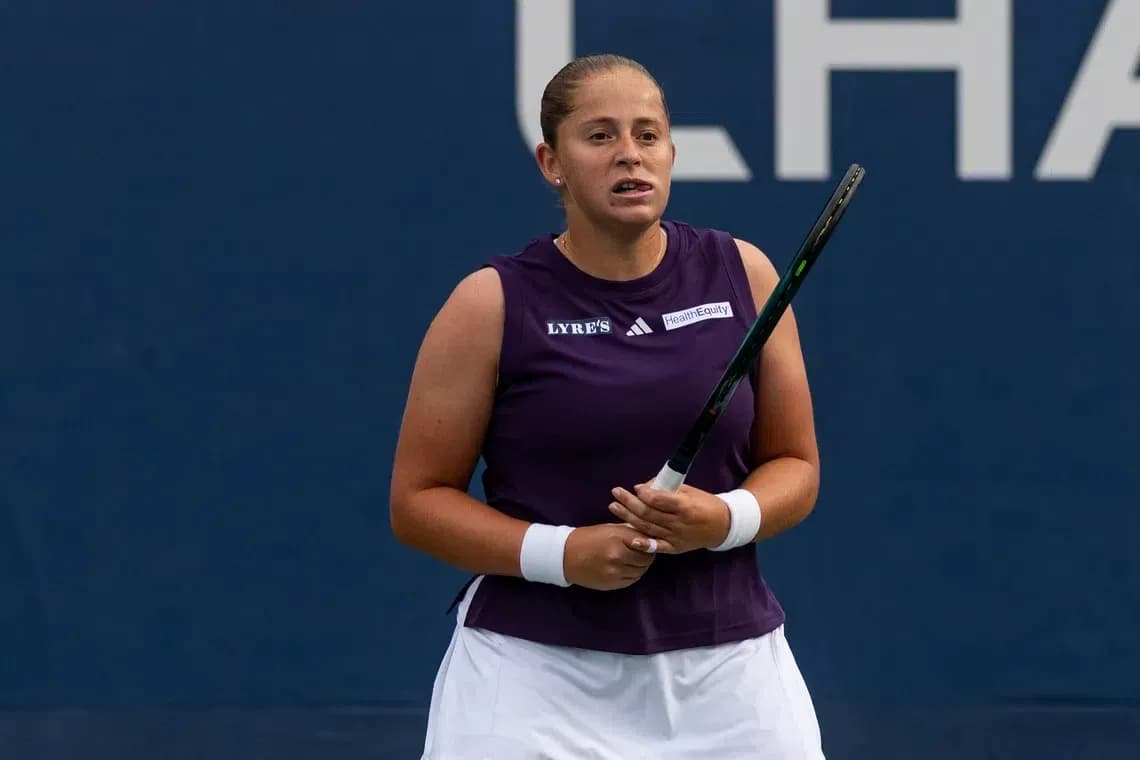
NEW YORK – Jelena Ostapenko has never tiptoed her way through a tennis tournament, and she wasn’t about to start in the heat of the US Open.
The Latvian firebrand found herself at the centre of another storm on Sept 7, this time in women’s doubles, after she and partner Hsieh Su-wei of Chinese Taipei marched into the quarter-finals – and straight into a confrontation off the court.
The fourth seeds had just beaten the Australian-Chinese Taipei duo of Maya Joint and Chan Hao-ching 6-4, 6-4, a solid, controlled win that never quite reflected the tension simmering around the court. The scoreline was tidy. The atmosphere was anything but.
Flashpoint on the changeover
The spark came during a changeover. Hsieh, usually the picture of calm mischief on a doubles court, walked toward the chair umpire to raise a concern. Ostapenko followed, visibly agitated, and pointed directly at the opposing team’s coach.
She accused him of clapping and shouting after their errors and offering sarcastic praise of their shots in Chinese. Hsieh translated the remarks for her partner, and that only sharpened Ostapenko’s anger.
“They do this because they know they cannot beat us,” she told the umpire, labelling the behaviour “very disrespectful” and asking for a Chinese translator to be brought in.
The umpire acknowledged the complaint and agreed to address it. That was all the invitation Ostapenko needed.
Turning up the heat
Back on court, the fourth seeds tightened their grip. The rallies grew shorter, the intent clearer. Ostapenko hammered returns, Hsieh threaded angles, and the pressure on Joint and Chan mounted.
The match, already leaning in their favour, slipped decisively away from the underdogs. The Latvian–Chinese Taipei pairing closed out the straight-sets win, their tennis as pointed as Ostapenko’s words had been minutes earlier.
When the final point landed, Ostapenko unleashed a roar in the direction of the opposing box, a celebration that doubled as a message. The handshake line told its own story: Hsieh and Chan did not shake hands after the fiery encounter, a rare breach of the sport’s usual ritual that underlined just how sour things had turned.
A familiar edge
For Ostapenko, controversy is no stranger. The 2017 French Open singles champion has built a reputation as one of the tour’s most combustible competitors, her shotmaking brilliance often accompanied by a volatile edge.
Her latest flashpoint comes not long after another high-profile clash at the US Open. In 2025, she was involved in a verbal confrontation with American Taylor Townsend, accusing her opponent of having “no class” and “no education” during a heated exchange.
Ostapenko later apologised for those remarks, saying her choice of words had been misunderstood because English is not her first language. The incident did little to soften the perception that, when emotions spike, she rarely leaves anything unsaid.
Now, with another dispute added to her New York scrapbook and a place in the women’s doubles quarter-finals secured alongside the unflappable Hsieh, the question lingers: can that combustible energy be harnessed for a deep run, or will the next flash of temper prove as decisive as any forehand?